
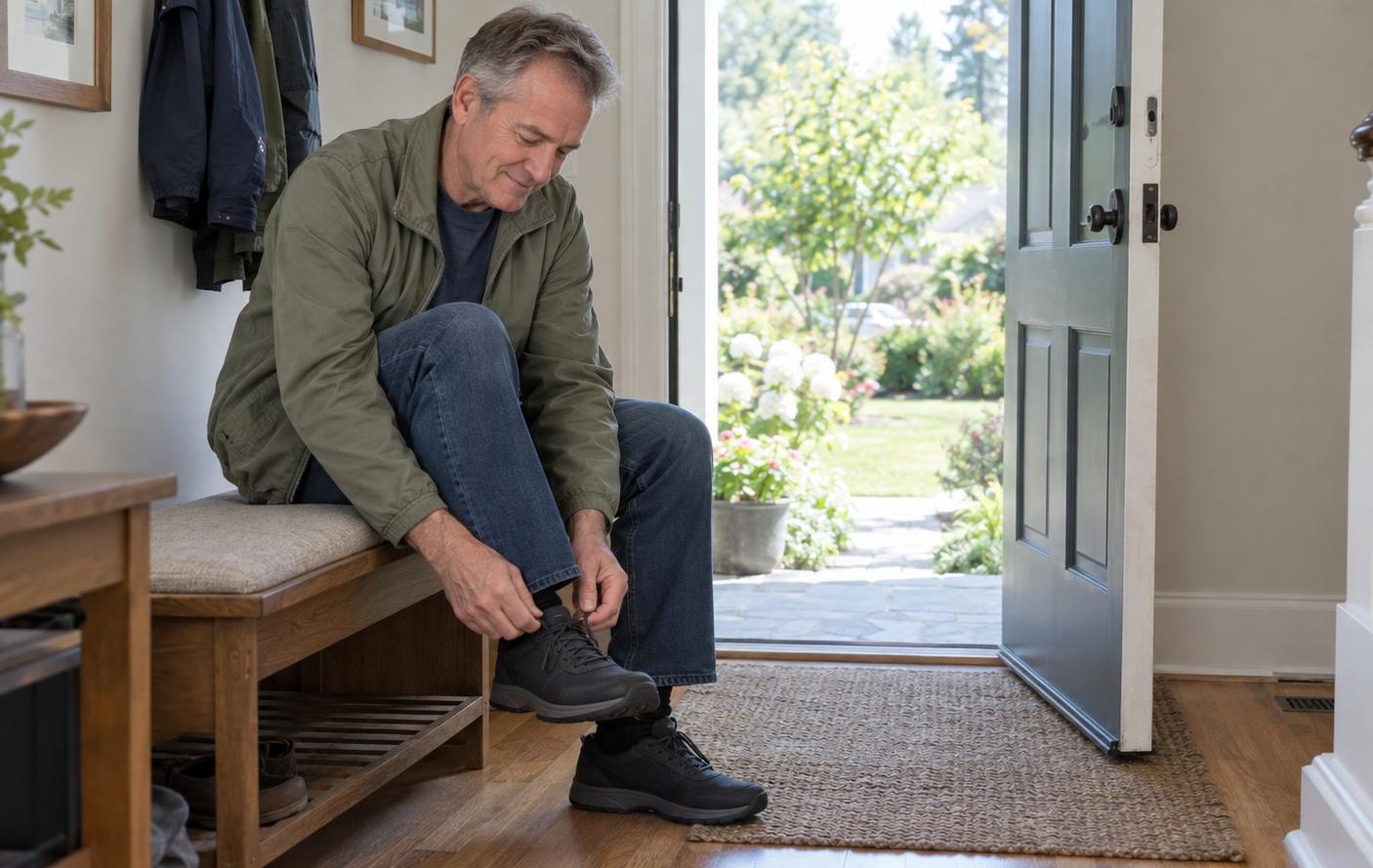
Start by noticing where you are today: how long you can walk comfortably and how easily you get up from a chair.
A goal you can meet this week is worth more than a big one you give up on.
Then set a small, specific goal, like “walk 15 minutes after lunch three days this week,” and build from there.
Know Where You’re Starting From
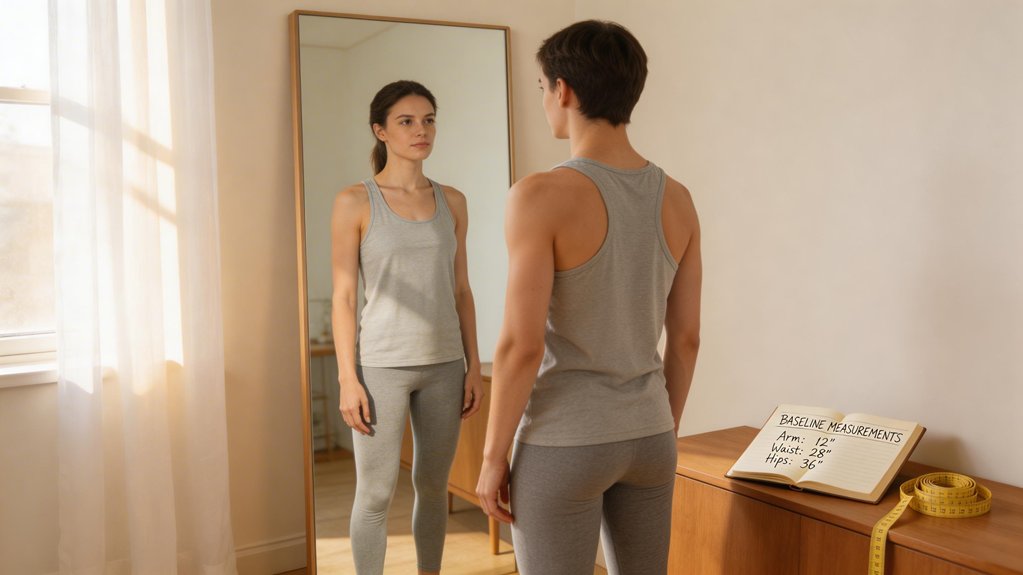
Before you set a goal, find out what you can do today.
Write down your starting point so you can see how far you’ve come.
Ask yourself a few simple questions. How long can you walk without needing to stop? Can you climb a flight of stairs comfortably? Can you stand up from a chair without using your hands?
There are no wrong answers. These details show you where to begin, so you don’t pick a goal that overwhelms you.
If you haven’t been active in a long time, or you have a heart condition, diabetes or joint problems, ask your doctor before you set your first goal.
Knowing your starting point also helps you avoid the common exercise injuries that catch beginners who do too much too soon.
SMART Fitness Goals That Stick
Now that you know where you are, build goals you can reach. The SMART framework helps: specific, measurable, achievable, relevant and time-bound.
Write one goal for this week and one for the month.
- Clear target. Make it specific, like “walk around the block after dinner” instead of “get fit.”
- Track it. Make it measurable by logging your walks in a notebook.
- Get support. Ask a friend to check in on your progress and celebrate with you.
Picture yourself finishing a goal, like walking a local charity 5K. If you later want to try jogging, a step-by-step beginner running guide builds up slowly.
Give each goal a realistic deadline. Break big goals into smaller steps.
Start Smaller Than You Think, Then Progress Gradually
The most common beginner mistake is starting too hard and quitting.
Build on a comfortable week, and don’t jump ahead.
Choose activities you can keep up. For example, walk at an easy pace on a few days a week. When that feels comfortable, add a few minutes to each walk.
Small increases work better than big jumps, and they help prevent injury and burnout.
You don’t need long sessions to benefit. Shorter bouts of walking add up, so they make a good starting point.
Record each week’s change in your notebook.
Measure What Actually Matters
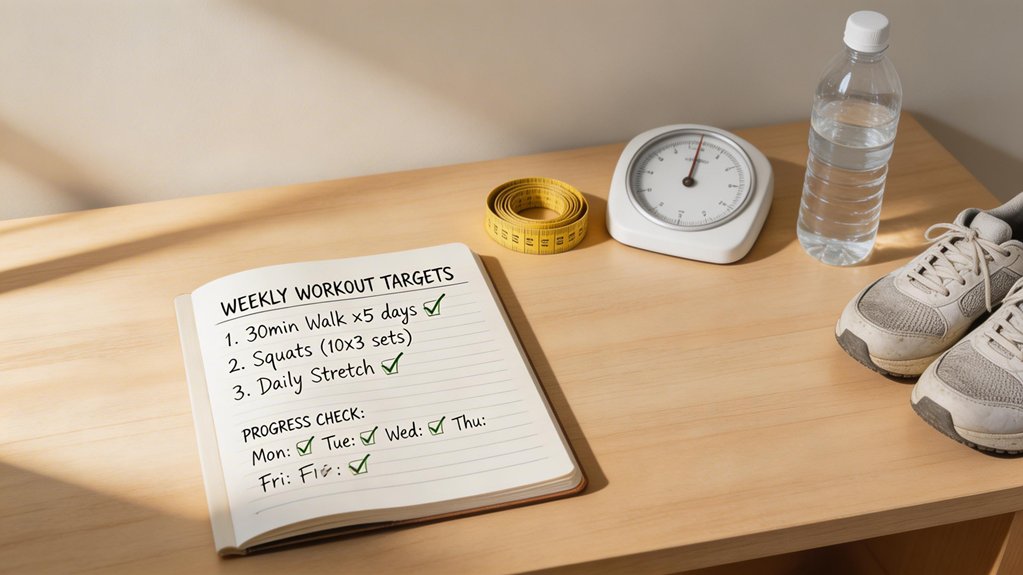
The scale tells only part of the story. That’s why it helps to track other signs of progress.
Track how you feel and what you can do, not just the number on the scale.
- How far or how long you can walk comfortably
- How easily you do daily tasks, like carrying groceries or climbing stairs
- How your clothes fit and how your energy feels through the day
Better sleep is another good sign, and regular exercise may help you sleep.
Skip numbers that don’t help you. Focus on what reflects how you feel and what you can do.
Celebrate Wins to Stay Motivated
Tracking keeps you honest, and celebrating keeps you going.
Mark milestones as you reach them. When you finish your first full week of walks, take a moment to notice it.
Small rewards help build a positive link with exercise. A favorite tea after a walk or a call to a friend both work.
Celebrate each small win, because that is how habits get built.
Remember that rest days are part of progress, too, since recovery is when your body adapts.