
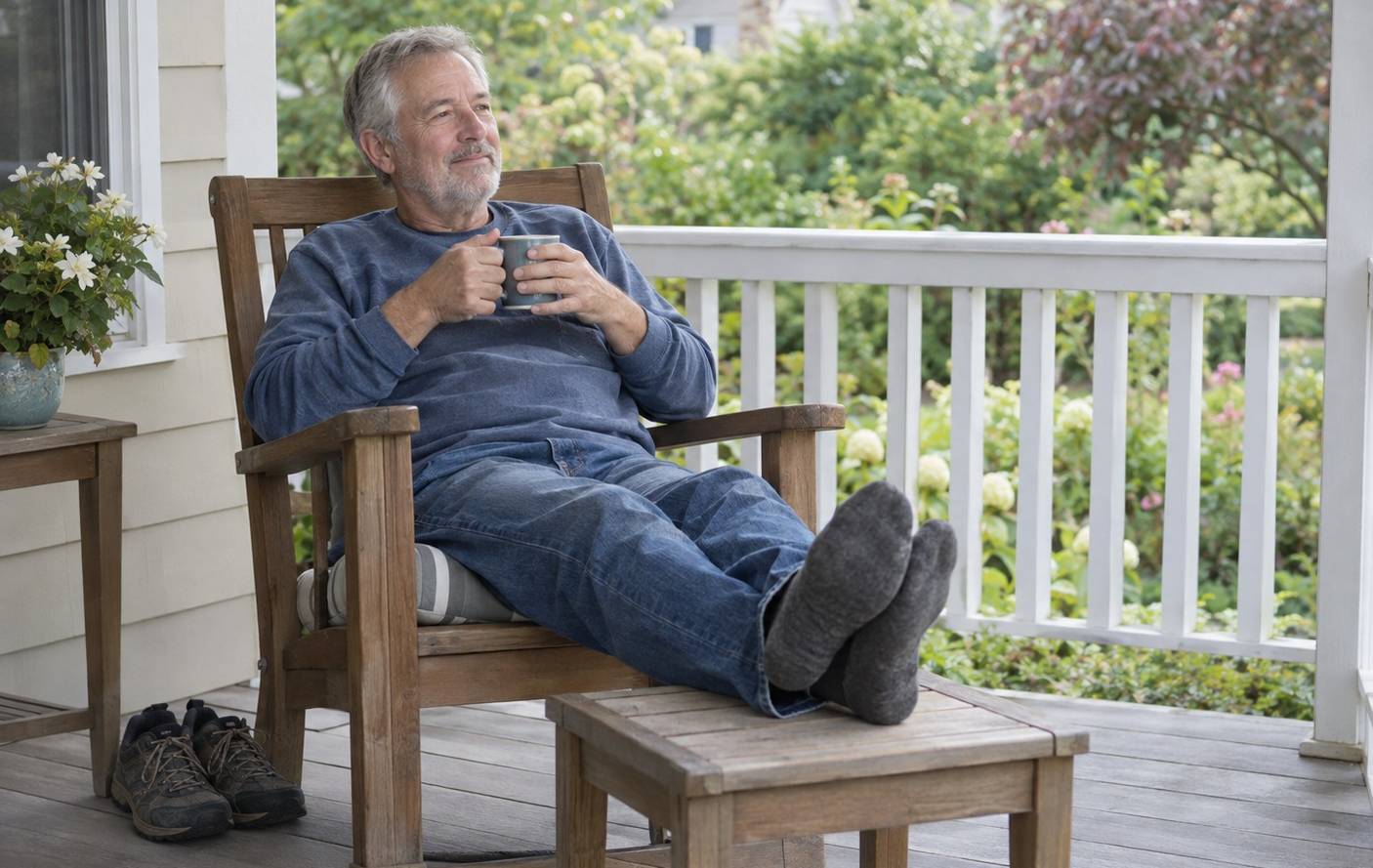
Rest days are part of exercise, not a break from it.
Plan rest days into your week, and treat them as part of the routine.
Your body adapts to exercise in the time between sessions. Walking, strength work and stretching all go better when you plan some days off.
Why Rest Days Matter

When you exercise, your muscles work harder than usual. Recovery is when your body catches up and adapts.
Rest gives your body time to adapt, so don’t skip it.
Eating enough protein and carbohydrate helps, and so does a good night’s sleep. Without enough recovery, tiredness builds up and you’re more likely to get an overuse injury.
Rest days also fit well with better sleep, since good sleep helps your body recover.
Recognizing Rest Day Warning Signs
Ask yourself whether you’re getting enough rest. Watch for signs such as persistent tiredness that sleep doesn’t fix.
If tiredness lingers after a rest day, take another one before you push on.
Other signs include workouts that feel harder than usual, a faster resting heart rate, irritability or trouble focusing.
If these show up, take an easy day or two before you go back to your plan.
If tiredness doesn’t lift with rest, or you have dizziness or unusual shortness of breath, call your doctor.
Chest pain or pressure that lasts more than a few minutes, or goes away and comes back, is an emergency. Stop and call 911, as the American Heart Association advises.
Good injury prevention habits matter on rest days too. They protect you from wear that builds up when recovery falls short.
Do You Need Active Recovery or Complete Rest?
When you need more recovery, you have two choices: complete rest or active recovery.
Match your rest to how tired you are: rest fully when drained, move gently when only a bit tired.
Complete rest means taking a full break. It can feel good after a hard week, and your muscles get a chance to recover.
Active recovery means gentle movement, like an easy walk or light stretching. It keeps you moving without much effort.
If your joints are sore, safe exercise modifications can make active recovery more comfortable. If you have arthritis or a joint replacement, ask your doctor which movements suit you.
You might use both across the week. Choose complete rest when you’re very tired and active recovery when you’re only a little tired.
Where to Place Rest Days in Your Week
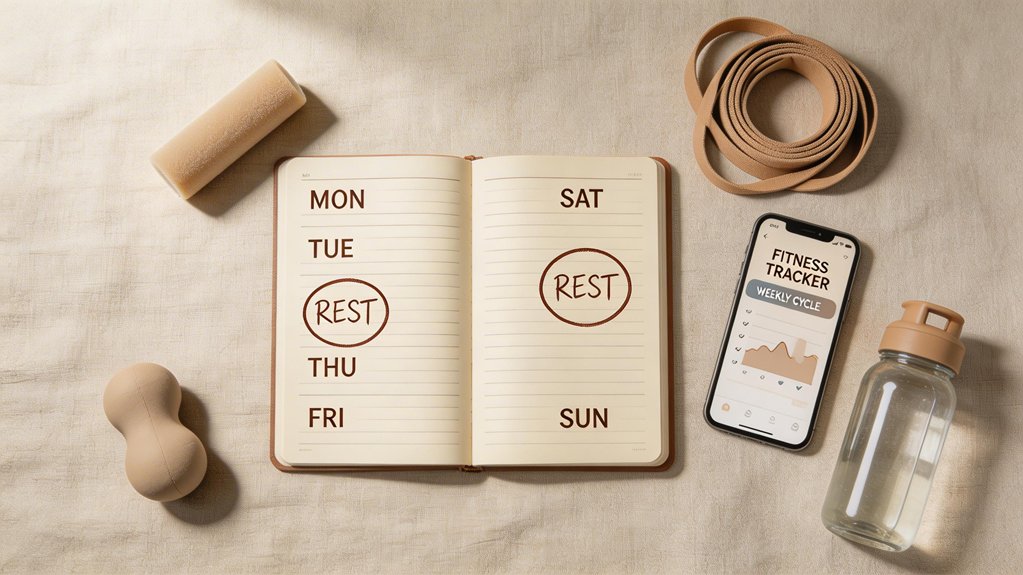
A simple way to place rest days is to put them between your exercise days.
Put your rest days on the calendar first, then fill in your exercise days.
Suppose you exercise on Monday, Wednesday, Friday and Saturday. Tuesday, Thursday and Sunday become your rest days. A rest day can still hold an easy walk. It is a break from strength work and hard effort.
Try strength work on two of your exercise days, with an easy walk on the others. Give your muscles a day off between strength sessions.
If you have a busy or tiring week, move a session or make it lighter. The plan should bend to fit your life.
Walking is a good choice on active recovery days. See the health benefits of walking.
Rest as Part of Your Training
Rest isn’t laziness. It’s part of how you get stronger and stay healthy.
See rest days as part of progress, and you’ll feel less guilty about taking them.
Proper pre- and post-workout habits pair well with rest days, because they help your body prepare for exercise and recover from it.
Here are some ways to use a rest day:
- Stretch gently or try some slow breathing.
- Eat regular meals with protein and plenty of vegetables.
- Take a light walk or a gentle chair-yoga session if you feel like it.
If you’ve ever thought a rest day was wasted, it isn’t. It’s part of how your body adapts to exercise.