
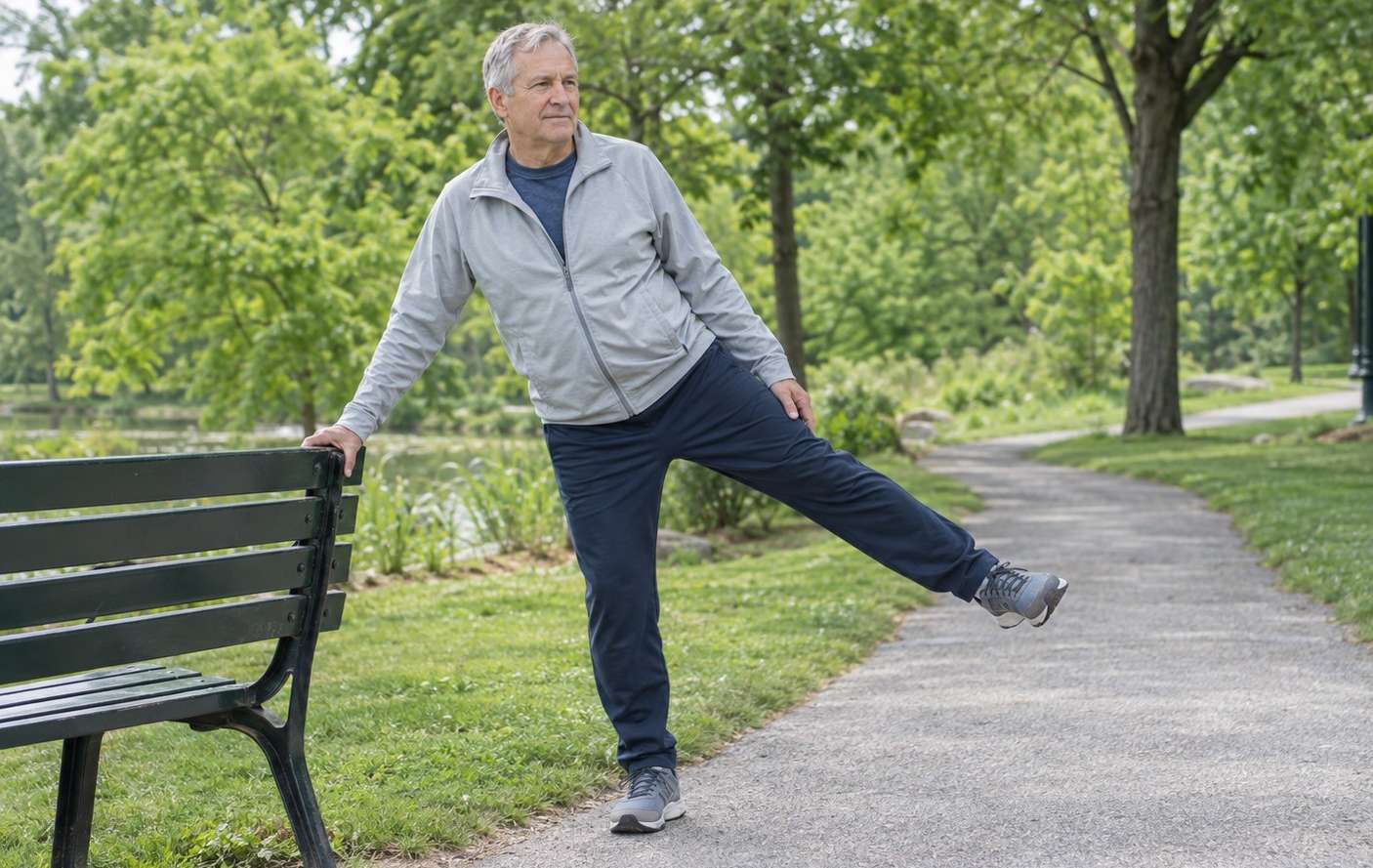
Five habits prevent most exercise injuries for beginners. Start with an easy warm-up, learn to tell soreness from pain, and get your form right first.
Then add a little at a time and give yourself rest days. Doing these consistently keeps you exercising comfortably for years.
Start Every Session With an Easy Warm-Up

Before a walk or a strength session, spend a few minutes moving gently. Walk slowly, march in place or swing your arms.
Harvard Health suggests a few minutes of dynamic stretching before a workout, with moves that copy your activity at a lower effort.
Your warm-up should feel easy, like a slow start rather than a workout.
You can monitor your exercise intensity with the talk test. If you can chat comfortably, you’re warming up at the right pace.
Telling Normal Muscle Soreness From Injury Pain
After something new, you may feel sore for a day or two. That’s normal.
Researchers describe this soreness as a dull ache after unfamiliar exercise that usually peaks 24 to 48 hours afterward and then fades.
Soreness is a dull, general ache in the muscle, while injury pain is sharp, sudden or stays in one spot.
Swelling, bruising or being unable to move a joint is a reason to stop and call your doctor.
If you want to ease sore muscles, you can browse foam rollers for muscle relief on Amazon. Skip foam rolling, or ask your doctor first, if you have osteoporosis or take blood thinners.
Some links on this page go to Amazon, and the site earns a small commission when a reader buys through one.
If an ache gets worse with rest or lingers for more than a few days, see a healthcare provider. Our safe exercise modifications can help you keep moving meanwhile.
Getting Your Form Right Before You Add Effort
Once you can tell soreness from pain, the next step is good form. Technique comes before more weight or a faster pace.
Learn each movement slowly until it feels natural. When a weight is too heavy, your body cheats: you swing, lean or rush, and joints take load the muscles should carry.
Perfect the movement first, then make it harder. Harvard Health suggests a weight that lets you do eight to 12 repetitions, with the last one or two feeling difficult. If you can’t reach eight, use less.
A resistance band, a light dumbbell or even a water bottle works well while you learn. Watch for these common mistakes:
- Swinging your arms to lift during a curl.
- Rounding your back when you bend to pick something up.
- Locking your knees straight during a standing exercise.
- Holding your breath while you push or pull.
- Rushing, so momentum does the work for you.
Before each session, take a minute to check your posture. Stand or sit tall, keep your knees in line with your toes, and breathe out on the effort.
When you spot a problem, make the move easier with a lighter band or a smaller range, and practice a few slow reps. A short phone video of yourself from the side shows what you can’t feel.
Stretching is fine for flexibility, but it doesn’t prevent injuries on its own. Good form and gradual progress matter more.
Why Gradual Progress Helps You Avoid Injuries

When you start feeling good, it’s tempting to do more right away. Resist that urge.
Muscles, tendons and joints adapt more slowly than your enthusiasm does. A sudden jump asks them to handle more than they’re ready for.
Change only one thing at a time, and only a little. Walk a few minutes longer, or use a slightly heavier band, but not both in the same week.
Notice how you feel the next day. If something still aches, hold steady or back off for a bit.
Building in rest days gives your body the chance to adapt to the work you’ve done.
Knowing When to Rest and When to See a Doctor
Even a careful plan can’t prevent every ache. Rest is the right response to most of them.
Sharp pain, swelling or a sudden loss of movement means stop for the day. Give the area a rest and see how it feels.
Seek care promptly if:
- you can’t bear weight on a leg
- swelling is severe
- you suspect a broken bone
If pain gets worse or doesn’t ease with rest, book a visit with your doctor.
If pain keeps coming back, a physical therapist can watch how you move and show you what to change.
That help is worth it if one side of your body moves differently from the other, or an old injury affects how you exercise now.
If you have osteoporosis, a joint replacement or a heart condition, ask your doctor which activities and warning signs matter most for you.
Resting when something hurts is part of your plan, not a setback.
Starting with safe strength training basics also helps you spot the difference between tired muscles and a warning sign. Once your form feels solid, you can read more about building muscle after fifty.