
Better posture comes from strong back and core muscles, a bit of chest flexibility and a few small habits through the day. You don’t need a gym or special equipment.
Strengthen your back and core, loosen your chest, and break up long stretches of sitting. Each of these takes only a few minutes.
Why Slouching Can Leave You Stiff and Sore

Long hours in a chair or over a phone can leave your shoulders rounded and your neck tight. Many of us notice it as an ache by the end of the day.
Harvard Health notes that poor posture and weak muscles in the back and neck can worsen the forward curve of the upper spine.
That is also a reason not to worry. Posture responds to how you use your body, and it’s never too late to begin.
Strong back muscles and regular movement breaks give your posture the best support.
Strengthening Your Core and Back for Better Posture
Your back and core muscles help hold you upright. When they’re weak, slouching comes easily.
Harvard Health’s physical therapist notes that some people only train the muscles at the front of the body. That can leave the upper and mid back underworked.
Start with these gentle options:
Some links on this page go to Amazon, and the site earns a small commission when a reader buys through one.
- Rows: pull your elbows back, squeezing your shoulder blades together. For more effort later, loop a resistance band around a sturdy post and pull against it.
- Wall or counter plank: lean your hands on a wall or kitchen counter and hold a straight line from head to heels.
- Glute bridges: lie on your back with your knees bent and lift your hips a few inches.
Aim to do strength work at least twice a week.
If you have osteoporosis or have had a spine fracture, ask your doctor which back and core moves are safe for you. Skip sit-ups and toe touches until you’ve checked.
Building your back muscles matters as much as your core. Learn the basics first with a safe strength training routine.
Chest and Shoulder Stretches for Rounded Shoulders
Tight chest and shoulder muscles can pull you forward and make slouching feel natural.
A doorway chest stretch is a good place to start. Stand in a doorway with your forearms on the frame and step gently through until you feel a mild pull across your chest.
Hold for about 30 seconds and breathe slowly. You can also squeeze your shoulder blades together and release a few times.
Stretch to mild tension only, never to pain. For more on how to do this well, see these notes on static stretching after your workout.
Simple Posture Habits for Every Day

Small habits through the day add up. Try these:
- Stand up and move about every 30 minutes if you sit for long periods.
- Set up your screen at eye level, and keep your feet flat on the floor.
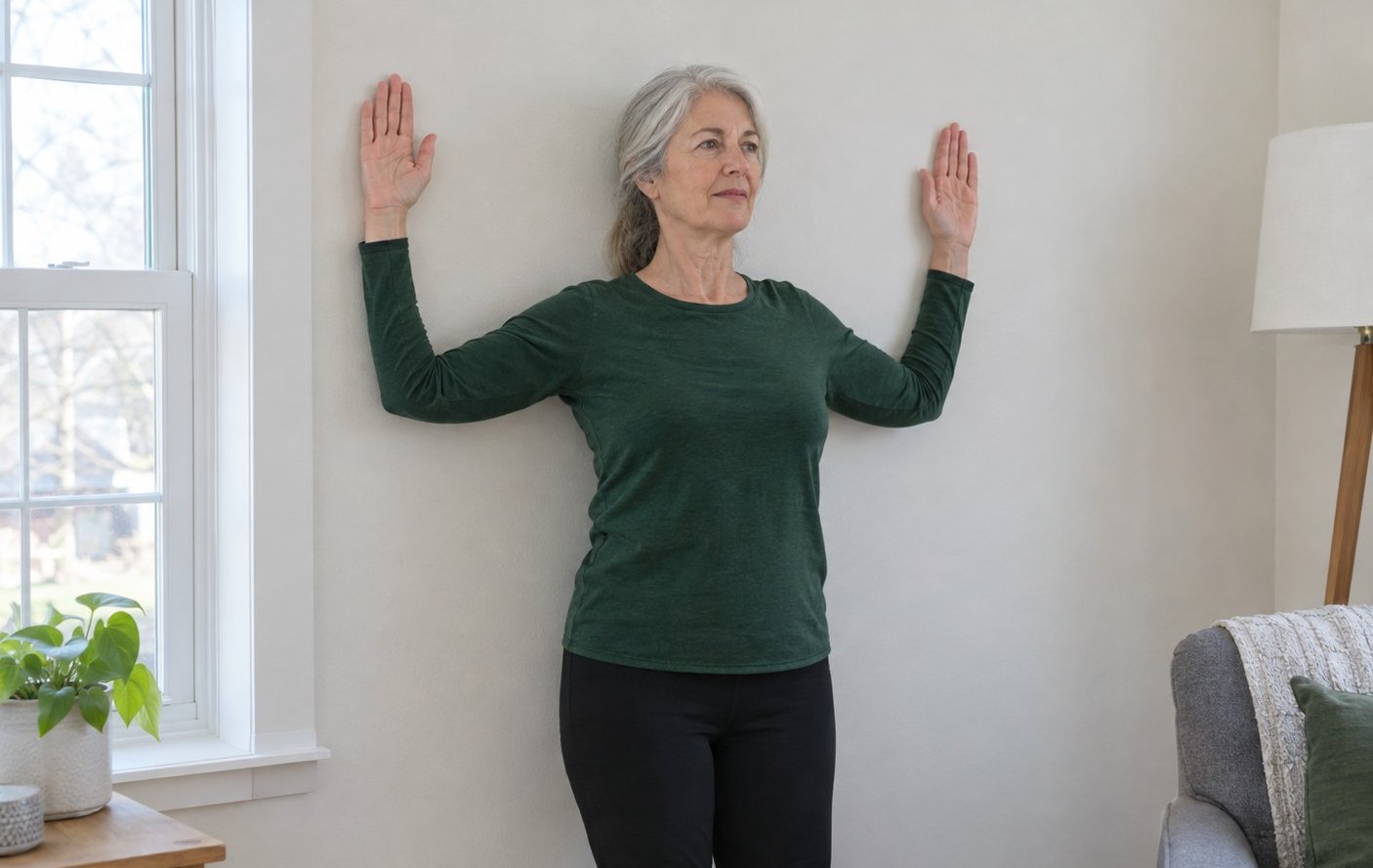
- Stand with your back against a wall for a moment, and notice how it feels to be tall.
- Gently glide your chin back, as if making a double chin, a few times during breaks.
Harvard Health’s therapist suggests taking breaks about every 30 minutes when working at a desk.
A quick movement break every half hour does more for your posture than one long session.
Adding balance exercises to your week also helps you stand steadier.
Being Patient With Posture Changes
There’s no set timetable for posture changes. Everyone is different, and progress is gradual.
You may first notice that you catch yourself slouching more often. Later, sitting or standing tall can start to feel less like effort.
Skipping sessions slows things down, so choose a routine you can keep up. If you’re also working on injury prevention strategies, use them to guide how fast you progress.
Keep your routine gentle and regular, and let the changes come at their own pace. Your muscles also need rest days to recover and adapt between sessions.