
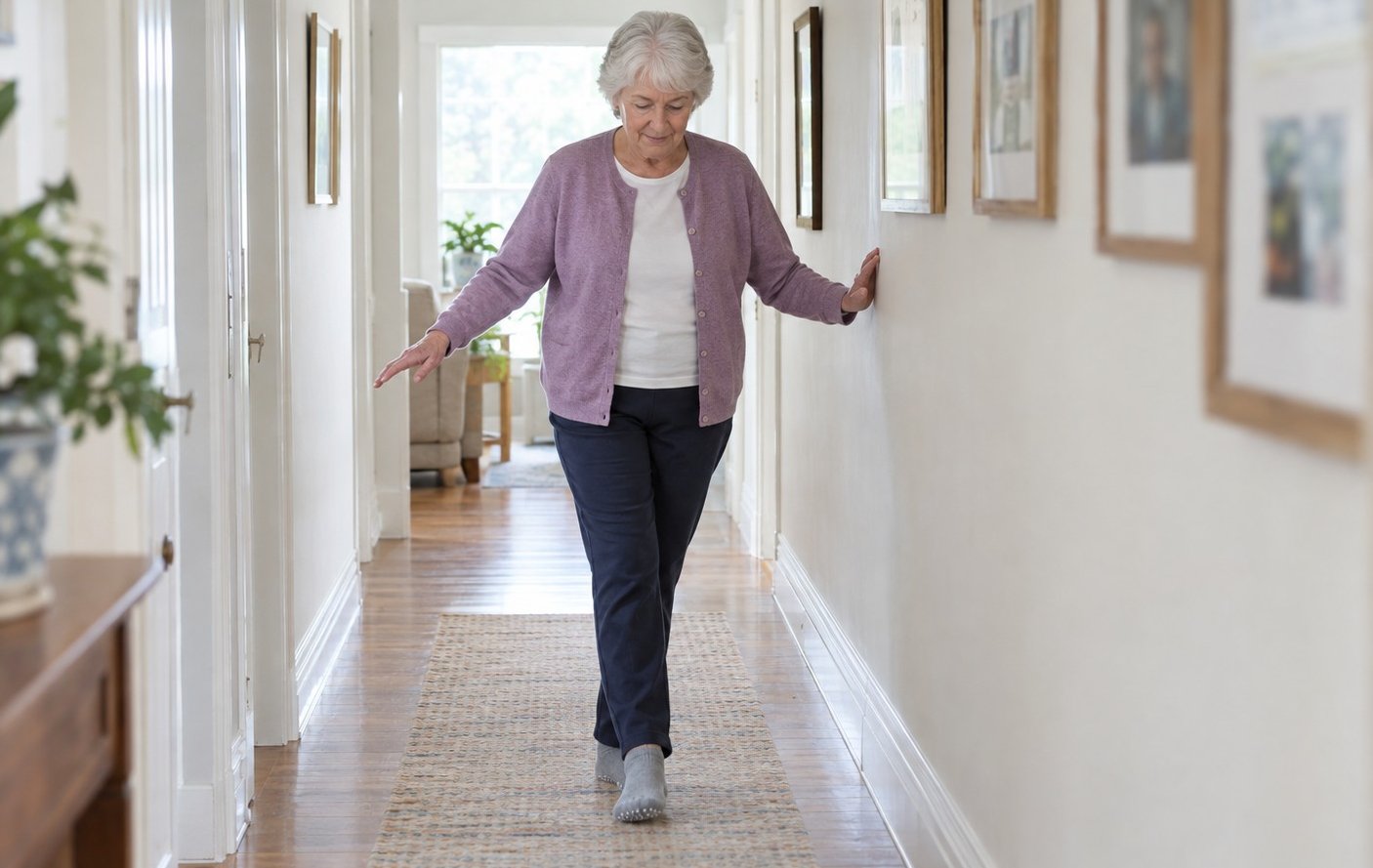
You can build balance at home with a sturdy chair or kitchen counter within reach. Start with fingertip support, then take the support away a little at a time as you get steadier.
Move slowly, and stop if you feel dizzy or unsteady.
Setting Up Safely for Balance Work
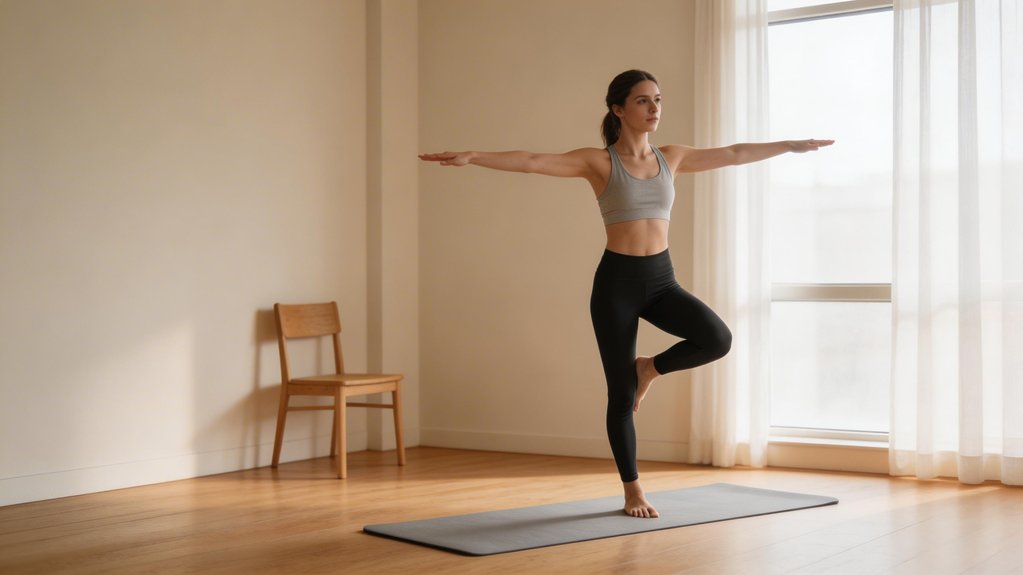
Set up your space first, and keep something sturdy within reach. Stand beside a kitchen counter or a heavy chair that won’t slide.
Clear away loose rugs and clutter. Wear comfortable clothes you can move in, and keep water nearby.
The National Institute on Aging (NIA) advises that you go slowly and mindfully to prevent falling. If you feel unsteady, steady yourself and stop.
If you have dizzy spells, have fallen before or have a condition that affects your balance, ask your doctor or a physical therapist which exercises are safe for you.
If joint pain is a concern, safe exercise modifications help you stay active without making it worse.
Master Static Balance Exercises First
Begin by standing still on a firm floor while you hold on. Static balance exercises build the base for everything that follows.
The NIA lists standing on one foot and the heel-to-toe walk among its balance examples. Here is how to start:
- Single-leg stance: Hold the counter with your fingertips, lift one foot a little and keep your standing knee slightly bent. Hold for about 10 seconds, then switch sides.
- Tandem stance: Place one foot directly in front of the other, heel to toe, and hold the counter lightly.
Both exercises train your sense of where your body is in space. As low-impact exercise, they are gentle on your joints.
The NIA suggests about three sessions of balance exercises a week. Work up to holding each pose for about 30 seconds.
Progress to Dynamic Balance Moves Gradually
Add movement only after the still poses feel steady. Dynamic balance means staying steady while you move.
Start with heel digs and knee raises while you hold the counter. Then try marching slowly in place or walking sideways along the counter.
Keep your gaze forward and move slowly. As you grow confident, you can lighten your grip or take a few more steps.
Remember that gradual progression is essential for new exercisers. It lowers the risk of soreness and overuse injuries.
Layer in Upper Body and Core Moves
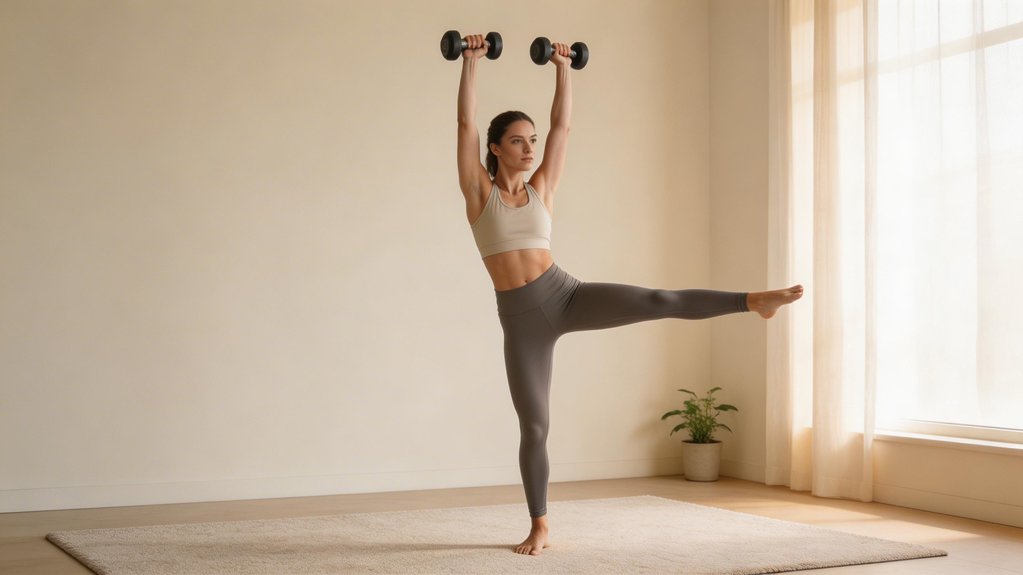
Add arm and core work once your feet feel steady. Your core helps hold you upright, and it plays a part in how you improve your posture during daily activities.
Try these next to your counter or chair:
- Tandem stance with arm lifts: Raise your arms to shoulder height while you hold the heel-to-toe position.
- Feet-together arm raises: Stand with your feet close together and slowly lift your arms forward, then lower them.
- Heel digs with one-arm reach: Hold the counter with one hand, reach the other arm forward and tap one heel in front of you.
- Sit-to-stand: Stand up from a sturdy chair and sit back down slowly, using your hands only if you need to.
Leave one-leg moves with weights out for now. They ask too much of your balance at this stage.
Know When You’re Ready to Advance
Move on when an exercise feels steady and you barely need the support. Progress in balance training isn’t about rushing. It is about recognizing when your body is ready.
A good sign is holding tandem stance without wobbling or grabbing the counter. That is your cue to lighten your touch or try a dynamic move.
If you’re still shaky after regular practice, stay with your current exercises longer. There is no shame in that.
This kind of training is worth the patience. A 2019 Cochrane review found that balance and functional exercises reduce the rate of falls by 24%. Understanding functional fitness shows how these gains carry into everyday movement.