

You don’t need a gym to move more. Plenty of everyday moments can carry a little extra movement.
Chores, errands, stairs and time with friends all add up. Pick one or two ideas below and build from there.
Can Housework Count as Exercise?
Yes, chores count as physical activity. The National Institute on Aging suggests you do household chores, garden, dance, or play with your grandchildren to add activity without special equipment.
Vacuuming, mopping, sweeping and scrubbing keep you on your feet and moving. Carrying laundry or groceries works your arms and legs too.
Carrying a bag in each hand saves trips, as long as the load feels comfortable.
A steady pace helps your cardiovascular health without a gym visit. Chores can also sit alongside a simple walking routine if you want something more structured.
Do Short Bursts of Movement Count?
Yes, short sessions count, so you don’t need to wait for a free hour. Five minutes of movement is better than none.
The NIA’s own example of a first goal is modest: a 10-minute walk three times a week. Spread through the day, short sessions add up, and regular movement can also help you sleep better.
When you do have five minutes, a few simple moves work the big muscle groups:
Some links on this page go to Amazon, and the site earns a small commission when a reader buys through one.
- Brisk walking, indoors or out.
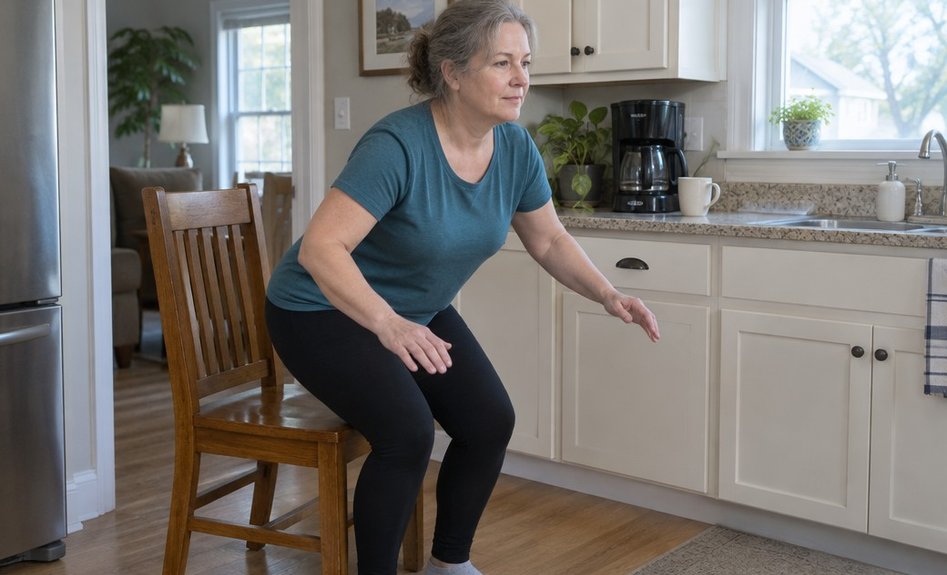
- Sit-to-stand from a sturdy chair, for your legs.
- Wall push-ups, for your arms and chest.
- Seated rows for your back: pull your elbows back, then add a resistance band when that feels easy.
Go slowly and stop if anything hurts. If you have balance problems or a joint replacement, ask your doctor which strength moves are safe for you.
How to Walk More on Errands and Trips
Small changes to how you get around add steps without adding a workout. Park a little farther from the store entrance. Get off the bus one stop early.
Walk to a nearby shop instead of driving. Combine errands and walk between them when the weather is good.
Meeting a friend? Arrive a little early and take a stroll before you sit down.
None of this needs a plan. The point is to notice chances to walk and take them.
There’s more on how much walking helps your health if you’d like to see where these small walks fit.
Small Moves While You Wait
You can sneak movement into the moments when you’re standing still. Waiting for water to boil, brushing your teeth or standing in line all work.
Give your legs a few easy moves while you wait.
- Rise onto your toes while you hold the kitchen counter.
- Stand up from a sturdy chair and sit back down slowly.
- Circle your ankles while you sit on a call.
- Walk around the room on speaker during a phone call.
Tie each move to a habit you already have, so you don’t have to remember it. Keep the moves small and steady, and hold something sturdy. Using proper form and technique keeps these simple moves safe.
Why Take the Stairs?

Stairs show up in office buildings, parking garages, apartment buildings and train stations. Each one is a chance to move.
Climbing a few stairs works your legs and gives your bones something to push against. The NIA lists climbing stairs among the weight-bearing exercises that make bones work harder.
You don’t need special clothes or equipment. Take your time, and use the handrail.
If stairs bother your knees or leave you unsteady, ask your doctor whether they suit you and which other options are better.
Stairs are one option among many. To see how walking compares with other kinds of activity, read the benefits of walking.
Moving With Friends and Family
Time with people you care about is a good way to move more. You don’t have to choose between being active and being social.
Here are a few ways to combine the two:
- Take a walk in a park or on a trail with a friend.
- Join a community walking group or a gentle class.
- Play catch or a lawn game with family.
- Garden together, or dance in the kitchen.
Walking the dog or splashing in a pool also works. Keeping it going is easier with good habits, and there’s more on building an exercise habit.
Group activities often include balance exercises as well, which build steadiness for everyday movement.
Even small amounts add up. The NIA says small amounts of activity throughout the day count toward your weekly total.
Read more: How Movement Breaks Up Sedentary Risk