
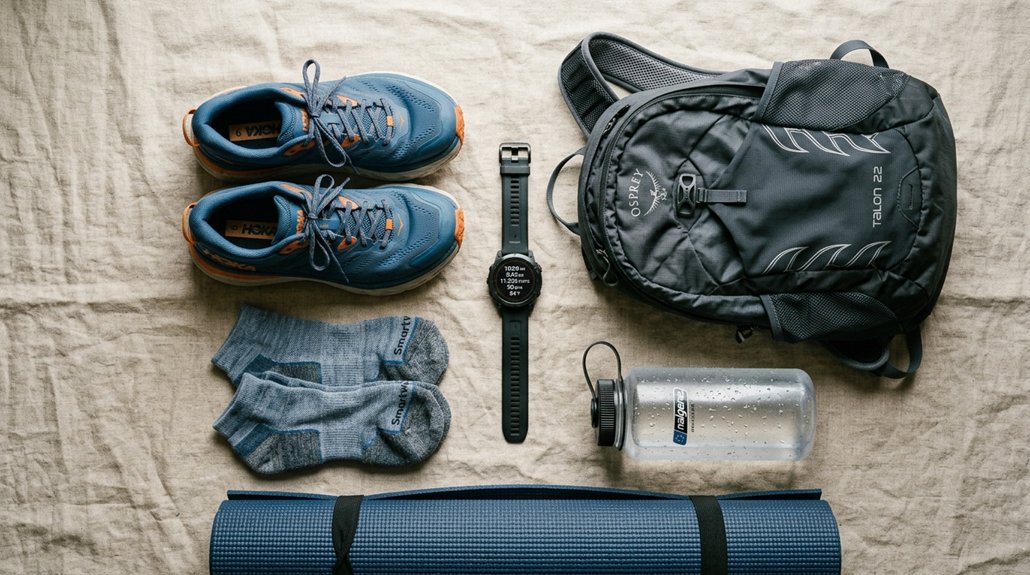
You need very little to start walking, and shoes come first. Add layers for the weather, a water bottle and your phone, and you are ready.
Everything else can wait until your walks get longer. Start with comfortable shoes, then add one item at a time as your routine grows.
Proper Walking Shoes Make the Biggest Difference
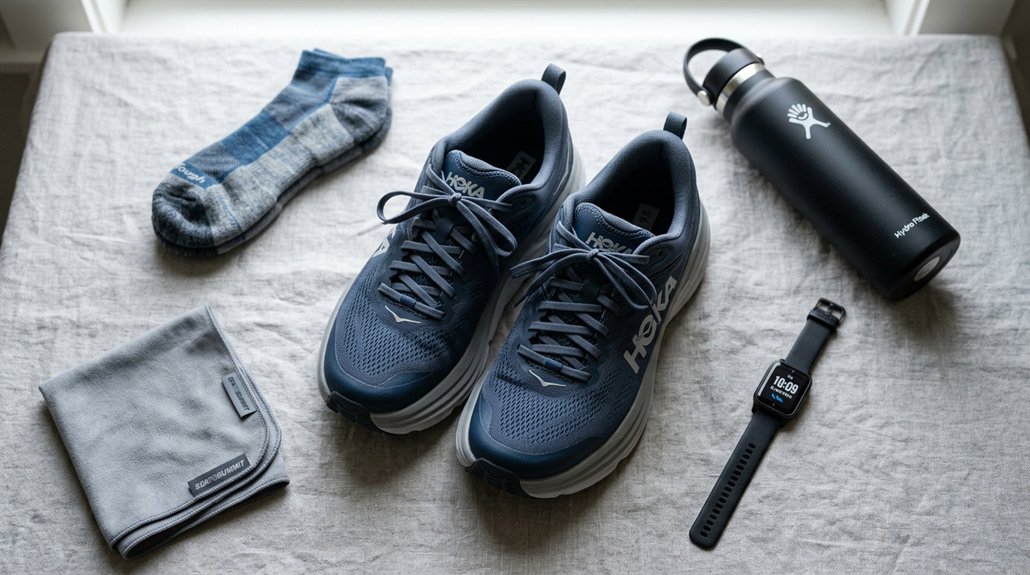
A cushioned walking shoe that fits well is the one item worth taking time over. Hiking boots are more than a beginner needs for sidewalks and park paths.
Fit matters most. The American Academy of Orthopaedic Surgeons (AAOS) explains that your feet swell throughout the day, so try shoes on late in the day.
The heel should be held firmly, and the toe box should leave room to wiggle your toes.
Wear the socks you plan to walk in when you try shoes on. Socks that fit snugly without bunching are less likely to rub.
The right shoe changes with the activity, and proper foot support is easier to judge once you know what to look for.
If your arches ache after a walk, you can compare orthopedic walking shoes with arch support on Amazon.
Some links on this page go to Amazon, and the site earns a small commission when a reader buys through one.
For extra steadiness on uneven ground, an adjustable pair of walking poles with rubber tips is worth adding.
Layer Moisture-Wicking Clothing for Any Weather Condition
Thin layers you can add or remove work better than one heavy coat. Your body warms up a few minutes into a walk, and the weather can change while you are out.
A simple setup covers most days:
- A light top that dries quickly, such as polyester, which stays less damp than cotton.
- A fleece or sweatshirt you can tie around your waist.
- A rain jacket for wet days.
- Comfortable, quick-drying pants that don’t bind at the waist or knees.
If you need lightweight tops and layers, you can compare running clothes on Amazon and pick breathable fabrics. You don’t need anything made for running.
Pack Safety Basics for Every Walk
Carry a short list of safety basics on every walk, even a short one. You will use them rarely, and they are light.
- Your phone, charged, so you can call for help or a ride.
- A card with your name, an emergency contact and any medications you take.
- A few bandages and blister covers.
If you walk early or late in the day, wear something bright so drivers can see you.
A little preparation is easy to build into the routine, and walking brings health benefits that reach well beyond fitness.
Carry Water and Hydration Based on Distance
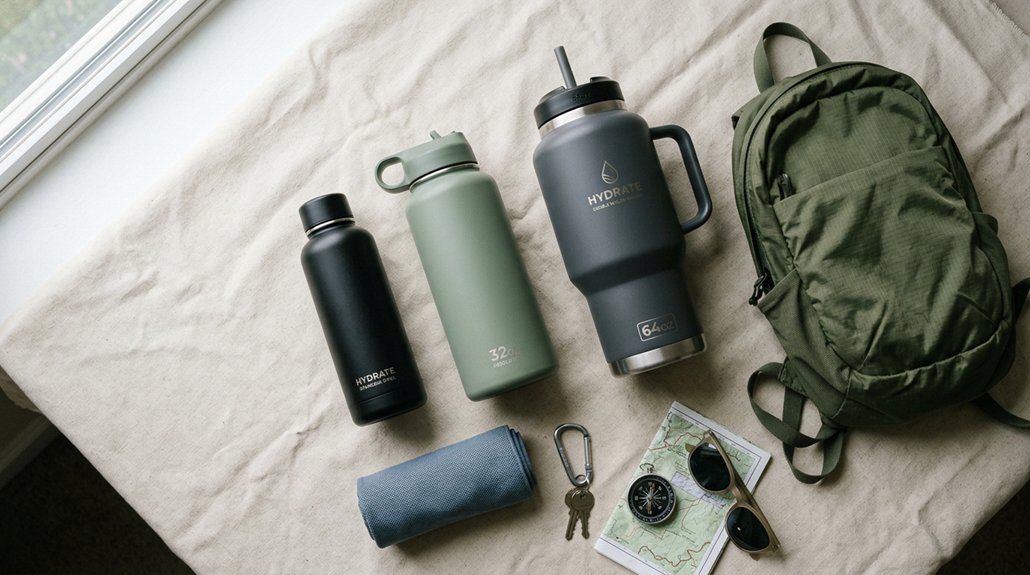
Sip water regularly during a walk instead of waiting until you feel thirsty. Harvard Health notes that older people don’t sense thirst as much as they did when they were younger.
How much to drink through the day is covered in staying hydrated as an older adult.
Match what you carry to your walk:
- For a short walk, a bottle you can hold in one hand is enough.
- For a longer walk, a small waist pack or light backpack holds one or two bottles.
A reusable bottle also cuts down on plastic waste. For long walks in summer heat or winter cold, you can compare insulated water bottles on Amazon.
If you take a water pill or have heart or kidney problems, ask your doctor how much fluid is right for you.
Adjust Your Gear Load for Longer Routes
When your walks get longer, a small backpack with padded straps is the next thing to add. It spreads the weight across both shoulders.
Pack only what you will use: water, a light snack, a thin extra layer, a rain jacket and your phone. Keep the total light, because a heavy pack pulls on your back.
Longer walks also put more miles on your feet. Comfortable walking shoes with good arch support and cushioning help reduce foot fatigue.