
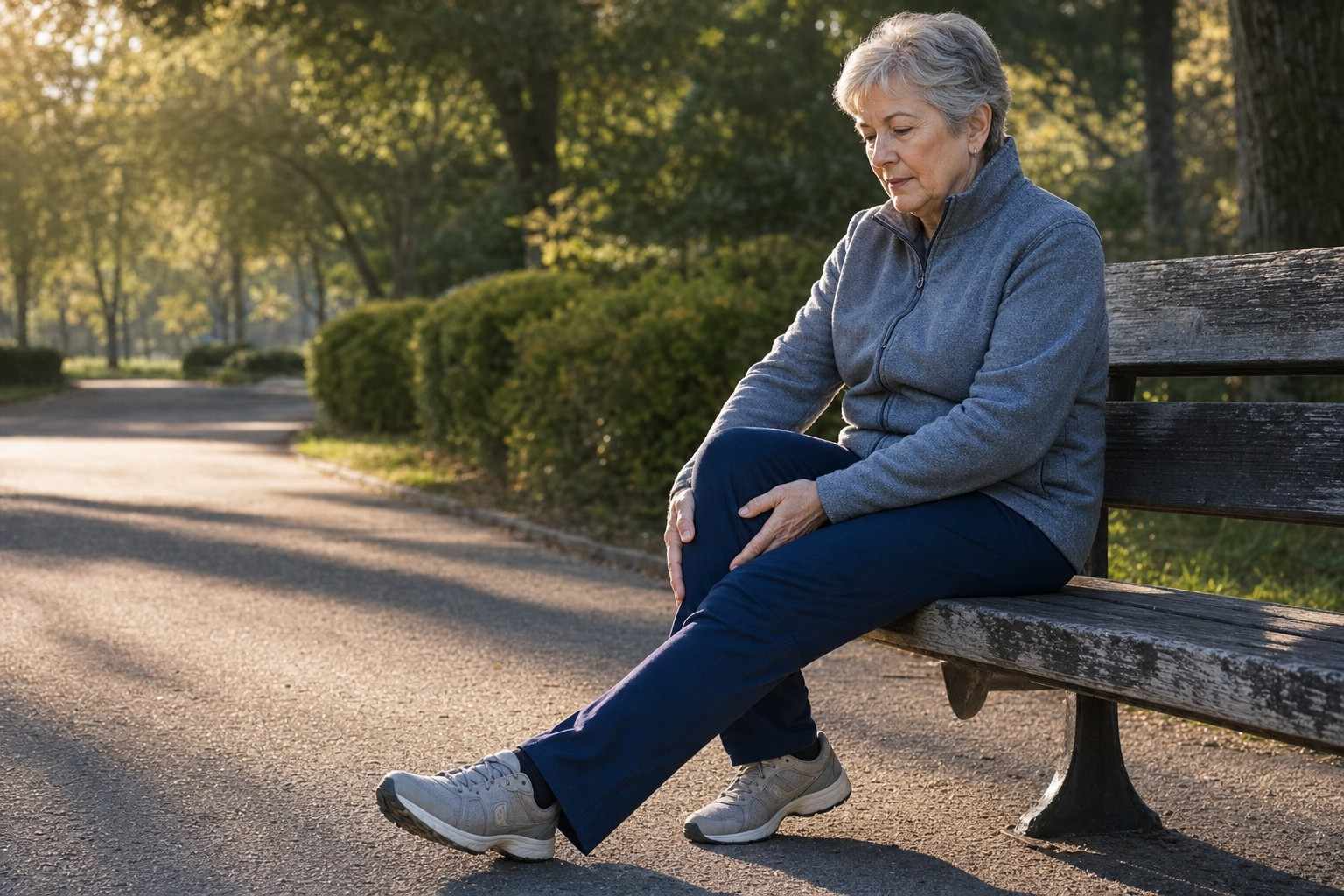
The instinct to rest a painful knee is completely understandable. If it hurts, stop using it. That logic makes sense for a sprained ankle, but osteoarthritis works differently.
Movement is one of the best-supported treatments for knee osteoarthritis, not a risk to it.
The American College of Rheumatology strongly recommends exercise for hip and knee OA, placing it alongside pain medication as a first-line approach. The CDC notes that physical activity can reduce arthritis pain and improve function.
The research is consistent and clear on this.
Why Movement Helps Instead of Hurts
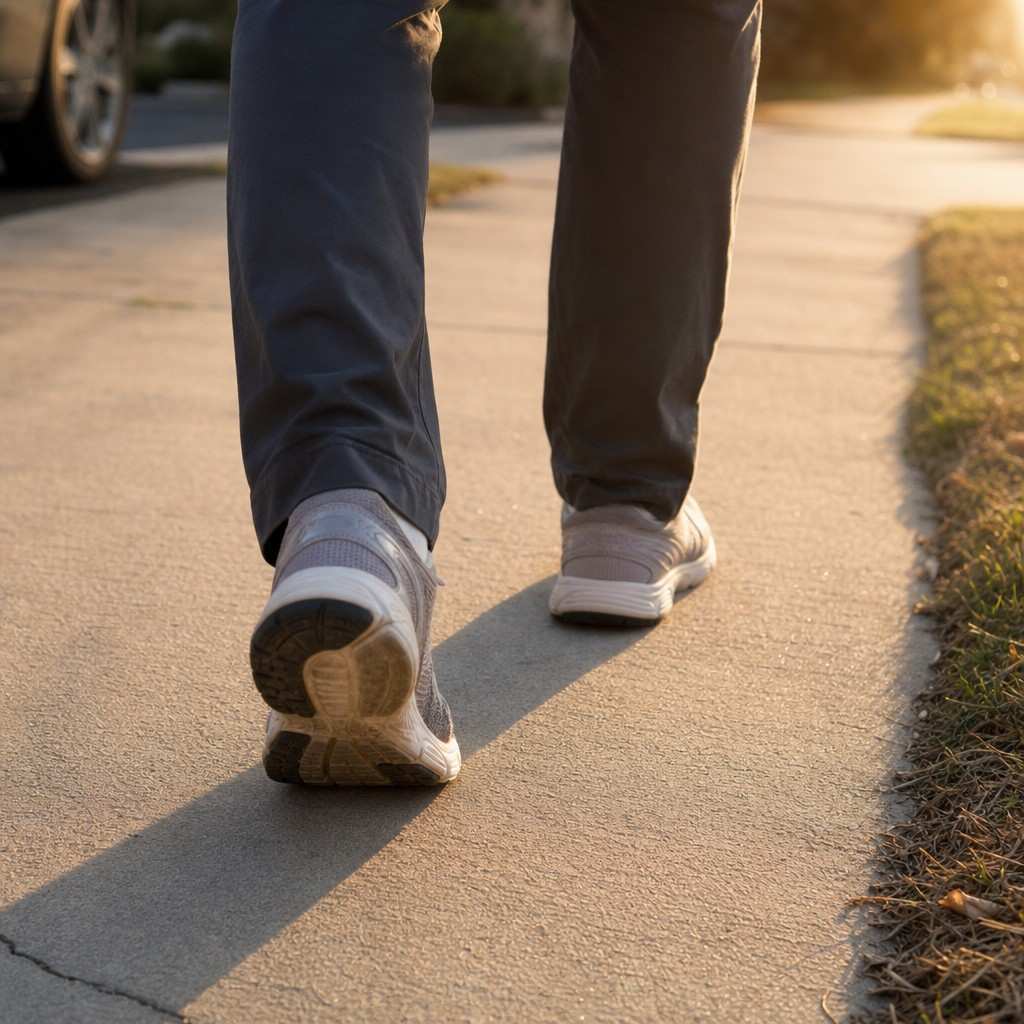

Cartilage has no blood supply. It gets its nutrients from the fluid in the joint, and that fluid circulates only when you move. A knee that stays still is a knee whose cartilage is sitting in stagnant fluid.
Movement feeds the joint. Rest, over time, starves it.
The other mechanism matters too. Stronger quadriceps, the large muscles across the front of the thigh, take load off the knee joint during walking and stair-climbing.
Every pound of force those muscles absorb is a pound the joint itself does not have to handle. This is why quadriceps strengthening appears consistently in guidelines for knee OA alongside range-of-motion and aerobic work.
A Cochrane review of land-based exercise for knee osteoarthritis found moderate reductions in pain and improvements in physical function across the studies reviewed. The gains were not from resting the joint. They were from using it in the right ways.
The Modes That Work Best
The evidence consistently points to three types of exercise for knee OA.
Low-impact aerobic movement reduces pain and stiffness while protecting the joint. Walking, stationary cycling, and water-based exercise all qualify.
If you want a lower-impact option for higher-pain days, a stationary exercise bike for seniors puts almost no compressive load on the knee. That is far less than walking on hard pavement.
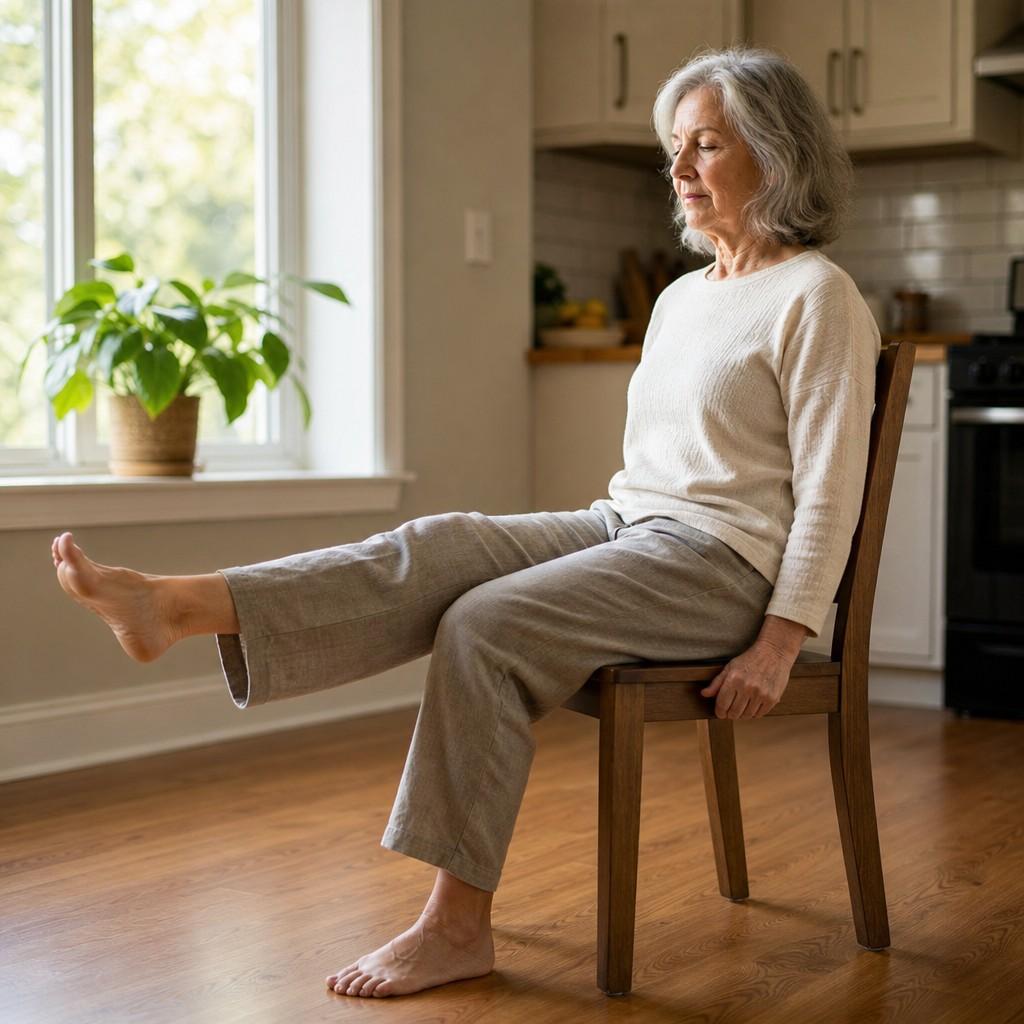
Quadriceps and hip strengthening is the mechanical fix. Straight-leg raises, seated leg extensions, and seated hip exercises build the muscles that unload the joint.
For people learning how to build this kind of routine, exercising safely with joint pain covers the foundational principles for getting started without aggravating things.
Range-of-motion work keeps the joint from stiffening further. Gentle heel slides, seated knee bends, and ankle circles maintain the mobility you have and often improve it slowly over time.
Water-based exercise deserves a special mention here. The buoyancy of water reduces joint load dramatically. That makes pool walking, water aerobics, or simple range-of-motion moves in chest-deep water well-suited to a flaring knee.
The resistance the water provides still builds strength. It is not just a rest-day option.
These movement types are gentler on joints for a reason, and what low-impact exercise actually means and why it matters gives the full picture.
The Acceptable Pain Rule

There is a distinction worth understanding: start-up stiffness versus warning pain.
The first few minutes of a morning walk often feel stiff and achy. The knee protests.
Then, after five or ten minutes, it warms up and loosens, and the rest of the walk is easier. That is the joint fluid circulating, the cartilage hydrating, the surrounding muscles warming.
That start-up stiffness is expected, and it is not a signal to stop.
Warning pain is different. It is sharp, sudden, or worsening during the activity.
It is pain that is significantly worse the next day, not just mild soreness that fades within a few hours.
The Arthritis Foundation guidance on exercise for osteoarthritis uses roughly 24 hours as a practical benchmark. If discomfort settles within that window, the activity level was appropriate.
If pain lingers or intensifies the next day, it was too much and the level should be reduced.
The guideline is not “no pain ever.” It is “the right kind of discomfort in the right amount.”
This is general information, not medical advice. If you have a recent joint replacement, a current flare-up, or concerns about your specific situation, check with your doctor before starting.
Starting Without Overwhelming Yourself
Consistency matters more than intensity. The Arthritis Foundation notes that gains in pain and function from exercise for OA accumulate over weeks, not days.
A ten-minute walk three times a week is a better starting point than a 45-minute session that leaves the knee swollen tomorrow.
Short, frequent movement is closer to what the joint actually needs than occasional longer efforts. The cartilage-feeding mechanism runs on repetition, not duration.
For building a routine when exercise feels unfamiliar, how to start exercising after 50 walks through the progression for this age group.
And if balance is a concern alongside the knee pain, simple balance exercises at home covers moves that build stability without loading the joints.
What Changes Over Time
Progress with OA and exercise is not linear. Some weeks the knee cooperates; some weeks it does not. That is normal and not a sign the approach is wrong.
The trend over four to eight weeks is what matters.
Most people who stick with low-impact aerobic work and strengthening notice meaningful differences in pain levels and how far they can walk without stopping. The joint does not regenerate.
But pain and function improve because of the surrounding muscle, the joint fluid, and the body’s adaptation to consistent, gentle use.
That is a realistic expectation, and it is one the evidence supports.
