
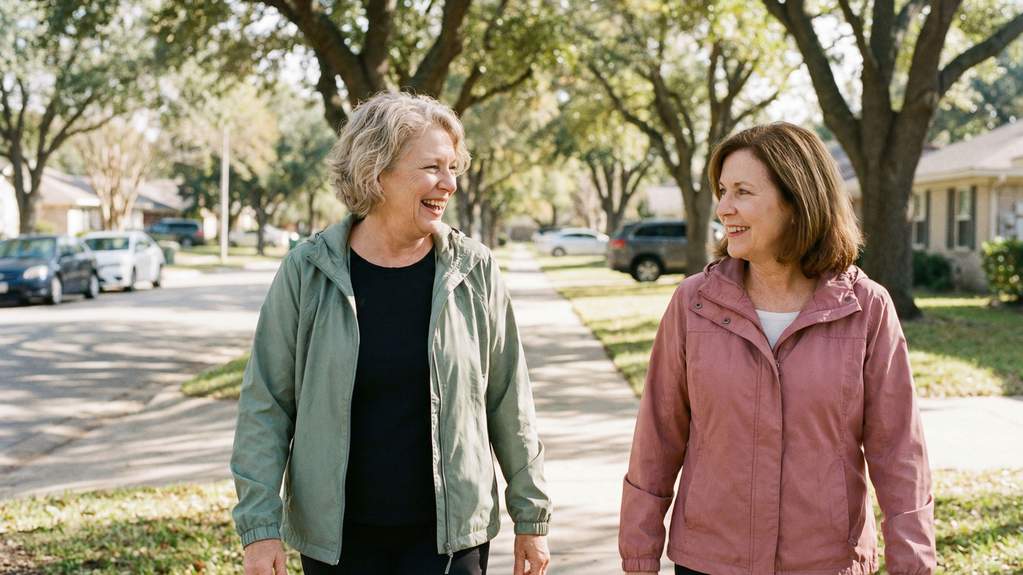
If you prefer exercising alone, you’re in good company. Plenty of people do.
Still, research suggests that company can make it easier to keep going, whatever your personality.
Even one walking partner can make the difference between a plan you drop and a plan you keep.
Here is what the studies say, and how to put it to use.
Why We Stick With Exercise Longer When Others Are Involved
When you tell someone you’ll meet them for a walk, you’ve made a small social promise. Breaking it carries a real cost.
A standing plan with another person turns “I should” into “I said I would.”
That cost, small as it is, can get you out the door on days when nothing else would.
A recent systematic review of exercise programs found that group programs were consistently linked to better adherence. That review covered adults aged 18 to 59 with overweight or obesity, so results may differ for you.
The support doesn’t have to come from a class or a gym. One neighbor who expects to see you at the corner at 7 a.m. works just as well.
There is also an identity effect. Over time, people who exercise with others may start to see themselves as people who exercise, and that makes the habit easier to hold.
How Having a Partner Changes Your Effort
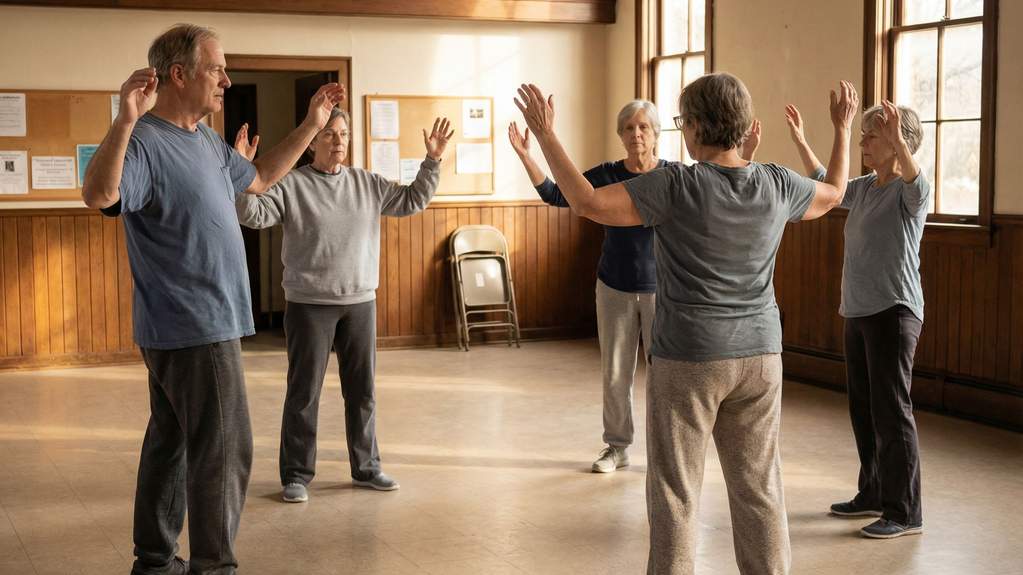
Researchers call it the Köhler effect: people exercising in a pair often work harder or longer than they would alone.
Pick a partner whose pace is close to yours, so the goal stays friendly.
A 2023 meta-analysis of 19 studies, with 1,912 participants in total, found a significantly higher performance gain in partnered exercise than in exercising alone.
The mechanism is simple. Nobody wants to be the one who gives up first.
You don’t have to be competitive for this to work. It’s about not wanting to let the other person down.
The Different Ways Social Exercise Works
Social exercise comes in many formats, and several of them cost nothing.
Choose the format that fits your personality, because the best one is the one you’ll keep showing up for.
- Walking with a neighbor is one of the most accessible starting points.
- Mall walking groups and park meetups are often free and open to all fitness levels.
- Group fitness classes give you a schedule and an instructor.
- Virtual groups and online classes let you exercise with others from home.
The Benefits of Walking for Overall Health are well documented, and a partner makes it easier to keep going.
A sport works too. Many courts post open play times for pickleball, so you can show up and join a game.
For classes, pick one pitched at beginners or older adults. If you have a heart condition or joint problems, ask your doctor which classes suit you.
Your accountability partner doesn’t need to be in the same room. Even a little contact helps:
- A shared step challenge with friends or family
- A group text where someone checks in weekly
- An online forum where people post their workouts
If you’re an introvert, you can still use this. The pull of not wanting to let someone down doesn’t depend on loving crowds.
Making Social Exercise Work for You
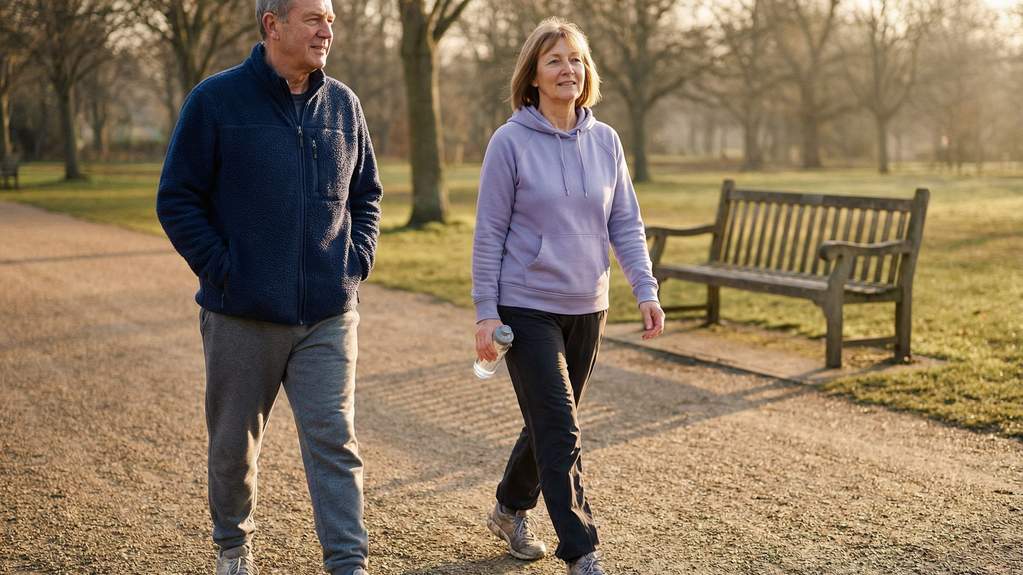
One change is enough to start.
Text one person today and ask if they want to walk this week.
Ask one person you trust to walk with you once a week.
If you’re not sure where to begin, there are practical first steps in How to Start Exercising After 50.
If you’ve struggled to stay on track alone, Building an exercise habit covers accountability and other habit tools.
If getting outside feels like a barrier, virtual options are a fine starting point. Online accountability groups, fitness apps with community features and live-streamed classes all offer company.
The Case for Not Going It Alone
Solo exercise isn’t wrong. Plenty of people keep a healthy routine on their own, and any movement is better than none.
But the research suggests that adding even one person can make consistency easier. It isn’t a shortcut. It’s a strategy that costs nothing.
Read more: How Regular Exercise Changes Your Mood