
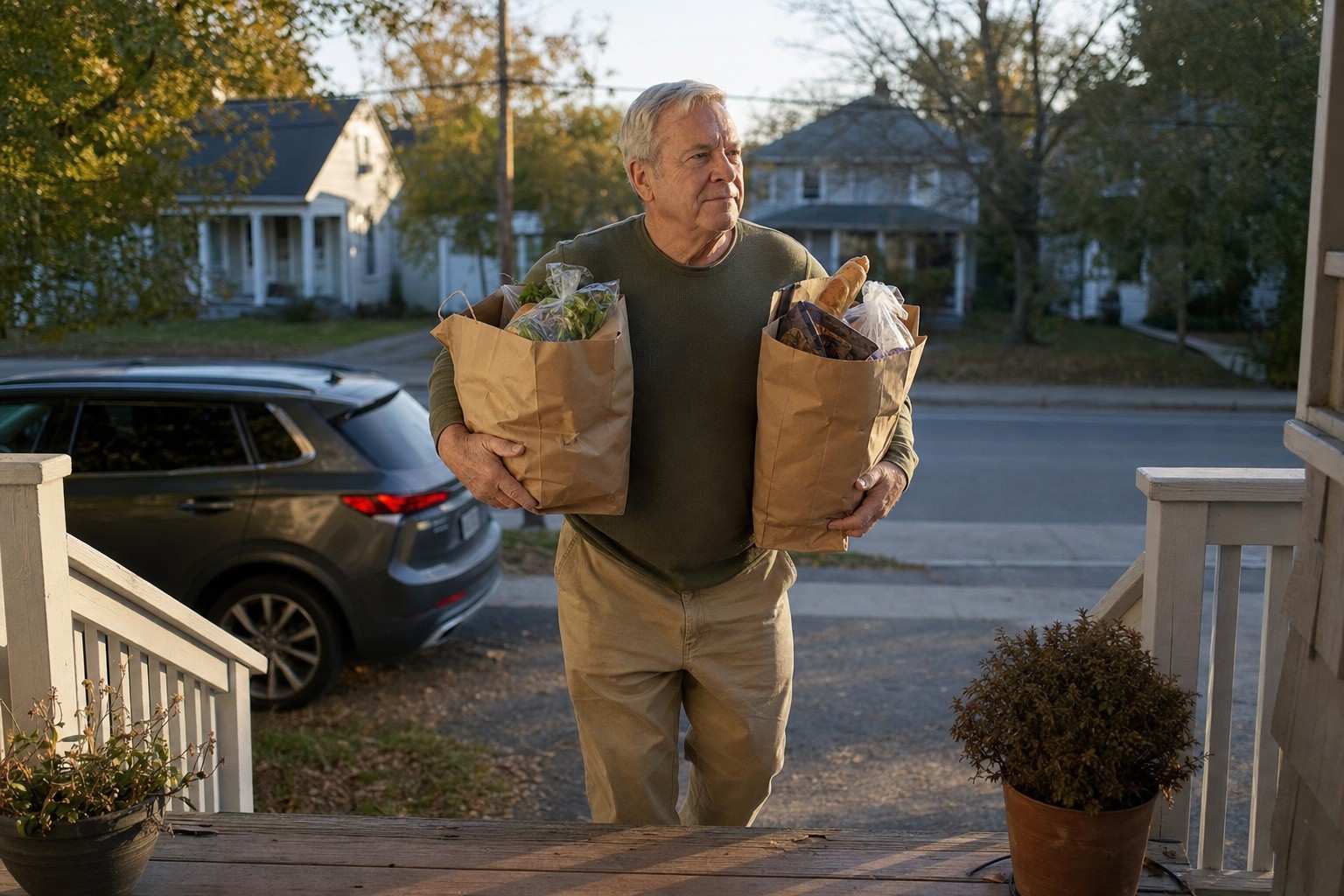
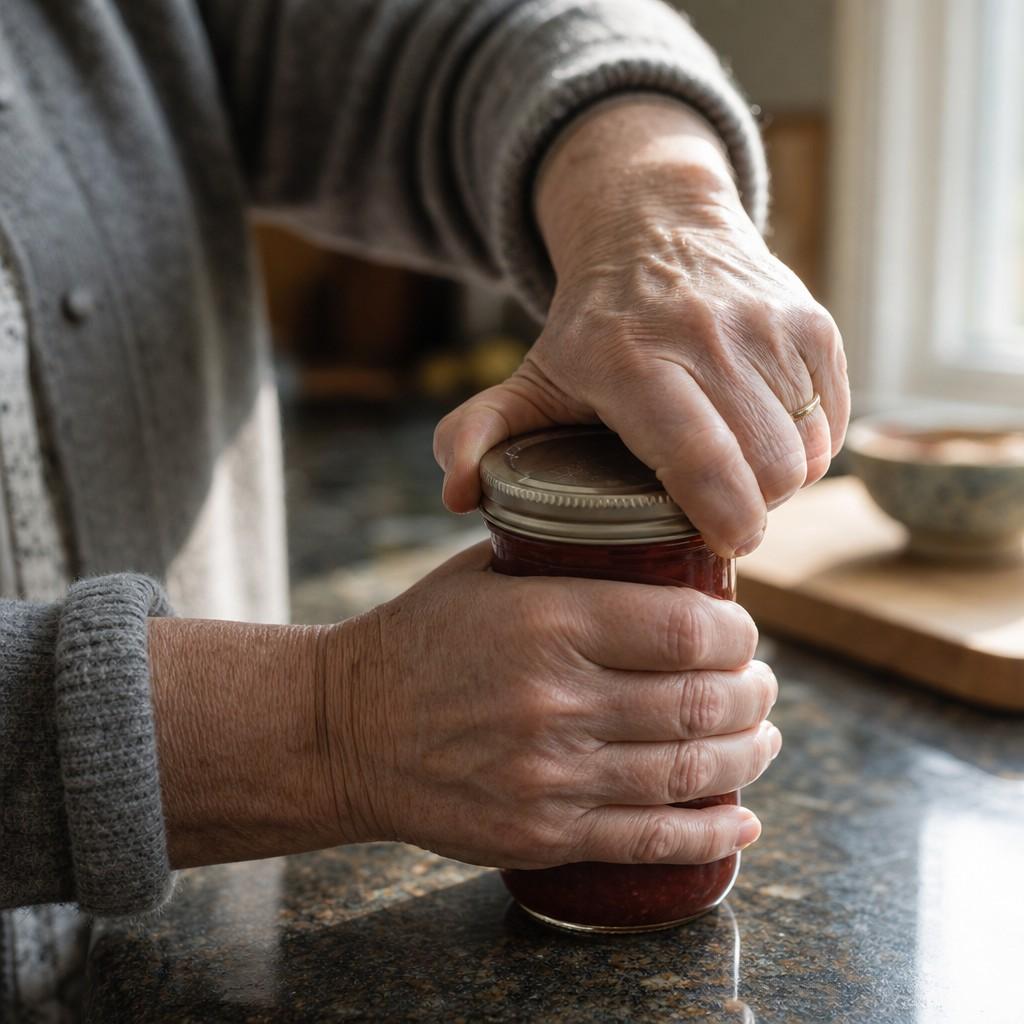
Twisting open a stubborn jar lid. Carrying both grocery bags in from the car in one trip.
Steadying yourself on a stair railing. These everyday moments rely on something researchers now treat as one of the clearest signals of how your body is aging. It is how hard you can grip.
It sounds too simple to mean much. Yet the strength of your hands tends to track the strength of everything else.
What the research actually found
The most cited evidence comes from the PURE study, published in The Lancet in 2015. Researchers measured grip strength in nearly 140,000 adults across 17 countries, then followed them for several years.
The pattern was hard to ignore. Every 11-pound (5 kg) drop in grip strength was linked to a 16 percent higher risk of death from any cause.
It was linked to a 17 percent higher risk of death from heart disease.
In that data, grip strength tracked these risks more closely than blood pressure did.
A weak grip is rarely about the hands alone.
Your grip draws on the same muscle reserves as the rest of your body.
Cleveland Clinic geriatric specialists make this point in their guide to what grip strength says about your health. A fading grip often signals a wider loss of muscle. That process is called sarcopenia, and it speeds up after 50.
Why grip fades with age, and why that is not the end of the story
Strength declines slowly from midlife on. Muscle fibers shrink, the nervous system fires them less efficiently, and daily activity often drops off at the same time.
This is normal physiology, not a personal failing. Rebuilding takes longer at 65 than at 30, and that is simply how aging muscle works.
The part that gets left out: muscle responds to training at almost any age.
Studies of strength training in adults in their 70s and 80s show real gains in muscle and function within a few months. The body still answers when you give it a reason to.
How to build a stronger grip at home
You do not need a gym or special gear to start. The simplest grip training is built into ordinary tasks.
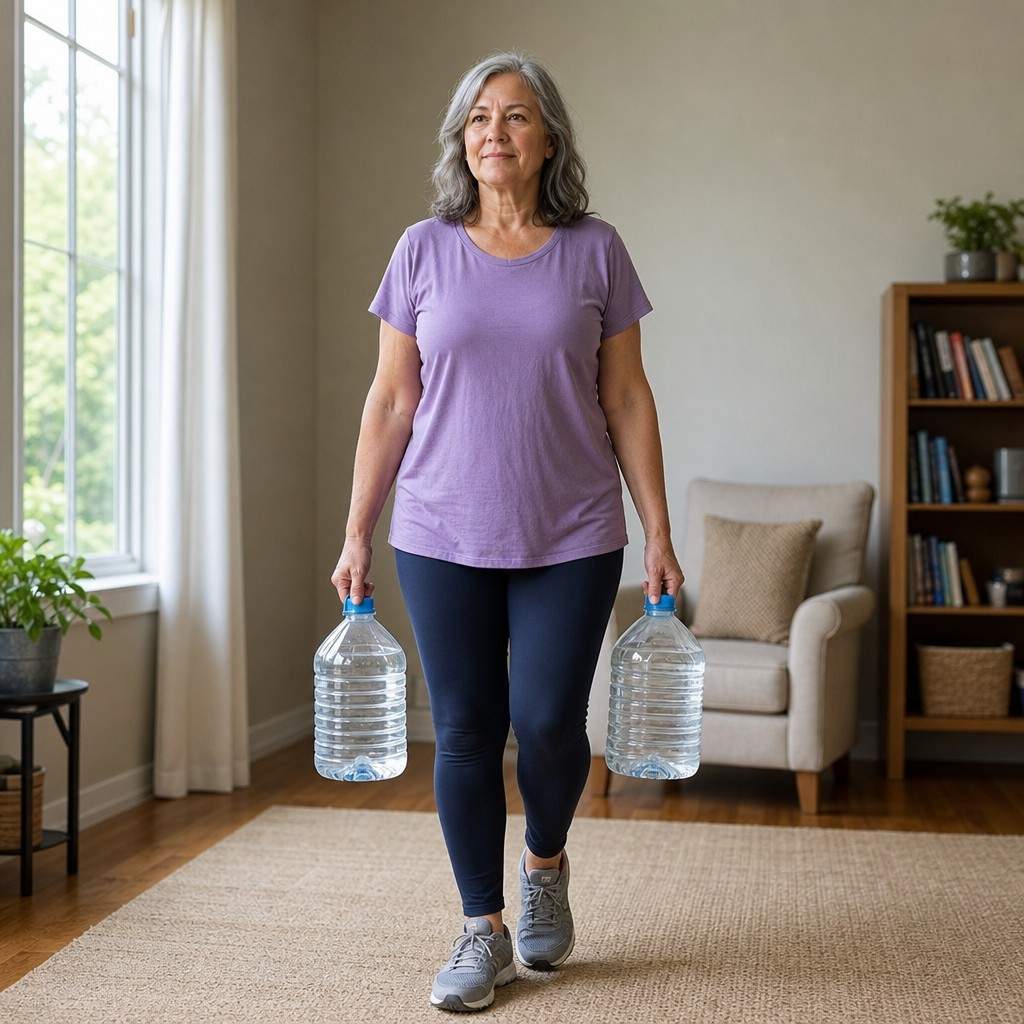
- Carry things. Hold a bag of groceries or a water jug in each hand and walk across the room and back. This is one of the most effective grip and whole-body moves there is.
- Hold and hang. Grip the edge of a sturdy counter, or hold a filled water bottle out in front of you, and count to ten. Repeat a few times.
- Squeeze. Roll up a hand towel and squeeze it firmly, or knead a ball of dough. Open jars by hand instead of reaching for a gadget.
Build slowly. Add a little weight or a few seconds each week rather than straining for a hard effort on day one.
Hand strength grows fastest when the rest of you trains too.
Working through the science of building muscle after 50 shows how light resistance work supports strength across your whole body. And a simple strength routine for beginners gives you a safe place to start.
How a stronger grip shows up in daily life
The point of training your grip is not a number on a test.
It is the railing that feels secure, the lid that gives way on the first try. It is the suitcase you lift into the overhead bin without asking for help.
Those small wins are also markers of independence, which is what most people are really protecting when they think about aging well.
If you have arthritis, a recent injury, or a condition affecting your hands or heart, check with your doctor before starting something new.
The takeaway
Grip strength is a window, not a verdict. A low reading is a prompt to train, and the evidence is consistent that training works.
Squeeze, carry, and hold a little more each week.
Pair that with regular movement and enough protein from everyday foods, and you are working on the same thing the studies measured. That is strength which keeps you steady, capable and independent for years longer.
Sources:
- Leong DP et al. (2015), The Lancet. Prognostic value of grip strength: findings from the PURE study.
- Cleveland Clinic. What Grip Strength Says About Your Health (health.clevelandclinic.org/grip-strength).
- Bohannon RW (2019), Sports Medicine. Grip Strength: An Indispensable Biomarker for Older Adults.