

You can start strength training at home with almost nothing. A mat and a set of resistance bands cover the first weeks. A light pair of dumbbells can come later, once you know you’ll use them.
The Centers for Disease Control and Prevention (CDC) advises adults 65 and older to do muscle-strengthening activities at least 2 days a week. Bands, dumbbells and your own body weight all count.
Buy a little at a time, and let what you actually use decide the next purchase.
Essential Home Gym Equipment

A mat, resistance bands and one light pair of dumbbells cover most beginner strength work. None of them needs much space, and you can start with the first two alone.
Resistance bands are light, cheap and kind to your floor. They work well for rows, presses and leg exercises.
If you’d like a full range of tensions in one purchase, you can look at resistance bands sold as a set on Amazon.
Some links on this page go to Amazon, and the site earns a small commission when a reader buys through one.
A mat cushions your knees and back during floor exercises and gives your hands a grip that won’t slide.
A kettlebell can wait. A foam roller supports recovery and gentle mobility work if you want one more piece later.
If you’d like to start with bands alone, you can compare resistance bands on Amazon for quick home workouts.
Free Alternatives You Already Have at Home
Before you buy anything, look around your house.
- A sturdy chair: for sit-to-stands, seated exercises and something to hold for balance.
- The bottom stair: for step-ups with one hand on the rail.
- A backpack with a few books: for a little added weight in sit-to-stands.
- Water jugs or bottles: in place of dumbbells for presses and curls.
- A towel: for stretching and gentle pulling exercises.
Wall push-ups, sit-to-stands and step-ups work your muscles with no equipment at all. Many beginners train for weeks with these alone.
A chair and a kitchen counter are also all you need for balance exercises, which train the steadiness that helps prevent falls.
Choosing Quality Dumbbells Affordably
Light dumbbells don’t need to be expensive or branded. Plain cast-iron or rubber-coated pairs work as well as premium ones.
For many beginners, 2 to 5 pounds is a sensible place to start. Buy one light pair first, and add a heavier pair once a full set with the light one feels easy.
Adjustable dumbbells save space, since one pair changes weight, but they cost more up front. Fixed pairs are simpler to pick up and put away.
Used dumbbells are worth a look too. A secondhand cast-iron weight is exactly as heavy as a new one.
When you’re ready, you can compare dumbbell sets on Amazon and filter by weight.
Resistance Bands, the Budget-Friendly Option
Bands are the cheapest way to add resistance, and they work. A 2019 review of eight trials comparing elastic bands with weights found similar strength gains with both, for arms and for legs.
You can do resistance band exercises for nearly every muscle group: rows, chest presses, leg work and shoulder movements.
To make an exercise harder, switch to a heavier band or hold the band a little shorter.
Bands fold into a drawer and fit in a suitcase when you travel.
When selecting the right resistance bands, check the tension printed on the package. Band colors show the level within one brand, but they aren’t the same from brand to brand.
Your Phased Equipment Buying Plan
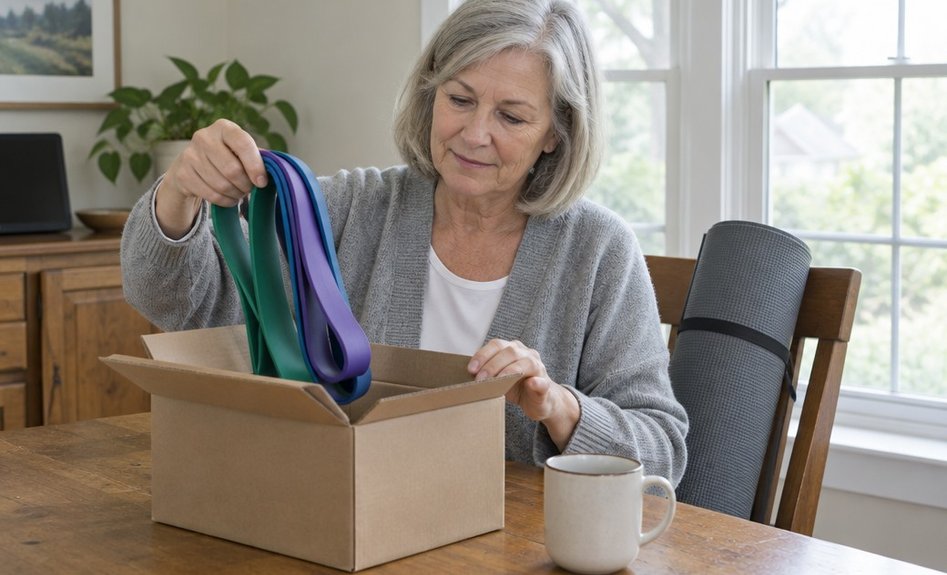
Buying in three steps keeps you from paying for gear you won’t use.
- First: a mat and resistance bands. Resistance band sets give you several tension levels in one purchase.
- After a few weeks: one light pair of dumbbells.
- Later: a heavier pair, or a light kettlebell, once the first pair feels easy.
For band choices, see resistance band sets.
Waiting between steps shows you which tools you actually reach for. Some people never need step three, and that’s fine.
Which Budget Gear Actually Breaks
Not all cheap gear fails the same way, so spend where it matters.
Resistance bands last well with care. Keep them out of direct sunlight, and check them for nicks or thin spots before each use, because a worn band can snap.
If your joints ache, start with the lightest band and use these gentle exercise modifications to adapt common moves. If you have arthritis or a joint replacement, ask your doctor or physical therapist which exercises suit you.
Adjustable dumbbells with plastic parts or screw-on collars can loosen or crack, so check them before each session. Cast-iron or rubber-coated fixed pairs hold up longest.
Fitting Your Gym Into Any Home Space
You don’t need a spare room. A clear patch of floor in the living room or bedroom works. You need room to lie down and stretch your arms out without touching furniture.
Move any rug that slides, and keep a sturdy chair within reach for balance.
Bands and dumbbells store under a bed or on a closet shelf, so the room goes back to normal after each session.
If you have a heart condition, joint pain or a recent injury, ask your doctor which exercises suit you before you start lifting.
Two short sessions a week is enough to begin, in line with the CDC’s strength guideline for older adults.
Learning safe strength training basics first helps you add weight only when your form feels steady.