
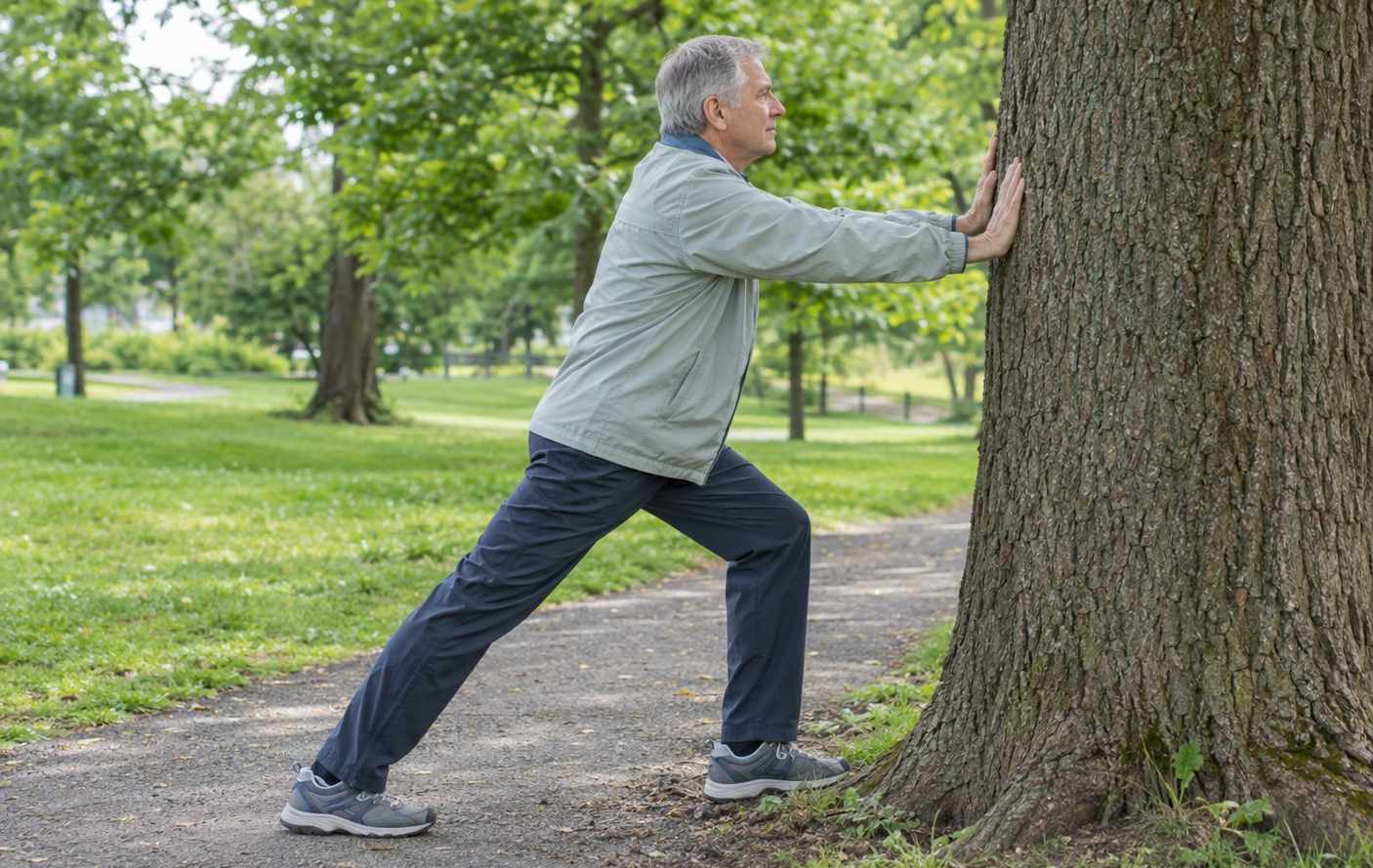
Stretching is good for staying limber, but it is not a shield against injury. Stretching alone does not lower your injury risk, and an easy warm-up plus strength and balance work does more.
You can keep stretching because it feels good and helps you move. Just don’t count on it to keep you injury-free.
What a Review of Over 26,000 People Found About Stretching and Injury

Many of us were taught to stretch before a walk or a workout so we wouldn’t get hurt. The research doesn’t back that up.
A review of 25 trials with 26,610 participants found no benefit from stretching for preventing sports injuries. Strength training and balance training did lower injuries in the same review.
An earlier systematic review of static stretching reached the same conclusion about overall injury rates. It also found only preliminary signs that stretching might help with muscle and tendon injuries.
Treat stretching as a flexibility habit, not an injury shield. Harvard Health says the same: stretching helps your flexibility, but injuries often come from overuse. If you stretch, proper stretching techniques keep it comfortable.
Why an Easy Warm-Up Beats Stretching Alone
Before a walk or a workout, a few minutes of gentle movement is a better use of your time than a long hold.
Try this simple order:
- Easy walk. Walk at an easy pace for a few minutes.
- Mimic movements. Add slow movements that copy what you are about to do, such as marching in place or gentle arm circles.
- Build gently. Start your activity at a gentle pace, then pick up speed as you feel ready.
Warm up with movement before activity and save long, held stretches for afterward. That order feels natural, and it matches Harvard Health’s advice to do static stretches after exercise, when your muscles are warm.
If you’ve had an injury or a joint replacement, ask your doctor or a physical therapist which warm-up moves suit you.
Regular walking for fitness can also be the easiest warm-up of all.
Why Strength and Balance Training Beat Stretching for Injury Risk
In that large review, strength training had the biggest effect on injuries, and balance training (called proprioception training) came next. Stretching showed none.
These trials looked at sports injuries, so they don’t speak for every walker. But the pattern is a good reason to add strength work to your week.
Stronger muscles around your hips, knees and ankles give your joints better support. Simple moves like sit-to-stands from a chair, wall push-ups and calf raises while holding a counter all count.
Balance practice helps too, and easy at-home balance exercises fit into a few minutes on at least three days a week.
Which Activities Need a Dynamic Warm-Up?

Most activities start well with a few minutes of easy movement. The warm-up just looks a little different for each one.
- Walking: start slowly for the first few minutes, then settle into your pace.
- Cycling: pedal gently with little resistance before you pick up the pace.
- Swimming or water exercise: a few easy lengths, or slow arm and leg movements in the water.
- Strength work at home: a minute or two of marching in place and shoulder rolls.
- Pickleball or tennis: walk, then add gentle side steps before you play.
You don’t need a special routine, only a slow start that matches what comes next.
Staying with a plan is easier when it feels doable, and building an exercise habit helps this routine stick.
Build a 5-Part Injury Prevention Plan
Stretching is optional in a good injury-prevention plan. These five parts do the real work:
- An easy warm-up before each session.
- Strength work a couple of days a week.
- Balance practice a few minutes at a time.
- Gradual progress, changing one thing at a time, such as time or effort.
- Rest days so your body can recover.
If you like to stretch, it fits nicely after activity.
Studies of stretching and soreness found that, on average, it reduced muscle soreness by less than 2 millimeters on a 100-millimeter scale. That is too small to notice, so stretch for comfort, not to prevent aches.
A plan built on strength, balance and gradual progress protects you better than stretching alone. Beginners can start with these essential injury prevention tips.