
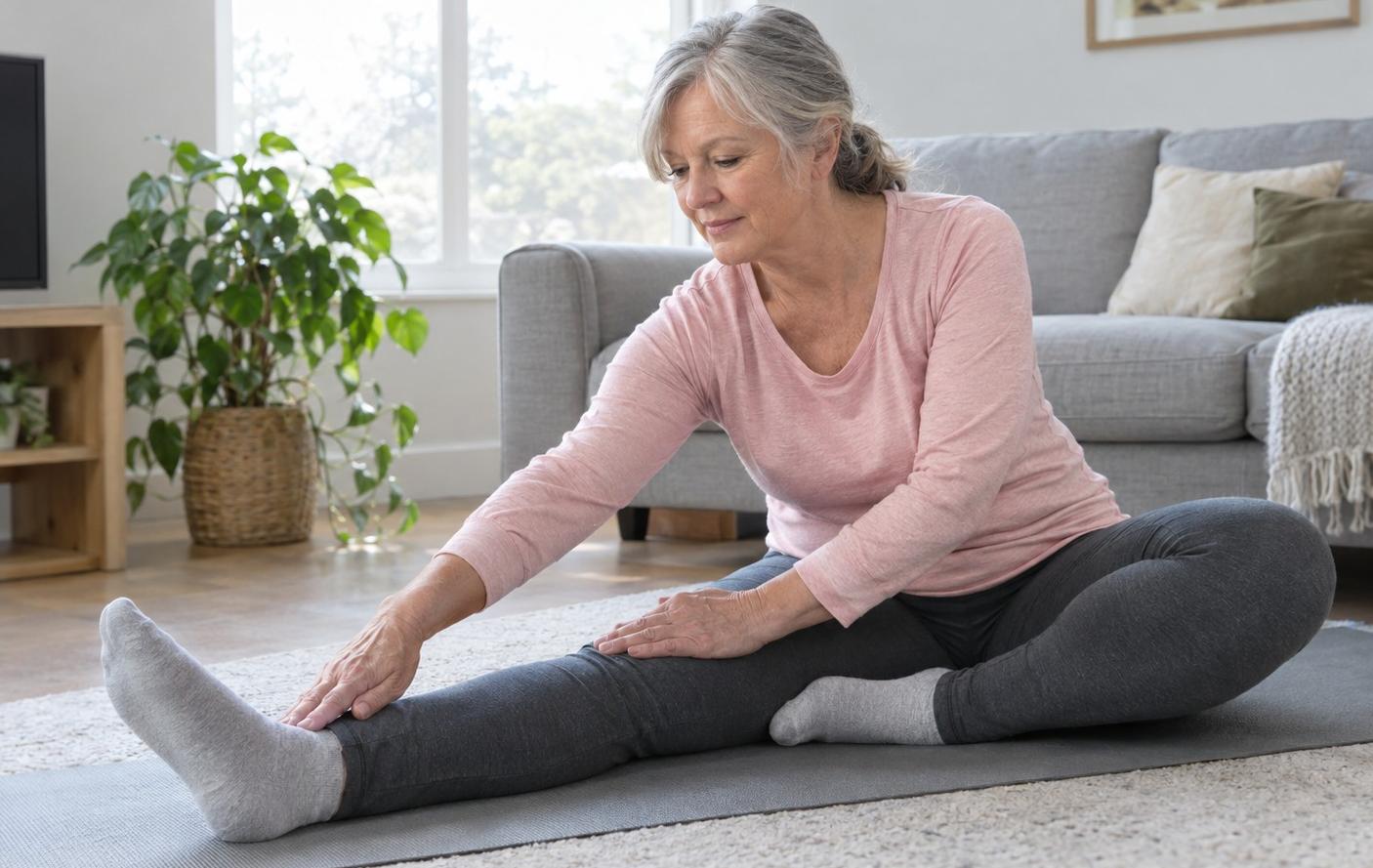
Stretching should feel like a slow, easy pull, never a strain. Walk or move gently for a few minutes, hold each stretch calmly, and keep breathing.
Stretching is a flexibility habit. It helps you reach, bend and turn more comfortably, and it works best when you go gently.
Static or Dynamic Stretching, and When to Use Each
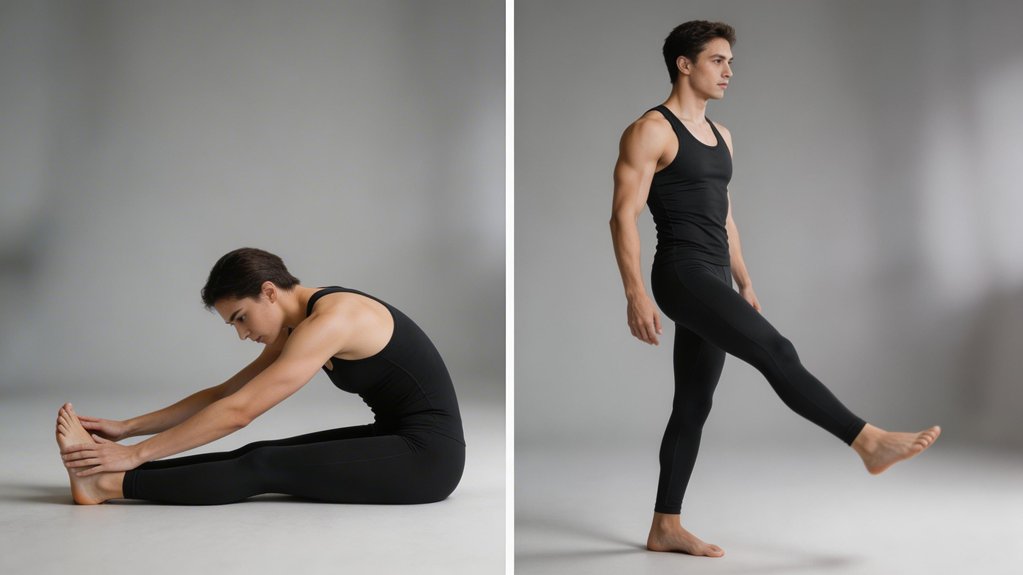
Dynamic stretching means moving gently through a range of motion, such as marching in place or slow arm circles. It belongs at the start of your activity.
Static stretching means holding a position. Save the held stretches for after you move, when your muscles are warm. Harvard Health notes that static stretches are best done after exercise, when muscles stretch more easily.
If you want to try more advanced methods, you can read about different types of stretching. Start with the basics first.
Why a Short Warm-Up Comes Before Stretching
A stretch feels easier and more comfortable once your body is warm.
A few minutes of walking, marching in place or easy arm swings is enough. You don’t need to work up a sweat.
An easy warm-up makes stretching more comfortable, and it matters more than the stretch itself.
Research on stretching and injury risk found that stretching alone does not lower injury rates. Your warm-up and strength work matter more.
If you stretch first thing in the morning, go slowly and stay well within your comfort zone.
How to Hold a Stretch Without Holding Your Breath
Many of us hold our breath when we concentrate on something. It happens in stretches too.
Holding your breath tends to make you tense up, and tense muscles resist the stretch.
Breathe in slowly through your nose and out through your mouth, in a calm rhythm. Steady breathing helps you stay relaxed and hold the stretch comfortably.
A stretching strap can help if you can’t reach your toes. You can compare stretching straps on Amazon and choose one with loops or handles.
Some links on this page go to Amazon, and the site earns a small commission when a reader buys through one.
Five Stretching Mistakes to Avoid
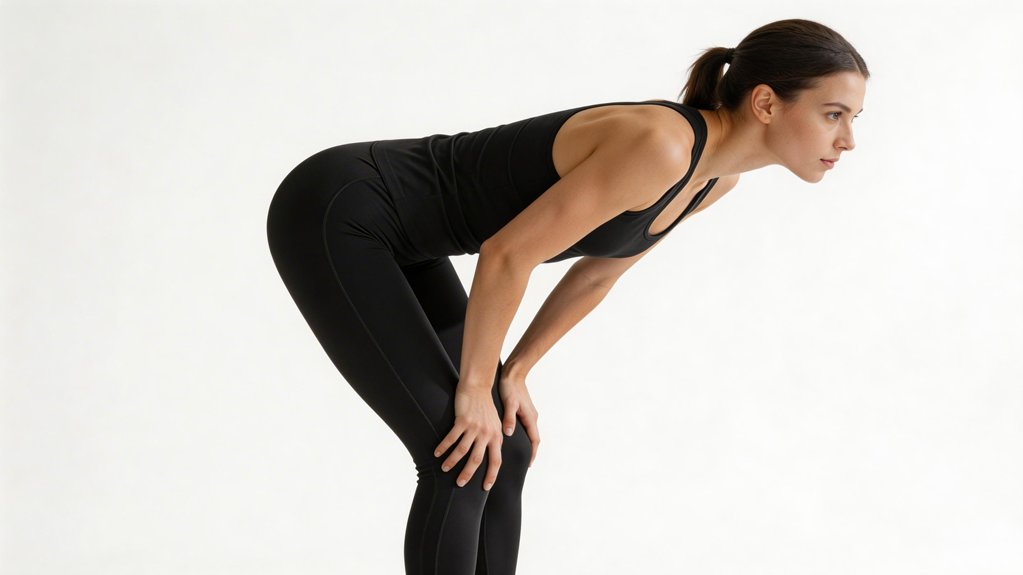
Most stretching problems come from doing too much, too fast. Here are five to avoid:
- Bouncing. Ease into the stretch and hold it still.
- Pushing through pain. Aim for mild tension and back off if it hurts.
- Holding your breath. Keep breathing slowly.
- Stretching an injured area. Rest it until a doctor or therapist says it’s okay.
- Forcing your range. Everyone’s flexibility differs, so go only as far as is comfortable for you.
Stop at mild tension, and back out of any stretch that causes sharp or lingering pain.
Harvard Health gives the same advice: stretch to mild tension with no bouncing, and don’t push through discomfort.
If you have a joint replacement, osteoporosis or a recent injury, ask your doctor or a physical therapist which stretches are safe for you. For tender joints, see our safe exercise modifications.
Beginner Stretches for Every Major Muscle Group
Once you know what to avoid, build a simple routine that covers your neck, shoulders, chest, back, hips, legs and ankles.
Pick one gentle stretch for each area. Hold each one for about 30 seconds, and work up to 60 if it feels comfortable. Repeat it two to four times if you like.
The American College of Sports Medicine recommends holding a static stretch for 10 to 30 seconds, and Harvard Health says older adults might work up to 60.
Stretching a little most days works better than one long session. A quick morning stretch routine is an easy way to make it a habit.
Flexibility builds slowly, so go at your own pace and let it come.