
The ability to lower yourself to the floor and rise back up on your own is one of the clearest markers of long-term independence. Researchers Brito and colleagues, in the European Journal of Preventive Cardiology, linked needing more support to rise from the floor with significantly higher all-cause mortality. They scored the movement on a simple scale and tracked outcomes over a decade.
How you get up off the floor is a real signal about how your body is aging. And it is a signal you can improve.
This is a practiced skill, not an innate one. Most people have simply stopped doing it regularly.
Why This Matters Beyond the Research

Falls are common in the 50-plus age group. But how a fall ends depends enormously on whether you can get back up on your own.
If you can rise with some confidence, a fall is a scare. If you cannot, it becomes a crisis. Time on the floor, an emergency call, a possible injury from struggling to rise rather than from the fall itself.
The STEADI program from the CDC, America’s public health agency, focused on fall prevention in older adults, emphasizes that leg strength and having a plan for getting up are protective factors. The getting-up part is often skipped in fitness advice. Check with your doctor if you have had recent surgery, severe arthritis, or a fall with possible injury.
The goal is not to eliminate the possibility of falling. It is to make sure a fall stays a minor event.
The Step-by-Step Technique

This sequence works for most people with reasonable mobility. Practice it on carpet or a yoga mat, slowly, before you need it in an unplanned situation.
Step 1: Stay calm, take a breath. The instinct to spring up immediately often leads to a second fall or a strain. Pause for a moment.
Step 2: Roll to your side. Tuck your chin slightly and roll toward your stronger side. Take your time.
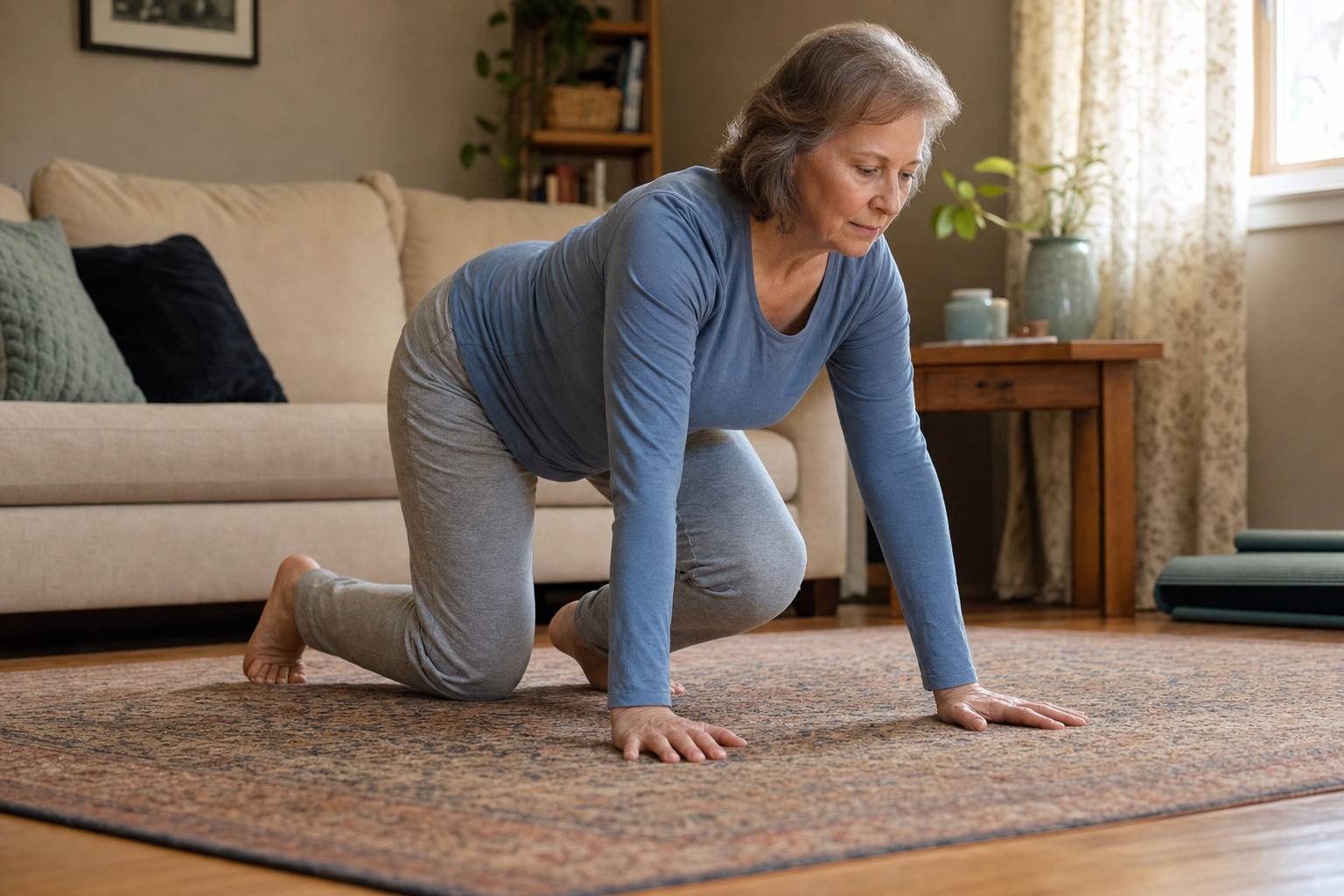
Step 3: Push up to hands and knees. Use both palms flat on the floor. This is a rest point; you are not rushing.
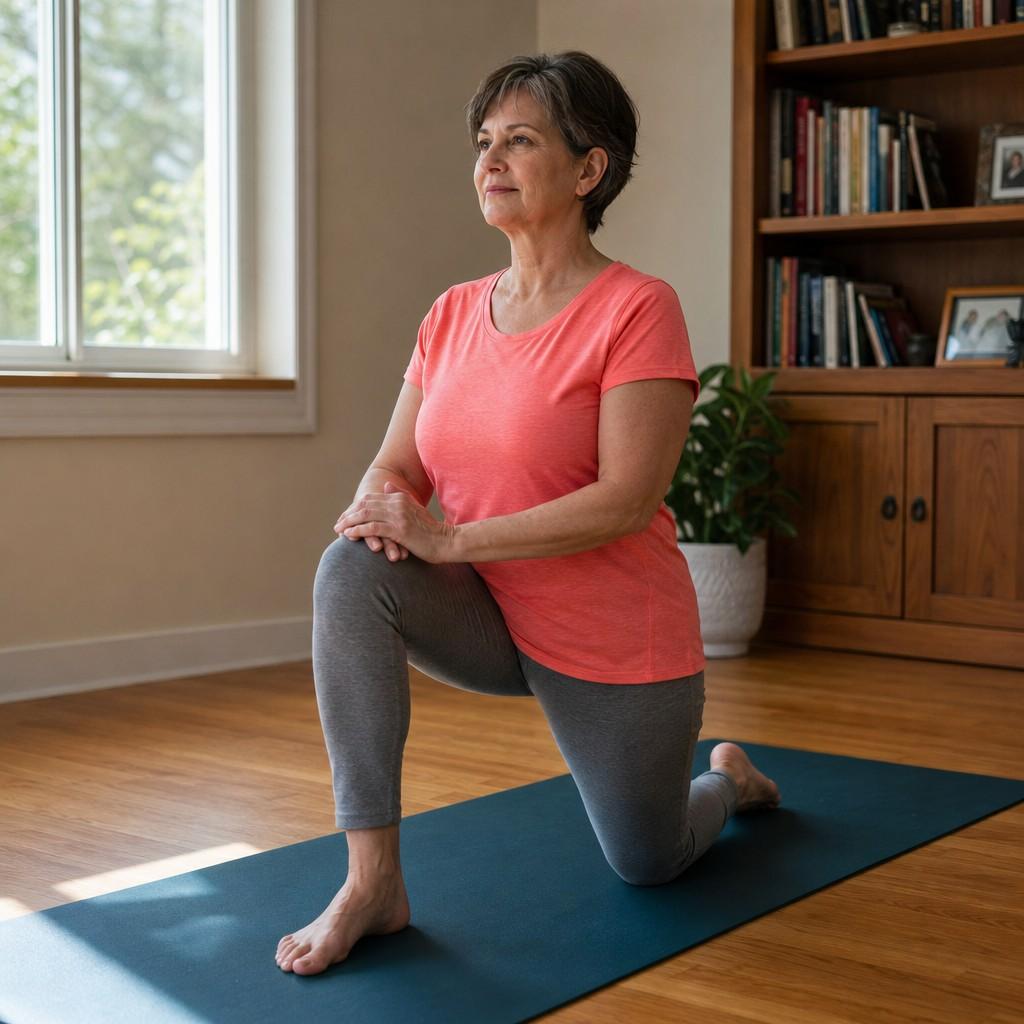
Step 4: Bring one foot forward into a half-kneel. Place your stronger foot flat on the floor beside your hands. You are now in a low lunge position with one knee still down.
Step 5: Push up using a sturdy chair or wall. Place one hand on a chair seat or wall for support as you straighten up. Rise slowly, then steady yourself before walking.
That is the whole sequence. It is slower and more controlled than most people expect. That control is the point.
The Strength and Mobility That Make It Possible

The movement draws on three physical qualities: lower-body strength, hip mobility, and core stability. You can train all three at home without any equipment.
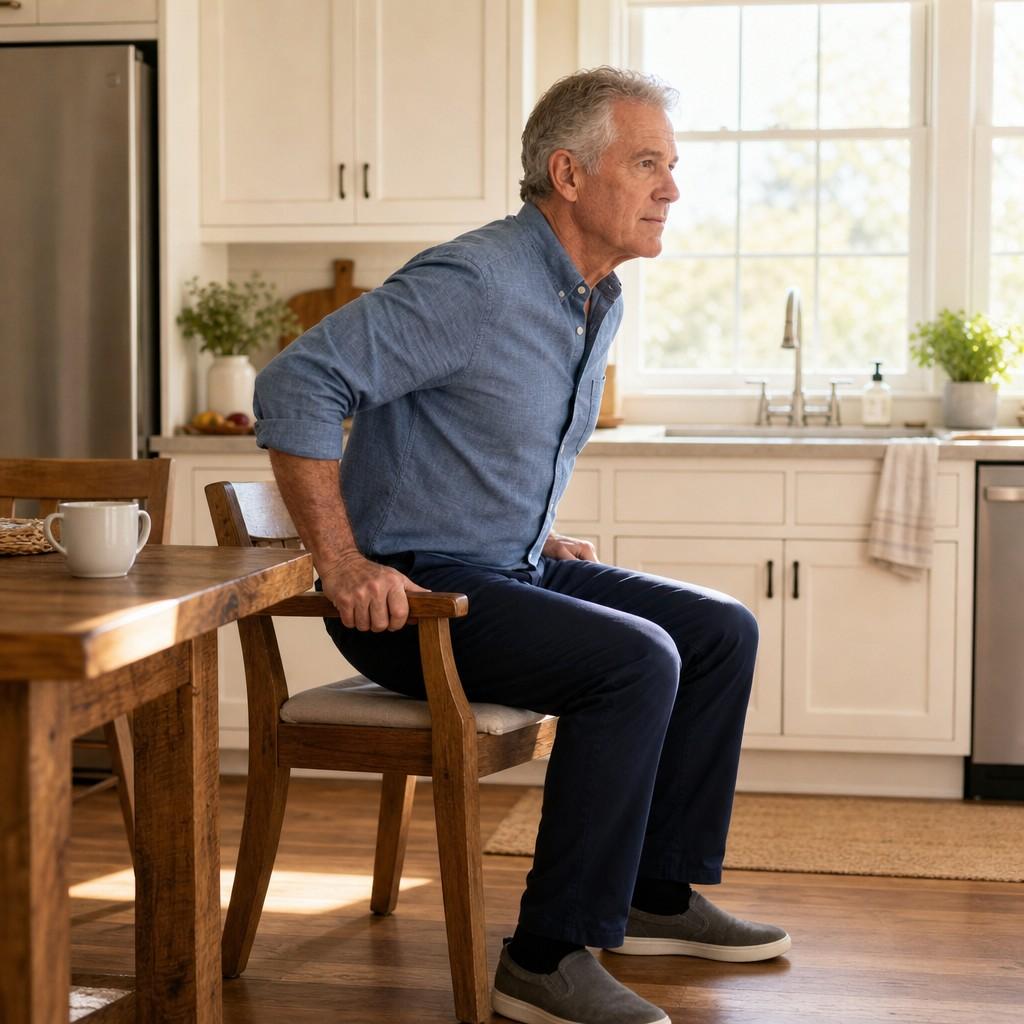
Lower-body strength. The chair sit-to-stand is the most direct drill. Rikli and Jones developed the Senior Fitness Test to measure lower-body strength in older adults, and this movement remains the standard measure. Sit near the front edge of a sturdy chair, cross your arms over your chest, and stand fully before sitting back down. Aim for ten repetitions, using your hands if you need them at first. The chair exercises for building strength go further from that same starting point.
Hip mobility. Stiff hips make the half-kneeling step harder to achieve. A simple seated hip opener: sit upright in a chair and place one ankle across the opposite knee. Let the bent knee relax toward the floor gently. Hold for 30 seconds per side. Simple balance work also supports the hip stability you need, and these balance exercises you can do at home cover the progression well.
Core stability. You do not need crunches. The dead bug is a gentle floor exercise: lie on your back, arms pointing toward the ceiling, knees bent at 90 degrees. Slowly lower one arm overhead while extending the opposite leg toward the floor, keeping your lower back pressed down. Return and switch sides. Building core strength without crunches walks through several options at the same level.
Practice It on Purpose
The research and the technique are only useful if you actually practice the movement. Most people wait until they need it.
Set aside five minutes one or two mornings a week. Put a yoga mat or folded blanket on the living room floor. Go through the get-up sequence two or three times in each direction. Some people find it turns into something unexpectedly low-key. Grandchildren who are over often join in, making a serious skill practice feel almost playful. That outcome is fine. The repetition is what matters.
Getting down and up from the floor is a movement pattern your body needs to practice to retain.
Have someone in the house with you the first few times if possible. Not because it is dangerous in practice, but because having a spotter removes anxiety, and the movement goes better when you are relaxed.
When to Get Help Instead
Some situations call for staying put and calling for assistance.
If you feel dizzy after a fall, do not try to stand. Dizziness can signal a concussion or a blood pressure drop, and rising too quickly can make it worse. Stay still, call out, and wait.
If you have pain that feels sharp or localized, particularly in a hip, wrist, or ankle, that area may be injured. Forcing a get-up with a fracture causes additional harm.
If you live alone and cannot rise after a few calm attempts, move to the coolest spot on the floor. Use a blanket for warmth and call for help. Think through this plan in advance.
A Skill Worth Practicing Now
Getting up off the floor is an everyday movement for young adults. For many people in their 50s and 60s it has quietly dropped out of their routine, which is exactly when the ability begins to fade.
The encouraging finding from the research is straightforward: this responds to practice. The muscles and mobility involved are trainable. Understanding what functional fitness means for beginners puts this skill in the broader context of staying active and capable.
Start on a soft surface. Go slowly. Practice it before you need it.