
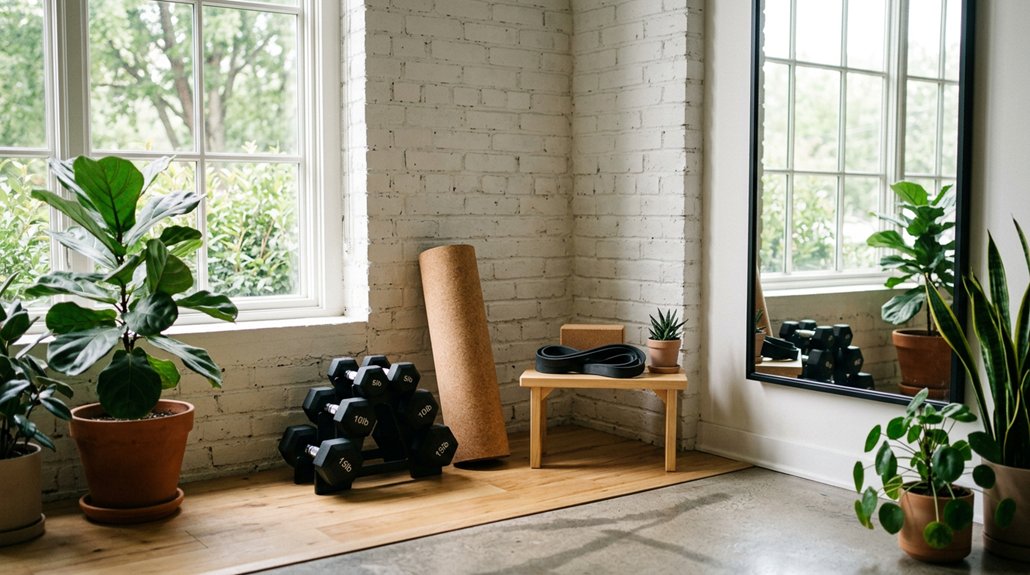
You don’t need a spare room or a lot of equipment to exercise at home. A clear patch of floor about the size of a yoga mat is enough to begin.
What matters is a spot you will actually use, with room to move and a safe floor. Pick a corner you can reach in a few steps, and clear it before each session.
Finding Room for a Home Gym
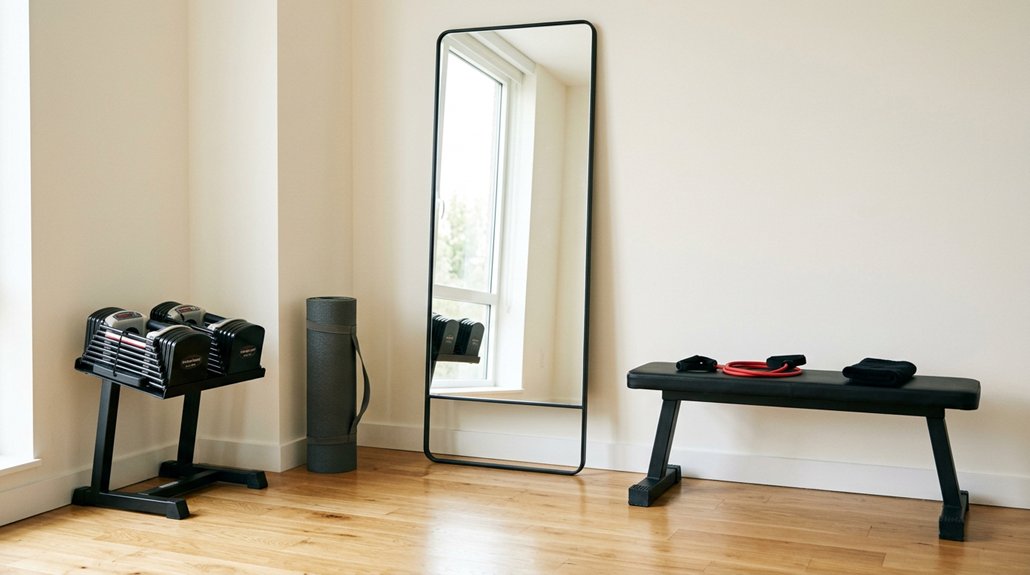
Before you buy a single dumbbell, you’ll need to claim some space in your home. Easy access matters more than square footage.
Good spots are a living room corner, a spare bedroom, a sunroom or a finished basement. Choose a place with good light and a floor that isn’t slippery.
Ask whether the area can do double duty. A living room corner that is clear for 20 minutes and back to normal afterward is a good fit.
Move loose rugs, cords and low tables out of the way. A clear floor is the simplest way to lower the chance of a trip.
If you have balance problems or have fallen recently, ask your doctor or a physical therapist what is safe to do at home.
Your workout spot should feel inviting, not squeezed into a corner as an afterthought. Essential balance exercise gear can make the space safer as well.
Choose Your First Few Pieces of Equipment
Start with two or three simple pieces and add more only when you want them. You can do a lot with very little.
Consider these first:
Some links on this page go to Amazon, and the site earns a small commission when a reader buys through one.
- A pair of light dumbbells covers many exercises. You can compare dumbbells and dumbbell sets on Amazon and pick a weight you can lift easily.
- Resistance bands are light, portable and work nearly every muscle group.
- A sturdy chair without wheels works for seated and support exercises, so you don’t need a bench.
For cardio, add a walking pad or a stationary bike. If space is limited, look at seated exercise pedal machines. Choose a walking pad with a handrail and a safety key.
Walking around your block or in place costs nothing and needs no equipment at all.
Protect Floors and Joints With an Exercise Mat
A mat gives you a defined spot and cushions your knees and hips on the floor. It also keeps you from slipping on smooth floors.
Unroll it where you exercise and roll it up afterward. That keeps the space clear for the rest of the day.
On a hard floor, a thicker mat is more comfortable for floor exercises. You can compare thick exercise mats on Amazon and pick one you can roll and carry easily.
Use Walls and Vertical Storage to Clear Space
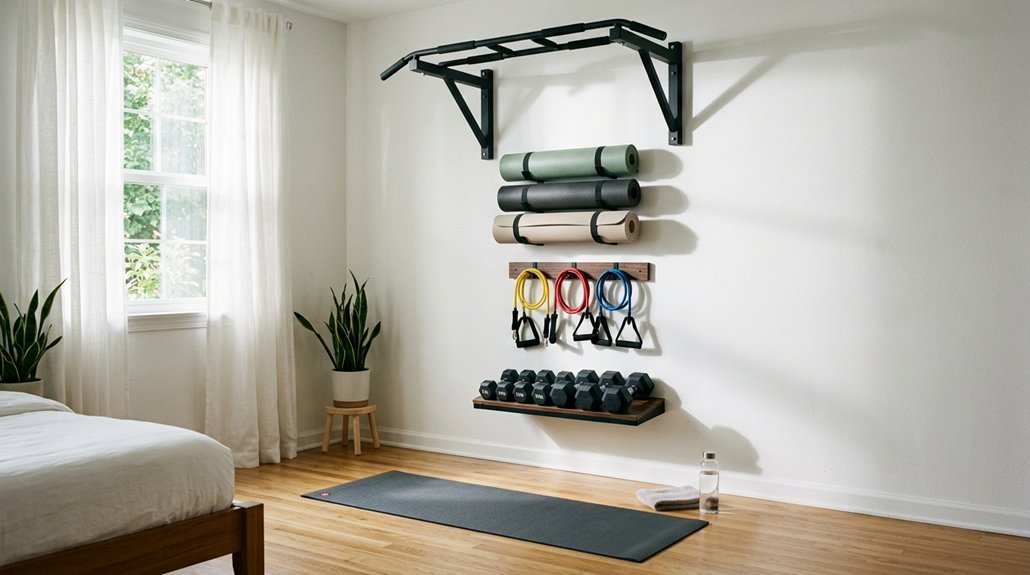
Storing equipment on the wall or in a basket keeps your floor clear. That makes the space safer and easier to use.
Think vertically with these simple options:
- A few hooks hold resistance bands and towels at eye level.
- A basket holds small items such as bands, a strap and a water bottle.
- A low shelf holds light dumbbells, so you don’t bend far to pick them up.
If your space is a corner of a home office, a standing desk converter can keep the desk usable for movement breaks.
Keep paths open around your exercise area, and don’t store anything where you might trip.
Install Mirrors and Lighting to Maximize Your Room
Good light and a mirror make the space safer and help you check your form. Bright rooms are easier to move around in.
Combine daylight from a window with a lamp or an overhead light. Bright light helps you see the floor and any clutter.
A mirror on the wall lets you check your posture during exercises. It also makes a small room feel larger.
For floor work, a high-quality exercise mat adds cushioning and keeps you steady.