
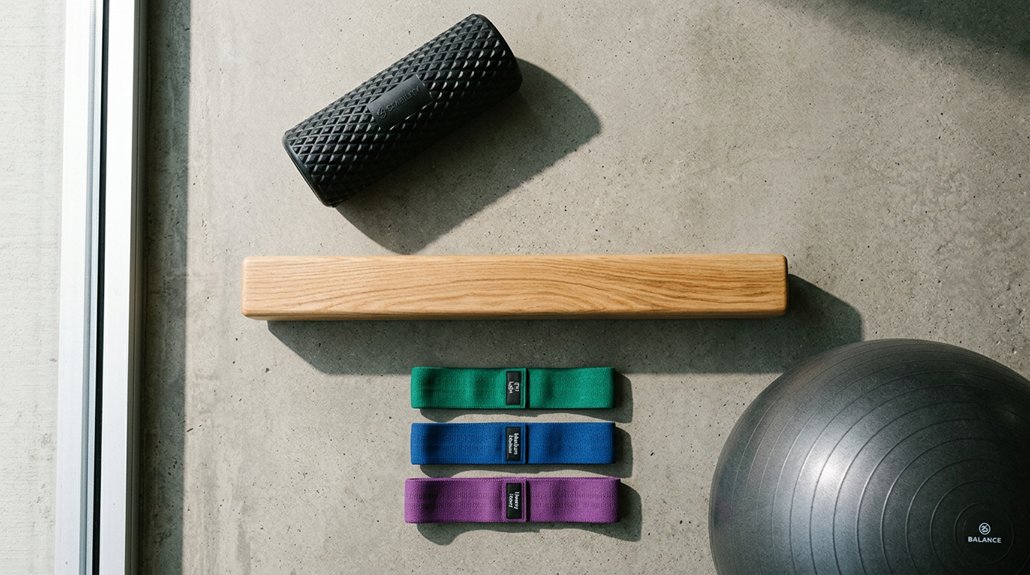
You don’t need to buy anything to start balance training. A sturdy kitchen chair and a counter cover your first weeks.
If you later want something extra, a foam balance pad is the simplest add-on.
Your First Balance Tools Are Already in the Room
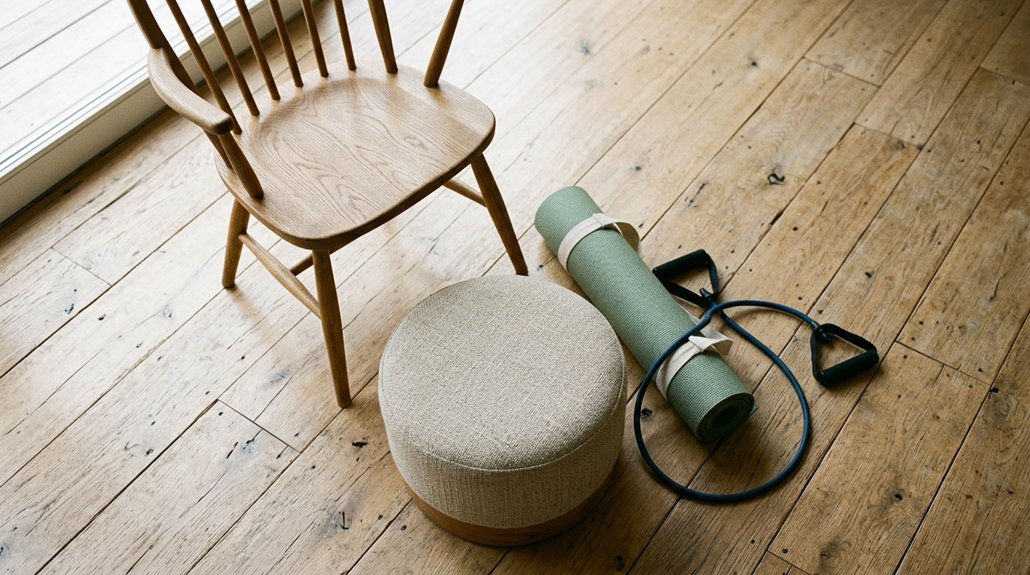
Your own furniture gives you everything you need for the first exercises. Stand behind a sturdy chair and practice shifting your weight from side to side.
Progress to holding the chair with one hand, then with your fingertips only. A kitchen counter works the same way for standing exercises.
As you improve, reduce hand contact a little at a time. Practicing simple balance exercises this way is how most people begin to work on fall prevention.
Setup Essentials for Balance Training
Once you feel confident with the furniture-based exercises, a few inexpensive items can add variety.
Add one piece at a time, and only after the basics feel easy. A foam balance pad gives you a softer surface to stand on beside your counter.
A stability ball rolls, so it asks more of your balance. A stability ball can wait until the pad feels easy.
Wobbly surfaces raise your risk of a fall. If you have fallen before, feel unsteady or have dizzy spells, ask your doctor or a physical therapist before you use any of them.
Equipment is optional.
The research on fall prevention is about the exercises, not the gear. A 2019 Cochrane review found that exercise reduces the rate of falls by 23%, and the programs that reduce falls primarily involve balance and functional exercises.
Match Your Goals to the Right Equipment
Before you buy anything, think about what you want to work on.
Match each tool to one clear goal. Here is a simple guide:
- Steadier standing and stronger ankles: a foam balance pad, used beside a counter.
- Core strength: a mat and your own body weight come first.
- Variety later on: a wobble board, which is the least forgiving tool here.
Some people use a stability ball for seated core work, with a wall or counter within reach. You can compare stability balls on Amazon.
Some links on this page go to Amazon, and the site earns a small commission when a reader buys through one.
The National Institute on Aging (NIA) lists a wobble board among its balance examples.
Vibration plates and mini-trampolines get a lot of attention. Both move under your feet, so treat them as later options and ask your doctor first.
You can read more about vibration plate benefits, whether vibration plates work well for older adults, and mini-trampoline training.
Budget-Friendly Balance Training at Home
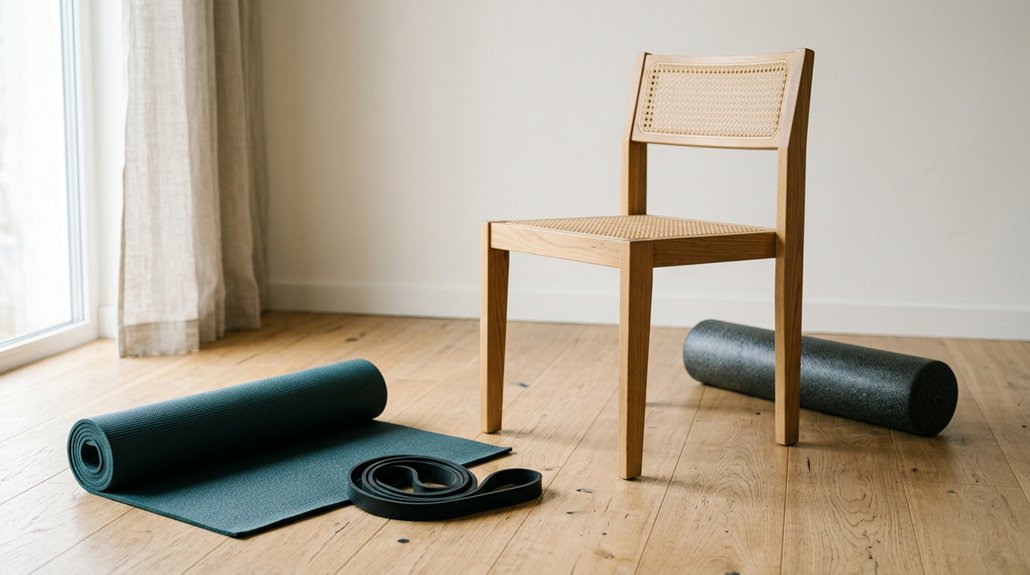
You can get most of the benefit from what you already own. A chair, a counter and a few minutes are enough for effective balance workouts.
When the floor feels easy, a balance pad is a small step up. You can compare balance pads on Amazon and choose a size that fits the space you have.
Start simple, then add equipment only if you find you want more challenge.
How to Progress Without Getting Hurt
Master the basic version of an exercise before you make it harder. Move on when the current version feels steady, and rest between sessions.
Listen to your body’s signals. If you feel sharp pain or instability, scale back right away.
A few minutes of marching in place or gentle walking makes a good warm-up. Understanding key injury prevention tips helps you stay consistent and avoid the mistakes that sideline many beginners.