
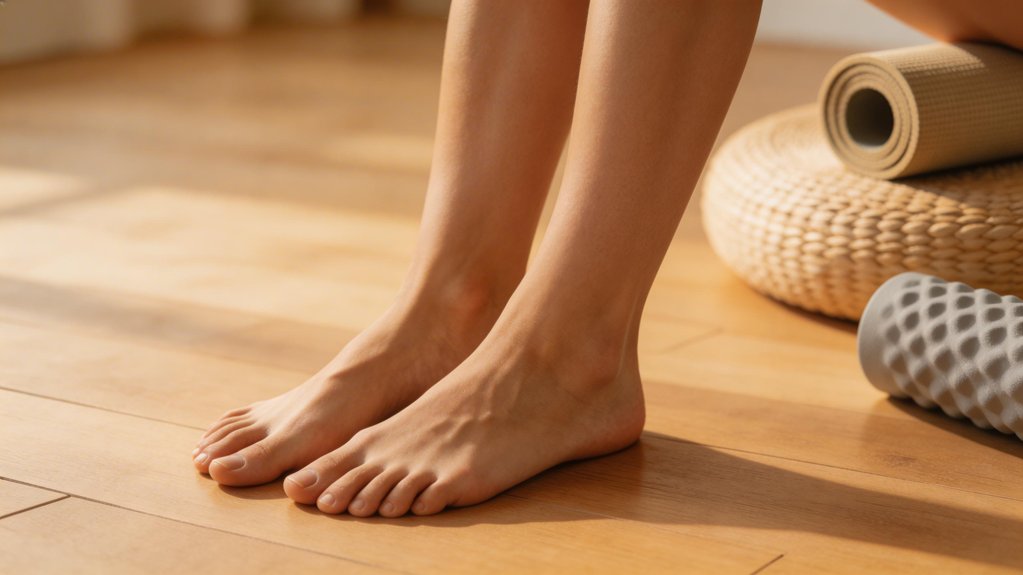
Low-impact exercise keeps at least one foot on the ground while you build strength and cardiovascular fitness without joint stress.
You’re doing activities like walking, swimming, or cycling, smooth movements that raise your heart rate gradually.
It matters because you can work out consistently, recover from injuries, and manage arthritis without pain. Start with a five-minute warm-up, then walk for 20-30 minutes at a comfortable pace.
You’ll learn how to layer in more intensity as your confidence grows.
What Low-Impact Exercise Actually Means

Low-impact exercise is simpler than it sounds.
You’re engaging in movement where at least one foot stays planted on the ground. Your joints experience minimal pressure during activity.
Think of smooth, fluid motions without jarring or jolting sensations. Walking, cycling, and swimming exemplify low-impact benefits. These activities raise your heart rate gradually while protecting joint health.
Smooth, fluid motions like walking, cycling, and swimming raise your heart rate while protecting your joints from jarring stress.
You’ll notice movements feel controlled and sustainable. Low-impact exercise doesn’t mean low-intensity or low-effectiveness. You’re simply choosing gentler approaches to fitness.
Whether you’re recovering from injury or managing arthritis, low-impact workouts help you build strength without overwhelming your body.
Incorporating balance exercises into your routine further enhances stability and reduces fall risk during daily activities.
Is Low-Impact Right for You? (Who Benefits Most)
Who actually stands to gain the most from low-impact exercise?
If you’re managing arthritis, recovering from injury, or protecting your joint health, low-impact workouts offer serious benefits.
You’ll strengthen muscles while reducing stress on vulnerable joints.
- Athletes use these exercises for injury prevention during off-season training.
- Beginners appreciate how accessible they are, no special skills required.
People with joint concerns can work out consistently without pain. You can build cardiovascular fitness, improve flexibility, and develop strength safely.
Learning proper exercise modifications ensures you protect your joints while maximizing workout effectiveness.
Whether you’re starting fresh or maintaining fitness after injury, low-impact exercise serves your body’s needs effectively.
Best Low-Impact Activities for Every Fitness Level
Since you’ve decided that low-impact exercise fits your needs, the next step is finding activities that match where you’re right now.
- Beginners benefit from walking routines that strengthen legs and build cardiovascular endurance gradually. Walking provides numerous wellness benefits that make it an excellent starting point for fitness beginners.
- Intermediate exercisers should explore yoga benefits like improved flexibility and core strength through controlled poses (read more on yoga mats).
- Swimming techniques offer full-body conditioning without joint stress, making it ideal for progression.
- Cycling tips include starting with stationary bikes to build leg power safely.
Advanced participants can combine these activities, increasing duration or intensity with resistance bands.
Choose what you’ll actually do consistently.
Why Low-Impact Exercise Builds Strength and Cardio Gains
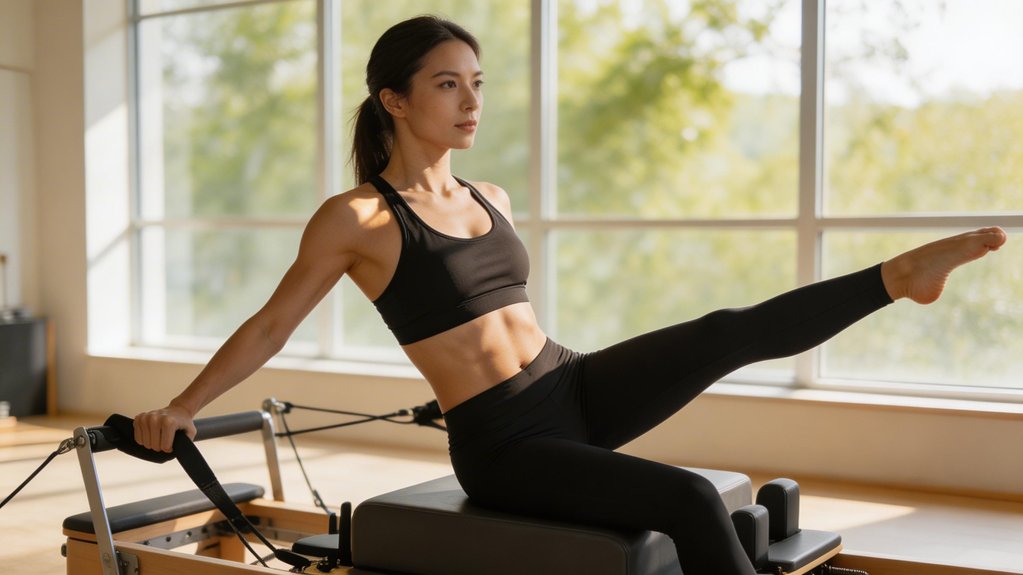
Misconceptions about gentler movement often overshadow the real power that low-impact training delivers. You’re building serious strength and cardio efficiency through controlled, sustained effort.
Here’s what happens:
- Your muscles develop endurance through resistance work without joint stress.
- Your heart strengthens during extended activity periods like cycling or swimming.
- Your body adapts to consistent challenge over time.
When you work out 150 to 299 minutes weekly, you improve cardiovascular health regardless of impact level. Low-impact exercises get your heart rate climbing steadily while protecting your joints.
You’re strengthening your core, glutes, and upper body through resistance bands and bodyweight movements.
These movements translate directly to better performance in everyday activities, which is the principle behind functional fitness.
Core, glutes, and upper body strength develop powerfully through resistance bands and bodyweight training.
The results are real, lasting, and sustainable for long-term fitness goals.
Your First Low-Impact Workout
When you’re ready to begin, start simple; walking is your easiest entry point.
Begin with warm-up routines of five minutes at a gentle pace. Focus on breathing techniques: inhale through your nose, exhale through your mouth.
Walk for twenty to thirty minutes at a comfortable speed where you can still talk. Your body adapts gradually, reducing injury risk.
Add bodyweight exercises like squats or marching once you’ve built confidence.
Listen to your body’s signals. Consistency matters more than intensity.
Research shows that optimal walking amounts provide significant cardiovascular and metabolic benefits for long-term wellness.
You’re establishing sustainable habits that’ll serve you for years ahead.
As always, this is general information rather than medical advice. The research describes what happens on average; your doctor can say what it means for you.