
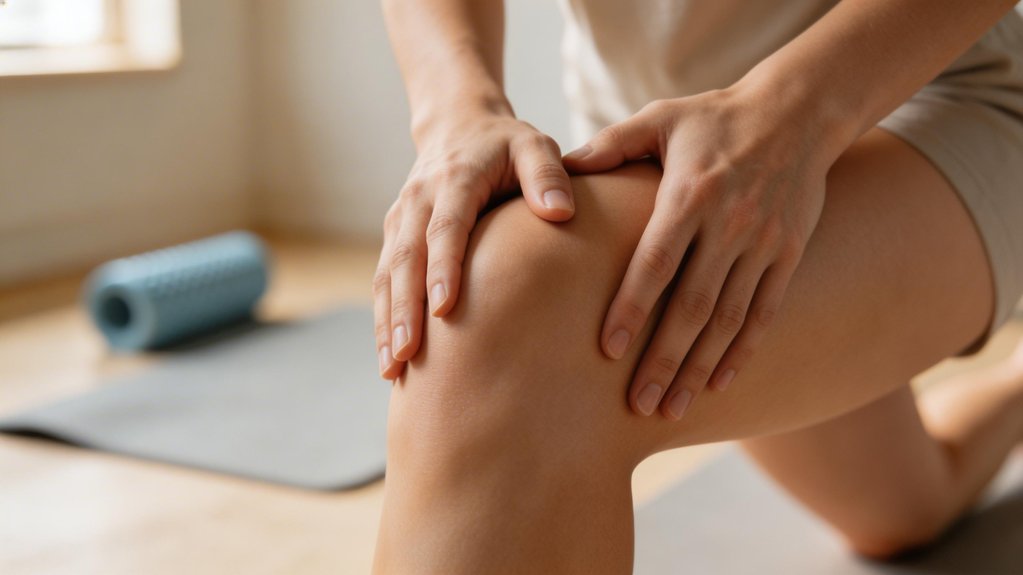
You can exercise safely with joint pain by choosing low-impact activities like swimming, walking, or cycling that support your body weight.
Watch for pain signals: mild discomfort during exercise is okay, but sharp or moderate-to-severe pain means stop immediately.
Modify exercises like replacing squats with reverse lunges to reduce stress.
Progress gradually by increasing duration one minute daily until you reach 30 minutes, and always take rest days. If pain lasts over two hours after exercise or causes swelling, see your doctor to rule out injury.
Choose Low-Impact Exercises That Protect Your Joints

When you’re dealing with joint pain, picking the right exercises makes all the difference.
Swimming techniques offer excellent support because water carries your body weight, easing stress on hips, knees, and ankles.
Swimming eases joint stress by letting water support your body weight, protecting hips, knees, and ankles.
Walking on flat surfaces for 10-15 minutes works well as you build endurance gradually.
Cycling keeps your legs strong while remaining gentle on joints. Yoga benefits include improved flexibility and balance through poses like cat-cow that don’t strain your body.
Tai chi and pilates strengthen your core with controlled movements.
Start slowly, progress gradually, and listen to what your joints tell you. A sustainable weekly routine ensures consistency and allows your body adequate recovery time between sessions.
Tell Safe Joint Pain From Warning Signs You Should Stop
The difference between manageable discomfort and a signal to stop is essential, and learning to spot it protects your long-term progress. Mild joint pain during exercise is often acceptable.
However, moderate to severe pain demands you stop immediately.
Pay attention to your pain thresholds. If you need elaborate bracing or constant ibuprofen after workouts, your activity’s too intense. Moderate soreness the next day suggests overexertion.
Take a rest day, then try shorter sessions. Sharp joint pain during specific movements like knee bending signals you need exercise modifications. Muscle soreness differs from joint pain.
Implementing key injury prevention tips from the start helps you avoid these complications altogether.
Consistent joint discomfort warrants switching to lower-impact activities altogether.
Modify Common Exercises to Reduce Joint Stress
Once you’ve identified which exercises aggravate your joints, you don’t have to give them up entirely; you just need to adjust them.
Smart exercise modifications protect your joints while keeping you active. Consider these practical adjustments:
- Replace squats with reverse lunges to reduce knee stress.
- Use hex-bar squats instead of traditional barbell squats.
- Adopt neutral grip positioning for pushups and bench press.
- Perform water aerobics instead of high-impact running.
These joint protection strategies let you maintain strength and fitness. Low-impact exercise offers significant health and wellness benefits while minimizing stress on your joints.
The key is finding movements that work for your body without triggering pain afterward.
Finding movements that work for your body without triggering pain afterward is the ultimate fitness goal.
You’re building sustainable habits that support long-term health.
Progress Gradually Without Overtraining Setbacks
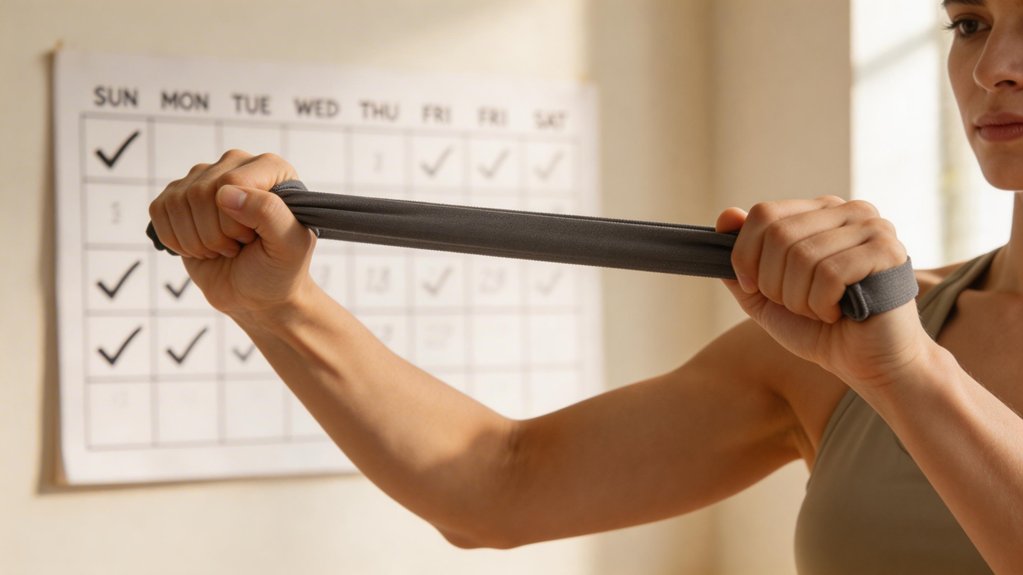
Finding the right modifications keeps you exercising, but advancing too quickly can undo that progress and sideline you with setbacks.
Track your progress by noting duration, intensity, and how you feel afterward.
Add one minute daily until you reach 30 minutes, then introduce new goals like resistance training.
Gradual adjustments prevent injury; increase weight or intensity only when your current routine feels comfortable.
Rest days matter; they let your joints recover and prevent overtraining fatigue.
If soreness lingers the next day, you’ve pushed too hard. Scale back, take an extra rest day, then resume at a slower pace. Rest days are crucial for allowing your body to adapt and rebuild stronger between workouts.
When to Check With Your Doctor About Persistent Pain
While you’re progressing through your exercise routine, you’ll want to know when persistent joint pain signals something that needs professional attention.
Pay close attention to these signs of concern:
- Pain lasting more than two hours after exercise ends
- Swelling, redness, or warmth around your joints
- Sharp pain that prevents normal movement or daily activities
- Consistent discomfort that worsens despite rest and ice
When to consult your doctor matters. If you experience any of these symptoms, seek medical advice promptly.
Your healthcare provider can rule out injury or underlying conditions.
Starting with safe strength training fundamentals helps prevent many joint-related complications before they develop.
Don’t tough it out alone; professional guidance keeps you exercising safely.