
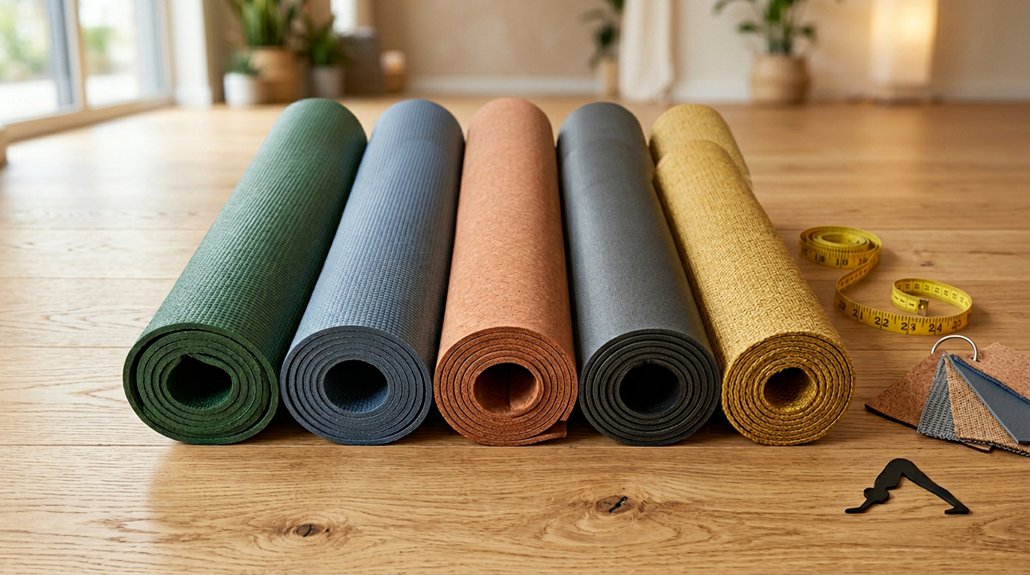
A first yoga mat only needs to do a few things well. It should grip the floor, cushion your joints and feel pleasant to use.
Think about how you will use it. Gentle floor stretching and slow yoga ask for cushioning and grip more than anything else. Choose a mat for how you will really use it, and test the grip before you commit.
Assess Your Yoga Style and Practice Frequency First
Decide what you will do on the mat and how often, because that shapes every other choice.
If you practice slow, gentle yoga or floor stretching, extra cushioning is usually more comfortable. Kneeling and lying on a hard floor can be hard on knees and hips.
If you move through faster, standing poses, grip and stability matter more.
Someone using the mat daily needs a more durable one. Occasional use is fine with a simpler mat.
Mats with extra cushioning and stability are particularly helpful for beginners over 50 who are just starting out.
Match your mat to your real routine, so you don’t buy one that doesn’t fit it.
The Comfort and Stability Trade-Off in Mat Thickness
A thicker mat cushions more, and a thinner mat feels steadier. Your joints and your balance both matter.
Extra thickness is kind to knees, hips and wrists when you kneel or lie down. The trade-off is that a very soft mat can feel wobbly in standing poses.
Thin travel mats roll up small but give little cushioning.
Pick a thickness that protects your joints without making you feel unsteady. If you have knee or wrist pain, ask your doctor or a physical therapist which floor poses are right for you.
For a place to start, you can compare yoga mats for morning stretching on Amazon and read the thickness in each listing.
Some links on this page go to Amazon, and the site earns a small commission when a reader buys through one.
Which Material Is Better: PVC or Natural Rubber?
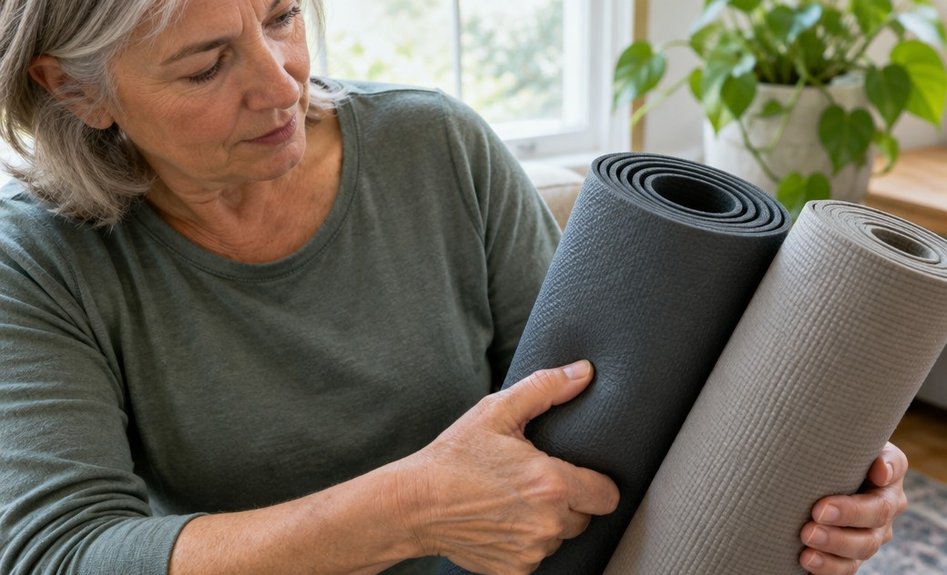
Material decides how a mat grips, how long it lasts and who can use it. Each common option has a trade-off.
PVC is durable and tends to feel sticky underfoot. Natural rubber has excellent grip, and eco-friendly options such as jute and organic cotton appeal to people who care about the environment.
Natural rubber is a latex product, so it isn’t right for everyone. MedlinePlus notes that latex-free versions of everyday products are available if you have a latex allergy.
Weigh how long you want the mat to last against how you feel about its material.
Why Grip and Texture Keep You Steady
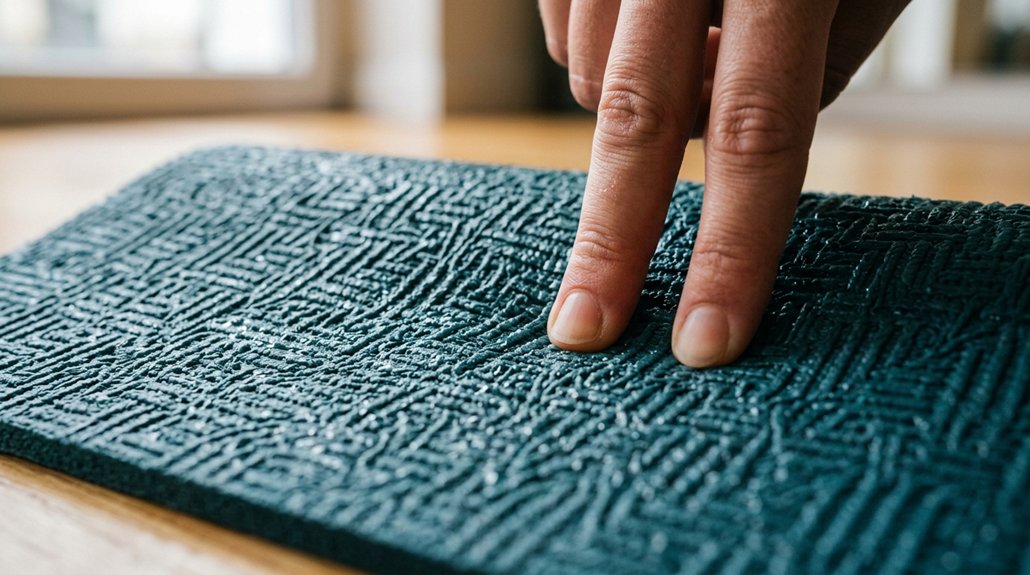
Choose a mat that doesn’t slide, because a slipping mat can make you lose your footing. That matters more as balance changes with age.
Raised patterns on rubber, jute and cotton mats give traction, especially if your hands or feet get damp. PVC mats have a sticky feel that resists slipping.
If you can, test the grip before buying. Unroll the mat, press your hand into it and push to see whether it moves.
To help with stretching, you can compare stretching straps on Amazon and use one to reach further in seated stretches.
How Can You Tell a Mat Will Last?
Look at how the mat is made, because even thickness and firm edges last longer. Cheap mats can flake or wear thin in a few months.
Check that the thickness is even from edge to edge. The surface should look dense and uniform, without thin spots or loose bits.
Notice whether it sheds small pieces in the first week or smells strongly. Both can be signs of poor construction.
How often you use it matters too. If you plan to practice often, put construction quality ahead of the lowest listing. Browse workout mat options on Amazon with that in mind.
Once you have a mat, you will need a place for it. How to Set Up a Simple Home Workout Space covers the layout.