
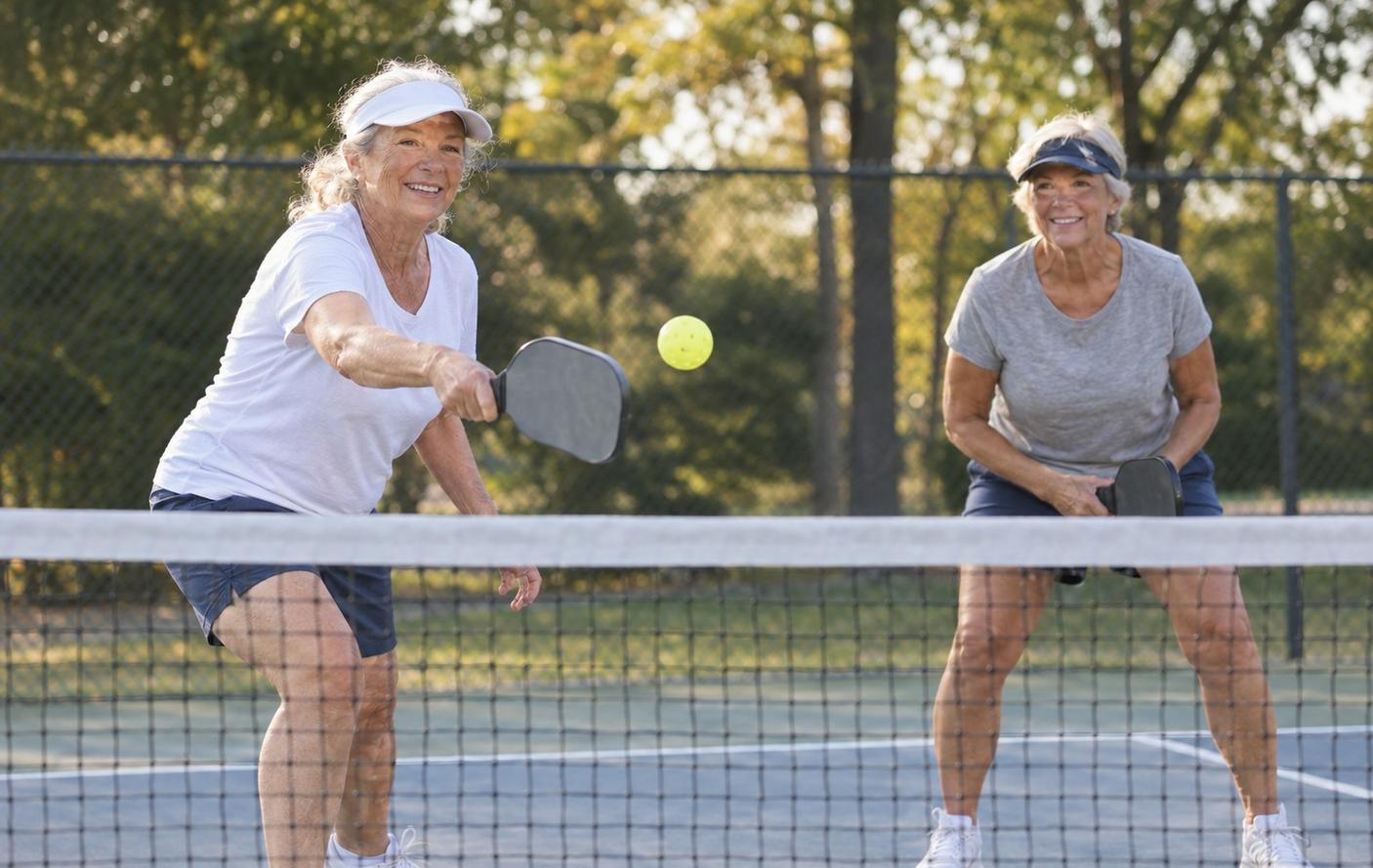
Yes, pickleball counts as real exercise for older adults, and falling is the risk worth planning for. In a study of recreational players averaging about 62 years old, heart rates during play sat near 70 percent of predicted maximum.
Falls also cause most of the injuries that send older players to the emergency room. A few habits lower that risk.
This is general information, not medical advice, so check with your doctor if you have concerns.
What the game asks of your body
The court is 20 feet wide and 44 feet long, according to USA Pickleball, the sport’s official national governing body in the US. Each side has a 7-foot non-volley zone near the net.
Every rally starts with an underhand serve.
UT Southwestern Medical Center, an academic medical center in Dallas, points out that the court is smaller than a tennis court. Players get aerobic exercise without sprinting or running at full speed.
Short, quick moves in every direction are the real demand. Harvard Health Publishing, the consumer health division of Harvard Medical School, says the game needs quick foot action and lunging, not long sprints.
An orthopaedic surgeon at Northwestern Medicine, a Chicago-area academic health system, says players need to be “relatively well conditioned”.
What early studies found
Researchers describe this field as young. A 2024 scoping review of 27 articles said the sport is still in the early stages of study, though some health benefits are documented.
How hard is it? Researchers fitted 53 recreational players, mean age about 62, with heart-rate watches. More than 70 percent of playing time fell in moderate to vigorous heart-rate zones.
The authors concluded the game can contribute substantially toward meeting activity guidelines.
Trials and a pilot, each with its limits:
- In Hong Kong, 72 older adults with pre-frailty played supervised pickleball or kept their usual routine for 8 weeks. 42 percent of the pickleball group moved from pre-frailty to non-frailty, against 8 percent of the others. Chair stand, arm curl and 6-minute walk results also improved.
- In Iran, 36 women aged 60 to 75 took part. 20 played three times a week for 8 weeks and 16 were the control group. Their balance scores rose 28.48 percent, while the control group declined. Social capital rose 12.59 percent.
- A small Utah pilot study of sedentary adults found better vertical jump and cognitive performance after six weeks, and players reported less pain.
Surveys point the same way, but they show association, not cause. In a national survey of 825 US adults over 50, current players were less likely to be lonely. The comparison groups had never played or had stopped.
In a survey of 1,667 players, playing three or more times a week went with higher well-being scores.
People who like a social game may simply play more. Exercising with other people has its own upside.
The injuries older players get most
The numbers below come from emergency-department records (NEISS, a US government sample of hospital emergency rooms). They count visits, not how likely any one player is to be hurt.
Slips, trips, falls and dives made up 63.3 percent of injuries in players 60 and over. That comes from a study of 2010-2019 records.
Strains and sprains led the diagnoses, followed by fractures. Two more findings:
- A review of fractures alone found that falls caused 92 percent of them. 87 percent of the players were over 60, and 69 percent were women.
- A survey of 92 recreational players found 42 percent had fallen while playing. The leading reasons were lunging and moving backward.
Achilles tendon. Studies at two large orthopaedic practices found pickleball tendon ruptures in older patients than ruptures from other causes. At one practice the average age was 64.5, against 48.6 for other Achilles injuries.
UT Southwestern lists Achilles tendinitis and tears among the more serious pickleball injuries it now sees. The Achilles tendon joins the calf muscle to the heel bone.
Shoulder. In a national survey of 1,758 players, 22.2 percent reported a shoulder injury in the past year. Overuse conditions were the most common type of “most serious” injury.
One institution’s records listed the rotator cuff as the most commonly injured site.
Eyes. Eye injuries were more common in players 50 and older than in younger ones.
The American Academy of Ophthalmology, a large association of eye physicians and surgeons, notes that the sport does not require eyewear at any level.
How to lower the risk
- Court shoes. USA Pickleball says sneakers or running shoes do not give the support needed for side-to-side action. Northwestern Medicine and UT Southwestern also advise shoes made for tennis or pickleball.
- Eye protection. Polycarbonate safety goggles give the best protection, per an ophthalmologist quoted by the American Academy of Ophthalmology. Even sunglasses or regular glasses beat nothing.
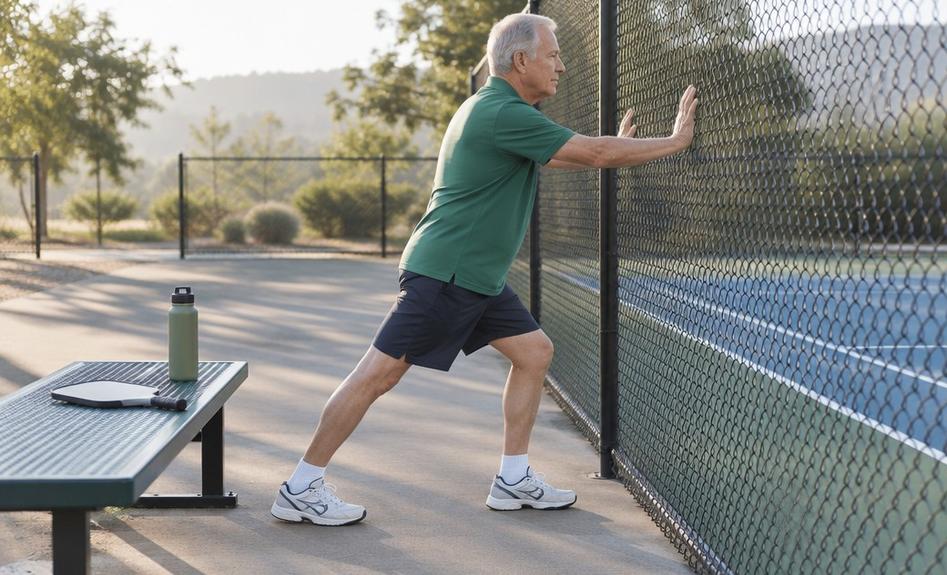
- A warm-up. Northwestern Medicine suggests warming up for at least five minutes before and after play. Cleveland Clinic, a nonprofit academic medical center, advises stretching first.
- Strength and balance. Harvard Health Publishing advises lower-body strength work at least twice a week, such as squats, lunges and heel raises.
- No diving. UT Southwestern says to avoid diving for challenging shots. It also suggests practicing side shuffles, cross-steps and slowly walking backward to improve balance on the court.
- Fluids and sun. USA Pickleball advises water, electrolytes and snacks, plus sunscreen and a hat outdoors.
- A safe surface. Northwestern Medicine suggests clearing debris from the court, noting cracks, and skipping wet surfaces.
The basics for preventing common exercise injuries apply here too: a dynamic warm-up, gradual progression, telling soreness from injury pain, and rest.
If something hurts, stop playing. Cleveland Clinic advises seeing a physician if the pain lasts more than a few days.
A first month, week by week
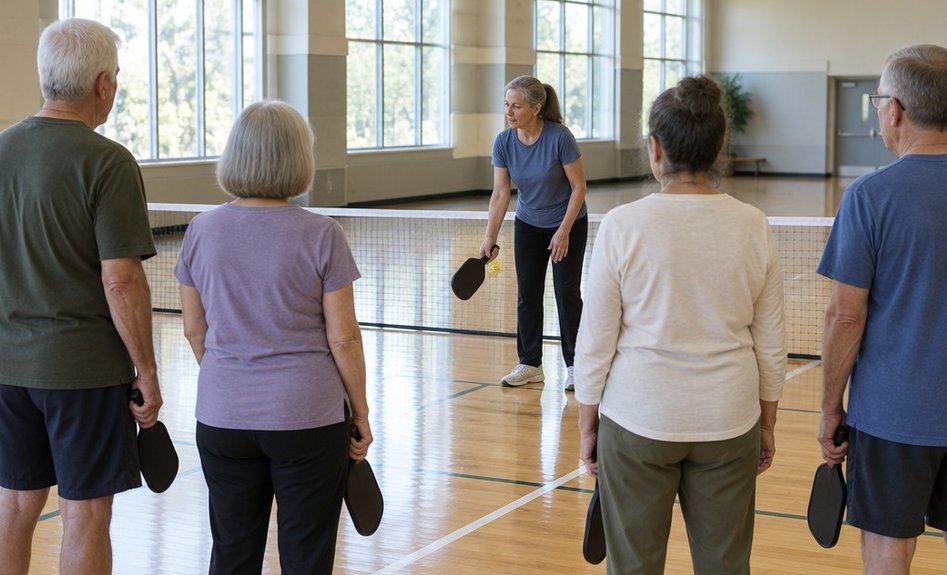
- Week 1: learn the basics. Take a lesson or a clinic for new players before you play games. USA Pickleball’s Serves program offers clinics for new players. Buy court shoes and eye protection, and bring water.
- Week 2: build the base. Start lower-body strength work on days you do not play. Add balance practice, such as yoga or strength training.
- Week 3: ease into games. The Hospital for Special Surgery, a New York academic medical center, advises ramping up your playing time slowly. It also suggests a day or two of recovery between sessions when you are just starting.
- Week 4: keep it steady. Add side shuffles and slow backward walking to your balance work, and play with people at your level. Cleveland Clinic says new players should not compete against advanced players.
Find a beginner session
Open USA Pickleball’s places-to-play page. It points to its official court finder, Pickleheads, which lists courts, schedules and open play times.
Then ask the program at the court nearest you about lessons or clinics for new players before your first game.