
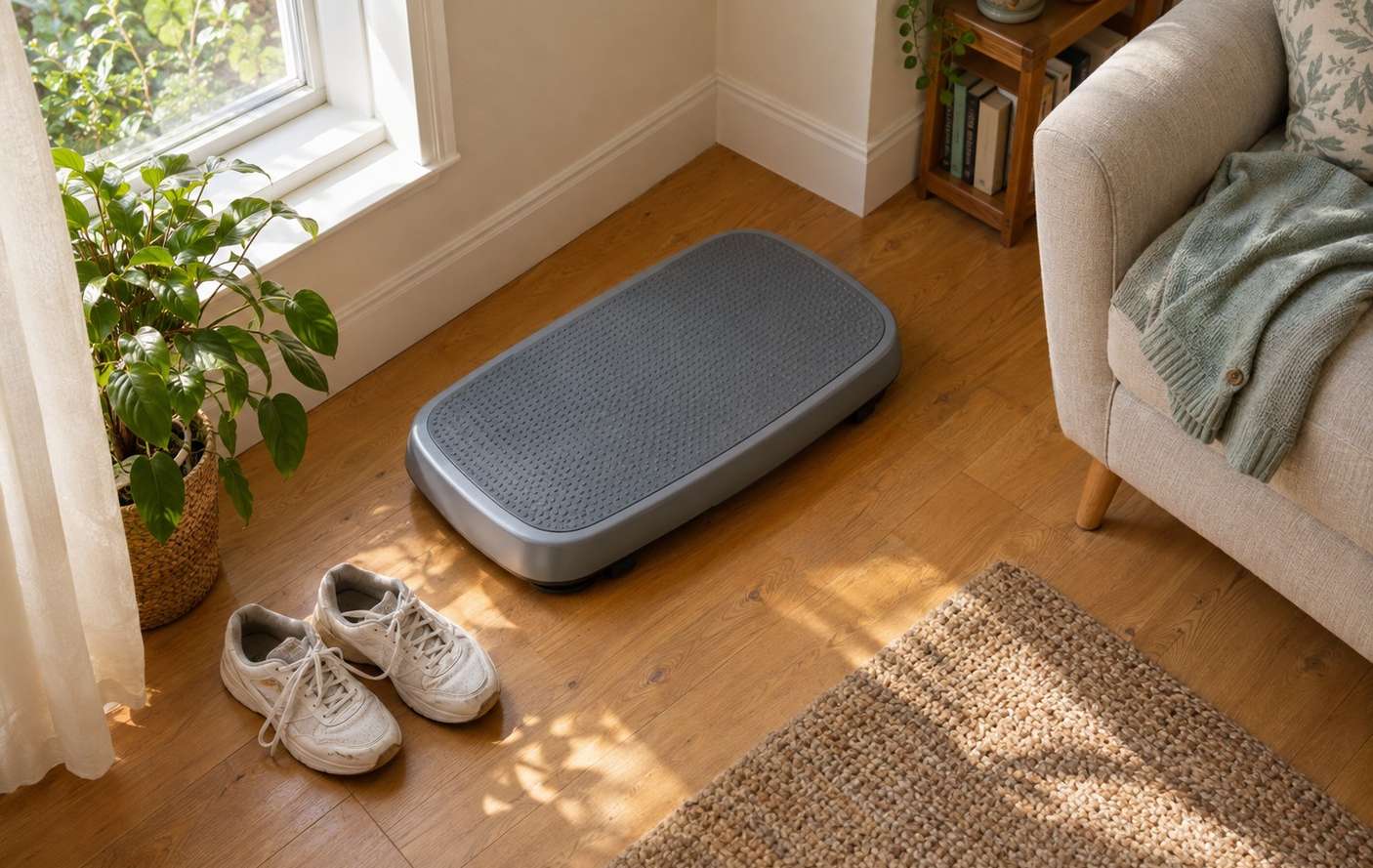
Vibration plates have a fairly clear record for leg strength, an unclear one for bone density, and no clear proof so far that they prevent falls.
A vibration plate is a platform that shakes quickly while you stand on it. Trials call the method whole-body vibration. Most of the bone trials below enrolled postmenopausal women.
This is general information, not medical advice, so check with your doctor if you have concerns.
What a plate does in the trials
In the 12-month bone trial, women stood on the platform for 20 minutes a day.
The plates shook at set speeds, measured in hertz (Hz, shakes per second). The longest bone trial used 30 Hz and 90 Hz plates at a low force, 0.3 g (0.3 times the pull of gravity).
The longest bone trial used a gentle setting, 0.3 g, for 20 minutes a day.
Leg strength: the most consistent gain
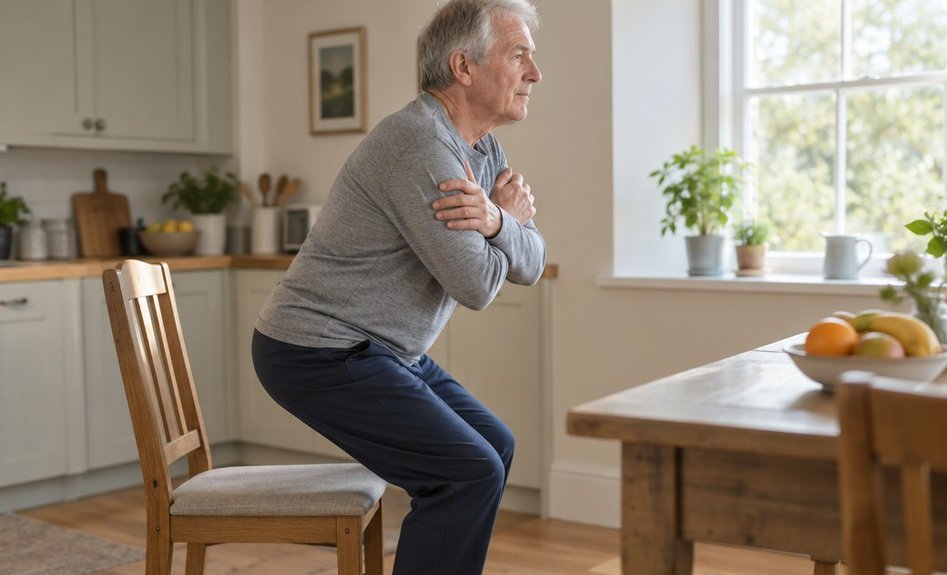
A 2011 review in Clinical Rehabilitation pooled 13 randomized trials with 896 older adults. It found that whole-body vibration improved knee extension strength, the strength of the muscles that straighten your knee.
A 2026 review in the Journal of the American Medical Directors Association looked at 36 studies in adults 60 and over. About two-thirds reported better leg strength, with knee strength the most consistent.
Strength is the one outcome where both reviews above agree.
Bone density: mostly little, with a few small gains
The longest bone trial found nothing.
In a 12-month trial in the Annals of Internal Medicine, 202 postmenopausal women were split into three groups. Two used a plate for 20 minutes a day, and one used no plate.
The authors concluded that 12 months of vibration had no significant effect on any bone outcomes.
All the women also took calcium and vitamin D.
Harvard Health Publishing, the consumer health publisher of Harvard Medical School, covered that trial. It noted that plate users lost as much bone over the year as women who skipped the plate.
It also said 12 months may be too short to show a slowdown.
Other results lean slightly positive:
- A 2010 meta-analysis of eight trials found a small gain in hip density in postmenopausal women, but not in the spine.
- A small 2004 pilot of 70 women aged 58 to 74 reported a hip gain of 0.93 percent on a plate.
- A 2018 pooled analysis found a before-and-after change in spine density.
Those programs differed and the studies were short. The 2011 review also noted that no randomized trial had tested plates for bone in older men.
Balance and falls: some gains, no clear proof of fewer falls
A 2012 review in Maturitas pooled 13 trials in older adults. Scores on basic balance tests and on the Timed Up-and-Go test (how fast you rise, walk a short way and sit back down) improved. Gait scores did not.
The reviewers said plates may help relatively basic balance ability, particularly in frailer older adults. They called the effect on falls inconclusive.
The 2026 review agrees: no included study was large enough to test falls as its main outcome.
Better balance scores on a test are not the same as fewer falls.
A 2025 commentary answered a Canadian Task Force on Preventive Health Care review. That review rated plates as moderate-certainty evidence for preventing falls in community-living older people. The commentary urged caution.
Strength, bone, balance and falls side by side
| Outcome | What the trials found | How strong |
|---|---|---|
| Leg strength | Gains in knee and leg strength in pooled trials | Strongest |
| Basic balance scores | Better scores in pooled trials, especially in frailer people; gait did not improve | Mixed |
| Hip bone density | Small gains in one pooled analysis and small trials; none in another pooled review or the 12-month trial | Mixed |
| Spine bone density | No gain in two pooled reviews; one analysis found a before-and-after change | Weak |
| Fewer falls | Not shown in the reviews; one review rated it moderate-certainty, disputed | Disputed |
Who should not use one
Power Plate, a company that makes vibration plates, lists who should not use one without a doctor’s approval.
The list includes people who are pregnant, have a pacemaker or implanted medical device, or have had recent surgery, especially joint replacements or spinal procedures.
It also names heart disease, uncontrolled high blood pressure and blood clots.
If any of those apply, skip the plate until your doctor says yes.
How a plate compares with walking and strength work
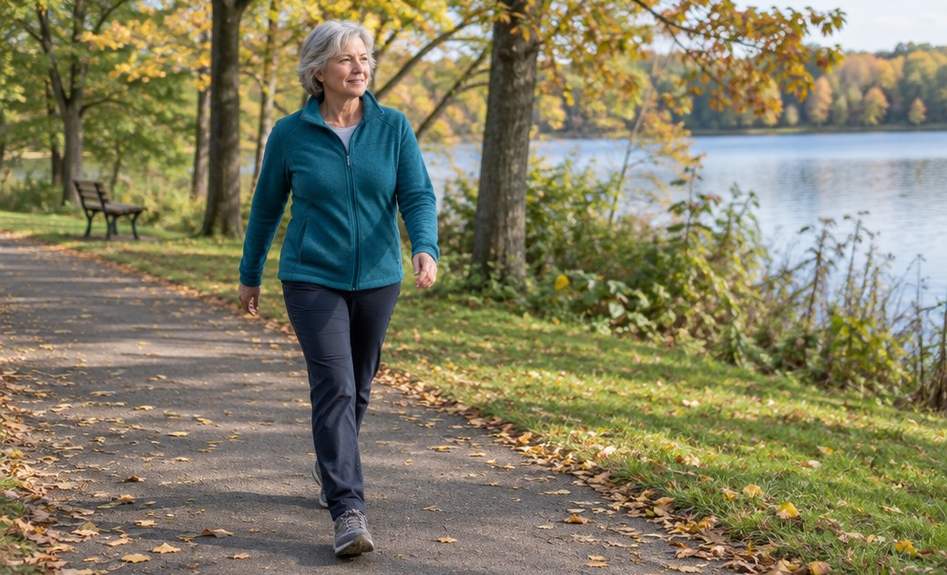
In head-to-head trials, a plate did not clearly beat ordinary exercise. The 2011 review found no difference in hip or spine density between plates and active exercise.
Two small trials leaned the plate’s way:
- A plate beat a walking program at the femoral neck (the top of the thigh bone) by 4.3 percent after eight months, in 28 women.
- In the same 2004 pilot, a plate group’s hip density rose while a resistance training group’s did not.
Both were small, so treat them as a reason to test further, not as a verdict.
For bone, the base is still weight-bearing movement and progressive resistance training.
Another popular gadget, the weighted vest, did not prevent hip bone loss during weight loss in a 12-month trial of older adults with obesity. In that trial, neither did progressive resistance training.
For falls, the stronger evidence sits with exercise itself.
Cochrane is an independent network that reviews medical research. Its 2019 review found that exercise cut the rate of falls by 23% in older people living at home.
If you still like the idea of a plate, you can look at vibration plates with handles separately.
This week, try simple balance exercises at home, starting with standing on one leg while you hold a chair for support. The research on balance training for fall prevention is the reason.