

A 12-month trial of 150 older adults did not show that a weighted vest protects the hip bone. In that 12-month trial, the hip lost bone density in every group, with or without a vest.
So a vest is not a proven way to protect your bones. It may still add some effort to a walk you already enjoy.
This is general information, not medical advice. Check with your doctor first if you have back problems, poor balance or osteoporosis.
What a 12-month trial found
Researchers at Wake Forest University in North Carolina ran the trial. They reported it in JAMA Network Open.
It enrolled 150 adults with obesity, with an average age of 66. About three in four were women, according to the trial report.
Everyone followed a diet to lose weight. One group also wore a weighted vest, and one added supervised strength training.
All three groups lost 9 to 11 percent of their body weight. Hip bone density fell 1.2 to 1.9 percent in every group, and the vest did not change that.
The vest group wore it about 7 hours a day. The vest was meant to put back the weight people lost, and on average it replaced 78 percent of it.
Strength training did not protect the hip either. The authors concluded that exercise may be insufficient on its own to prevent bone loss during weight loss.
What smaller trials found
Earlier trials were small, and they tested more than walking.
In one study from Oregon State University, nine postmenopausal women did vest-plus-jumping exercise three times a week. They kept it up for 32 weeks a year over five years, researchers reported in the Journal of Gerontology.
Nine similar women who stayed active but were not in the program lost hip bone density at every site. The exercisers mostly held steady.
The trial was tiny, and jumping was part of the program, so the vest alone cannot take the credit.
A 9-month trial of 44 women aged 50 to 75 used vests for lower-body strength exercises. Strength rose 16 to 33 percent compared with the control group.
Density at the femoral neck (the top of the thigh bone) did not change, the authors reported.
A 12-week trial of 16 postmenopausal women used vest loads up to 15 percent of body weight. A blood marker of bone breakdown fell 14.5 percent in the vest group.
That marker is not the same as stronger bone.
The evidence at a glance
| Claim | What the trials found | Strength |
|---|---|---|
| A vest protects hip bone during weight loss | No difference in a 150-person randomized trial | Best evidence here (one trial) |
| A vest with jumping keeps hip bone stable | Held steady in 9 women over five years | Weak |
| A vest adds leg strength | Gains in a 9-month exercise program | Mixed |
| A vest adds to weight loss on a diet | Weight loss was the same with or without a vest | Not shown (one trial) |
| Walking in a vest beats walking without one for bone | None of these trials tested it | Untested |
“Mixed” means the trial showed a gain in strength but no change in bone.
How heavy to start
None of the trials above tested a plain walk with a vest. So there is no proven dose for walking.
UCLA Health is an academic health system in Southern California. It says the general advice is to start at about 5 percent of your body weight. For a 150-pound person, that is 7.5 pounds.
A physical therapist at Atlantic Health, a not-for-profit healthcare provider in New Jersey, gives a range of 5 to 10 percent. If you have to change how you walk, the vest is probably too heavy.
An adjustable vest, sold in the weighted vest category on Amazon, lets you add weight in small steps. A vest is not a purchase you need to make yet.
Who should skip it or ask first
Atlantic Health advises speaking with a medical provider first if you have a spinal condition or a history of osteoporosis. The same goes for heart disease, muscle weakness, or joint or back pain.
A back or neck injury calls for great caution, according to Dr. Sharon Hame, a sports medicine orthopedic surgeon at UCLA Health. Arthritis in the hips, knees or ankles may also feel worse with added weight.
If your balance is uncertain, or you have had a fracture, ask your doctor before adding weight to a walk. For bone, ordinary impact and resistance exercise loads the skeleton without a vest.
How to walk in a vest
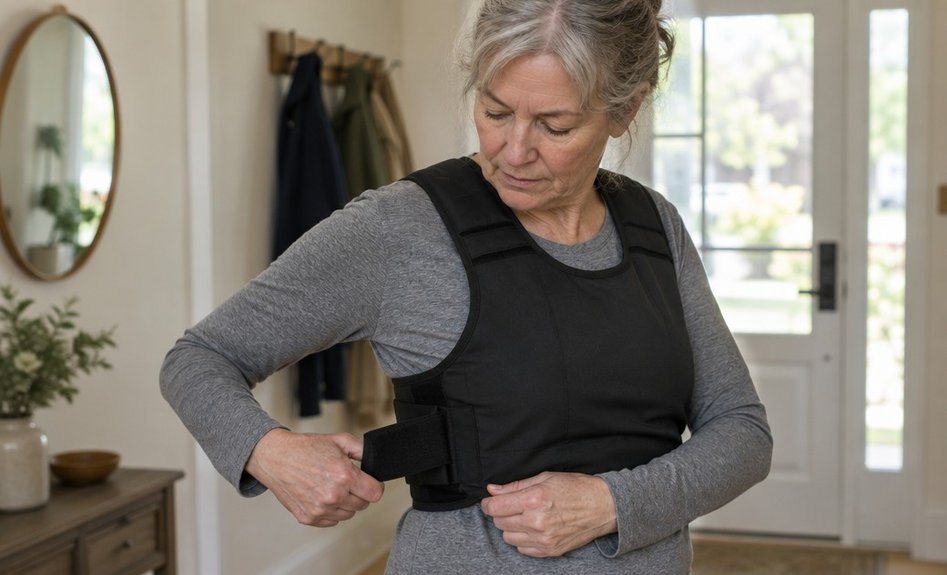
If you are new to exercise, build a regular walking habit before adding weight.
After several weeks, UCLA Health suggests a first vest walk less than half as long as your usual walk. It also suggests a short loop near home rather than a route that takes you far away.
Follow these points:
- Choose a vest that fits snugly and does not shift as you move.
- Stand tall with your shoulders back.
- Wear it no more than three times a week, as the Atlantic Health therapist advises.
A low-cost test before you buy
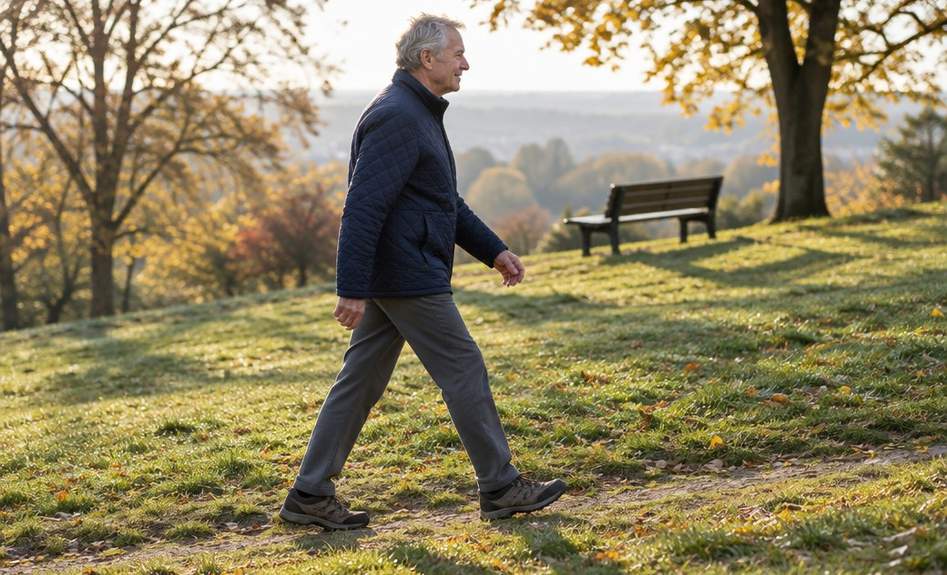
Next week, add 5 to 10 minutes to your usual walk, or choose a gentle hill. UCLA Health lists a longer, faster or uphill walk as another way to raise the effort without adding weight.
Notice how your knees, hips and back feel afterward.
If the longer or hillier walk feels fine and your doctor agrees, a vest at about 5 percent of your body weight is the usual place to start.