
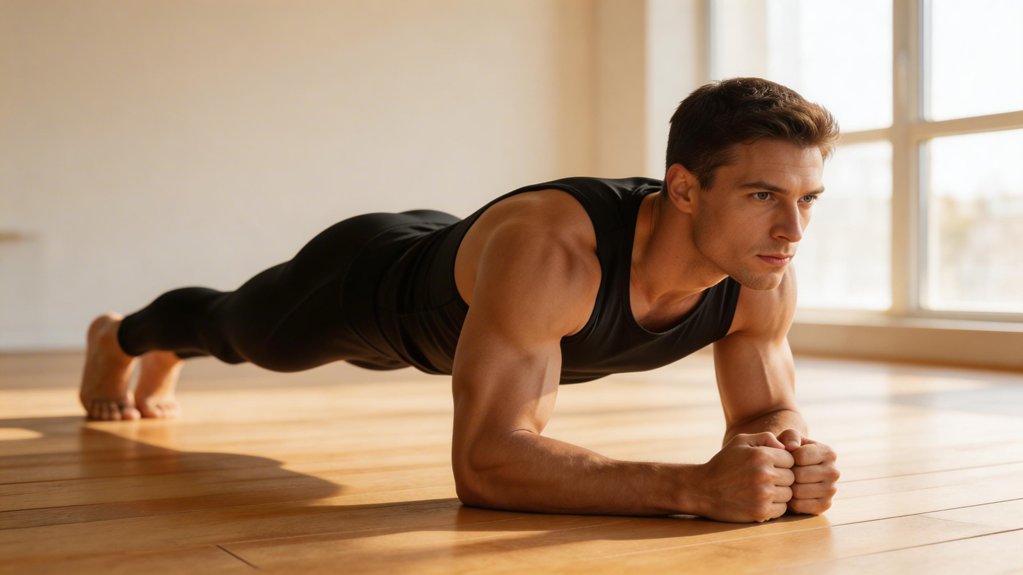
You don’t need crunches to build genuine core strength.
Planks engage your front, sides, and back muscles simultaneously when you maintain a straight line from head to heels.
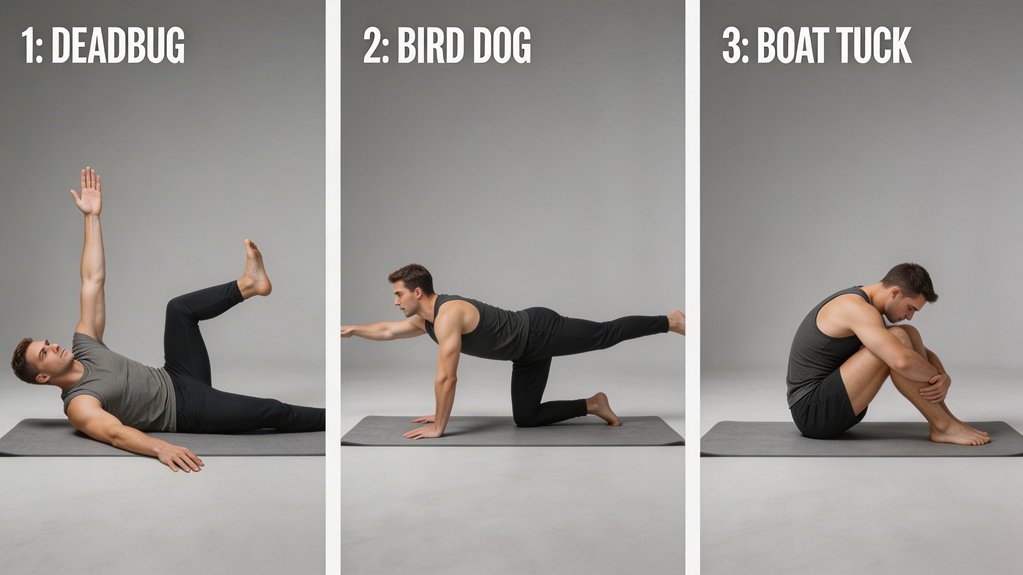
Add dynamic exercises like deadbugs and bird dogs that coordinate opposite arm and leg extensions.
Once you’ve built foundational strength, progress by adding light dumbbells or kettlebells over several weeks.
This approach supports everyday activities like carrying groceries. It prevents injury far better than visible abs ever could, and it builds sustainable progression.
Why Functional Core Strength Matters More Than Six-Pack Abs
While visible abdominal muscles might look impressive, they won’t help you carry groceries up a flight of stairs. Nor will they prevent a fall on uneven ground.
Functional core strength matters because it supports your everyday activities.
A strong core acts as your body’s central link, connecting your upper and lower body effectively.
You’ll bend, twist, and squat with better stability and control.
This functional strength improves your posture, balance, and injury prevention, especially important as you age.
Understanding functional fitness principles helps you recognize that your core is essential for performing daily tasks efficiently and safely.
You’re building practical strength that serves you daily, not just aesthetic muscles.
Core-Building Planks and How to Master Them
Since you’ve learned why functional strength matters more than appearance, it’s time to master the exercise that builds it best: the plank.
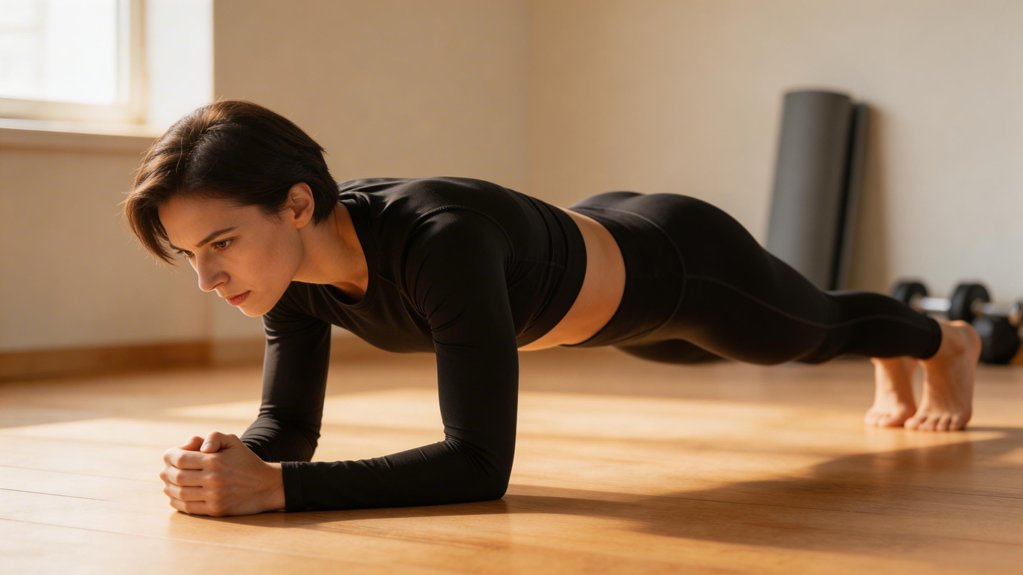
Planks recruit muscles across your front, sides, and back simultaneously. This balanced engagement creates genuine core stability that serves you during daily activities.
Proper form means maintaining a straight line from head to heels. Plank variations like hip dips and arm reaches challenge your core further.
Maintain a straight line from head to heels, then progress to hip dips and arm reaches for deeper core strength.
Beginners who need extra support or have mobility limitations have an excellent alternative in seated strength exercises.
Start with what feels sustainable, then progress gradually. You’re building the foundation that supports everything else you do.
Three Plank Mistakes That Waste Your Effort
Most people unknowingly sabotage their plank workouts by making the same three form mistakes.
First, you’re likely sagging your hips toward the floor, which kills core activation and puts stress on your lower back.
Second, you’re probably hiking your hips too high, breaking proper plank alignment from head to heels.
Third, you’re letting your shoulders creep toward your ears instead of keeping them relaxed and engaged.
These mistakes mean you’re not actually strengthening your core effectively. Correcting your form is essential to injury prevention and maximizing the benefits of your workout.
Focus on maintaining that straight line. Your body’s a plank, literally.
Feel the difference when form’s right.
Deadbugs, Bird Dogs, and Boat Tucks as Crunch Alternatives
Now that you’ve nailed your plank form, it’s time to explore exercises that’ll challenge your core in different ways.
Deadbugs involve lying on your back with knees bent, pushing one hand up while extending the opposite leg for six reps per side.
Bird dogs require extending one arm forward while kicking the opposite leg behind, then bringing both back with control.
Boat tucks rock you onto your sitting bones, using core muscles to bring your upper body nearly upright while drawing legs toward your chest.
These dynamic movement benefits offer engaging core alternatives that build real functional strength. These exercises provide safe exercise modifications that allow you to build strength while protecting your joints from high-impact stress.
When to Progress Beyond Bodyweight
Once you’ve built foundational strength with bodyweight exercises like deadbugs and bird dogs, your core will adapt and demand more challenge. That’s when resistance training becomes essential.
Start by adding light dumbbells to your movements. Hold weights during boat tucks or deadbugs to increase difficulty gradually.
Progress to overhead kettlebell exercises, which demand serious core bracing.
Intensity progression doesn’t mean jumping to heavy weights immediately. Instead, increase resistance slowly over weeks. Prioritizing safe strength training ensures you build sustainable progress while minimizing injury risk.
You’ll notice your stability improving and your ability to support others through physical tasks strengthening. This measured approach builds lasting power.