
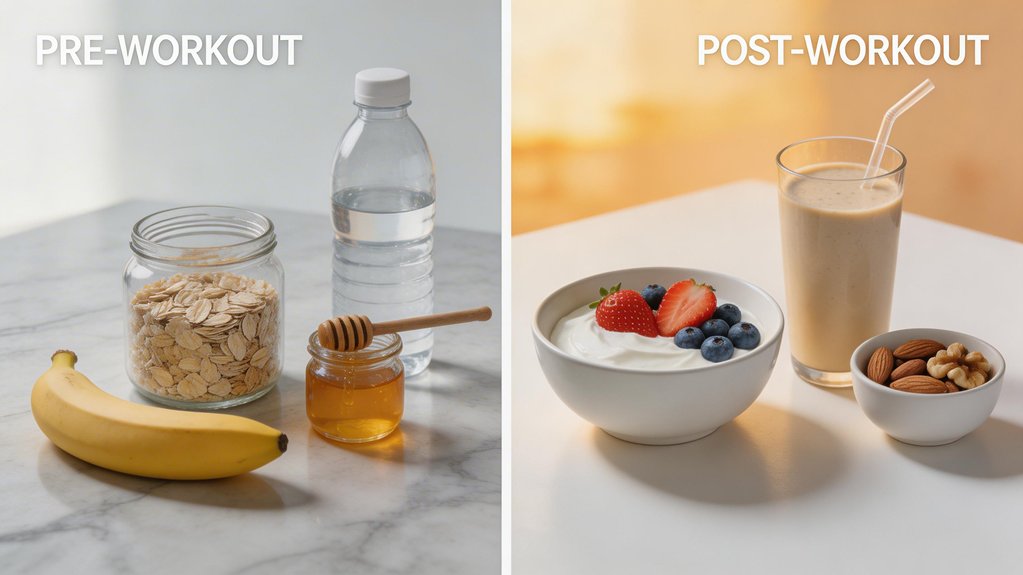
Eat a full meal two to three hours before working out, or grab a light snack sixty to ninety minutes prior.
Bananas, yogurt, and oatmeal work well. You need carbs for energy and protein for muscle support, skip heavy fats.
After you exercise, consume carbs and protein within forty-five minutes to repair muscles and restore energy. Think Greek yogurt with berries or a turkey sandwich.
Stay hydrated throughout.
Your specific food choices depend on your workout type and timing.
Timing Your Pre-Workout Nutrition
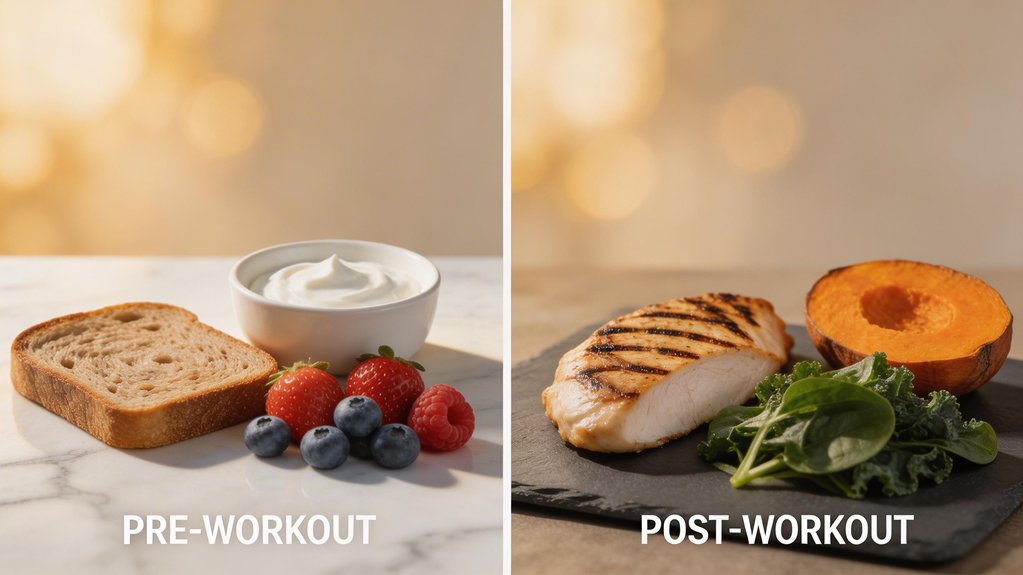
When you eat matters just as much as what you eat. Your meal planning should align with your workout timing to prevent sluggish feelings and maintain steady energy.
Timing your meals strategically around workouts prevents sluggish feelings and maintains the steady energy your body needs.
A full meal needs two to three hours for proper digestion. Lighter snack choices work better closer to exercise; try carbs sixty to ninety minutes before.
Within thirty minutes, grab easily digestible options like yogurt or a banana.
Five to ten minutes before, a single piece of fruit suffices.
Proper pre-workout nutrition timing prevents digestive discomfort while fueling your body effectively for peak performance and recovery.
Macros in Pre-Workout Meals
While timing gets you halfway there, the macronutrient makeup of your pre-workout meal does the real work.
You’re balancing carbohydrates, protein, and fat to fuel performance and support recovery. Here’s what matters:
- Carbohydrate sources like oatmeal and whole grains provide sustained energy for your workout.
- Protein types including eggs and Greek yogurt support muscle function during intense efforts.
- Fat considerations mean keeping intake minimal before exercise to avoid sluggishness.
Your nutrient ratios depend on digestion timing and exercise type. A 2-3 hour window allows heavier meal examples with balanced macros.
Closer to workout time, emphasize carbs while minimizing protein and fat.
Incorporating high-protein foods into your pre-workout nutrition ensures your muscles have the amino acids needed for optimal performance and recovery.
Smart meal planning keeps your energy levels steady throughout training.
Pre-Workout Nutrition for Cardio, Strength, HIIT, and Endurance
Now that you’ve got your macros dialed in, it’s time to match your nutrition plan to what you’re actually doing in the gym.
Cardio demands easily digestible carbohydrate sources one to three hours beforehand.
Strength training benefits from balanced meals with carbs and protein in that same window.
HIIT requires moderate meals well before, followed by pre-workout snacks for energy.
Endurance work needs one gram of carbs per minute of activity, consumed two to three hours prior.
Each exercise type responds differently to fuel timing and composition.
Different workouts demand different fueling strategies—timing and nutrient composition matter for maximum performance gains.
Matching your nutrition strategy to your workout type optimizes performance and recovery.
Post-Workout Nutrition: Recovery Within 45 Minutes
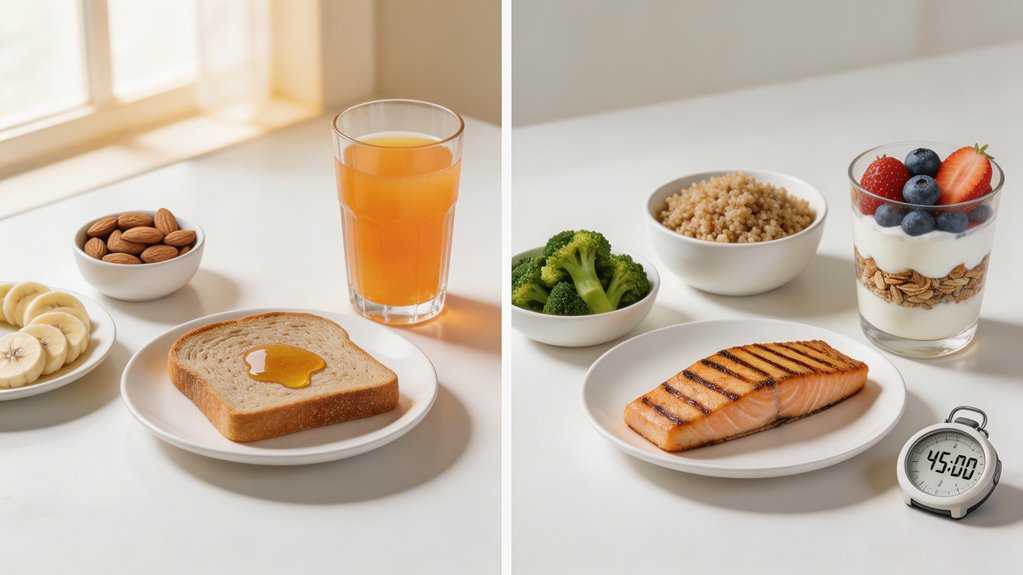
After you finish your workout, your muscles are primed to absorb nutrients and kickstart recovery.
Your body needs fuel to repair muscle fibers and replenish glycogen stores. The window closes within 45 minutes, so don’t delay eating.
Here’s what you need:
- Carbohydrates plus protein: Combine both nutrients for ideal muscle repair and energy restoration.
- Recovery snacks: Greek yogurt with berries, a turkey sandwich, or chocolate milk work well.
- Hydration strategies: Drink water consistently during and after exercise to replace lost fluids.
Strength training demands carbs and protein together.
Endurance sessions benefit from carb-focused snacks.
Proper nutrition after exercise supports muscle adaptation and prepares you for your next training session.
Early Morning: Fueling When You’re Short on Time
You’ve nailed your post-workout nutrition, but early morning workouts throw a wrench into that plan. You’re tired, rushed, and your stomach isn’t ready for a full meal.
That’s where quick breakfast options and nutrient dense snacks save you. Grab a banana with almond butter five to ten minutes before exercising. A handful of dried fruit works too.
Greek yogurt with berries takes slightly longer to digest but fuels you well. These choices deliver carbs and modest protein without weighing you down.
You’ll perform better and recover faster when you prioritize these simple, accessible options. Plus, consistent morning exercise combined with proper fueling can contribute to better sleep quality at night, making your overall fitness routine even more beneficial.