

Your target heart rate is the range your heart should work in during exercise, usually 50 to 85 percent of your maximum heart rate. If you are new to exercise, start near the lower end of that range. The top part, above about 70 percent, is vigorous effort that most beginners do not need.
To find it, subtract your age from 220 to get your maximum, then multiply by 0.50 and 0.85. For a 60-year-old, that works out to roughly 80 to 136 beats per minute.
What Your Target Heart Rate Actually Means
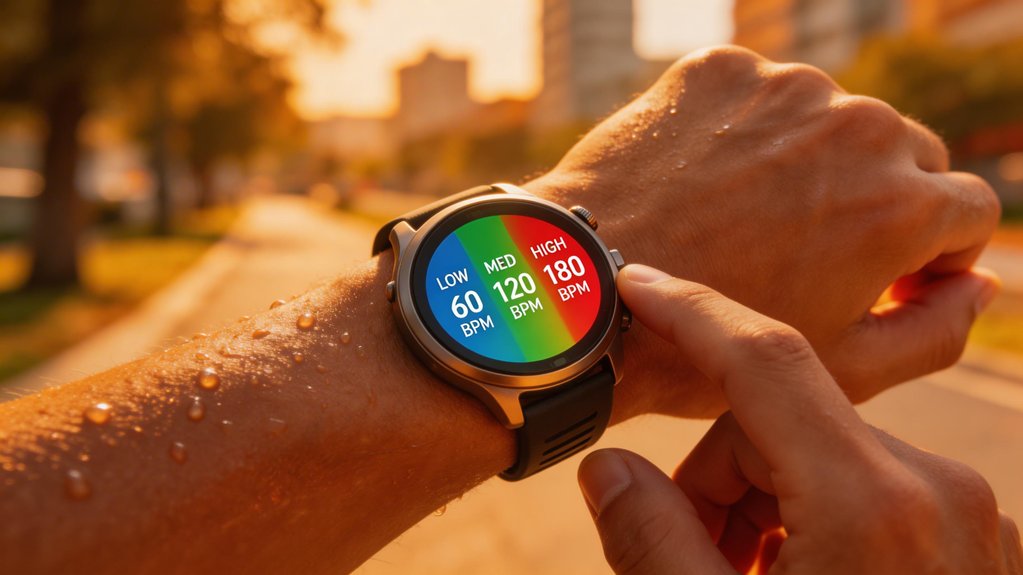
Your target heart rate tells you how hard your heart is working compared with its limit. Johns Hopkins Medicine describes it as a percentage, usually between 50 and 85 percent, of your maximum safe heart rate.
Think of it as a guide, not a grade. The zone is meant to be challenging enough to build fitness and comfortable enough to repeat.
Regular exercise at a steady effort is also tied to better sleep quality, which helps you recover between sessions.
Calculate Your Target Heart Rate Step by Step
Two quick calculations give you your range. Here is the example for a 60-year-old:
- Maximum rate. Subtract your age from 220 for your maximum heart rate: 220 minus 60 is 160 beats per minute.
- Lower end. Multiply that number by 0.50 for the lower end of the zone: 160 times 0.50 is 80.
- Upper end. Multiply by 0.85 for the upper end: 160 times 0.85 is 136.
MedlinePlus says moderate exercise sits at 50 to 70 percent of your maximum. For this 60-year-old, that is about 80 to 112 beats per minute.
If you take a beta blocker or other heart medicine, ask your doctor for your range, since the formula may not fit you.
You can also monitor your exercise intensity with the talk test, which needs no pulse check at all.
Why Staying in Your Target Zone Helps
Start near the low end of your zone and build up gradually. Johns Hopkins advises beginners to start where they’re comfortable, around 50 percent of maximum heart rate, and exert themselves more over time.
Working too hard too often is a poor plan for a beginner. It feels unpleasant, and it makes you less likely to keep going.
Staying in your zone lets you build endurance at a pace you can repeat. Steady activity is also good for your brain as you age.
Matching Your Zone to Your Activity

The same zone applies to any steady activity, so pick what you enjoy. Brisk walking, swimming and easy cycling can all be done at a moderate effort.
Water supports your body weight, so swimming can feel easier than its heart rate suggests. Your zone stays the same, and your body is the best judge of how hard you are working.
Beginners often do well with low-impact exercises like swimming and walking, which reduce stress on joints.
How to Monitor Your Target Heart Rate During Exercise
Two simple methods give you a reading during a workout. Your actual heart rate may vary depending on your age, overall fitness level and medications, so treat the numbers as a guide.
- Check your pulse: Stop moving and find your pulse at your wrist, just below the thumb. Count the beats for 15 seconds and multiply by four.
- Use a device: A fitness tracker or watch can show your heart rate as you go.
Devices can also misread, so pair them with how you feel. Johns Hopkins says to stop if you feel very uncomfortable and not to get overly fixated on numbers.
If you want a wearable, you can compare heart rate monitors on Amazon.
Some links on this page go to Amazon, and the site earns a small commission when a reader buys through one.