
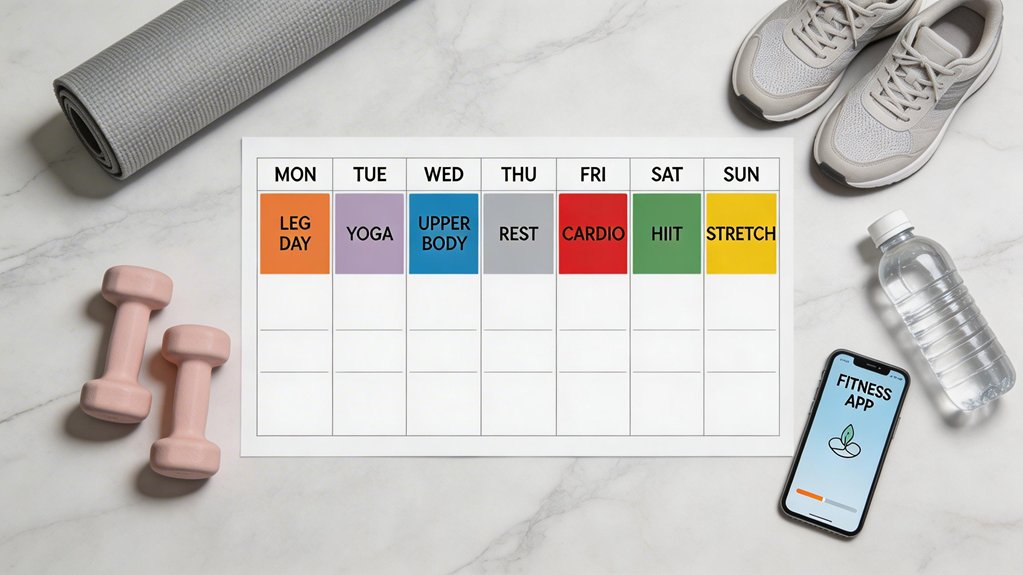
Start with three to four exercise days weekly, say Monday, Wednesday, Friday, and Saturday, alternating between cardio and strength training to keep things fresh and prevent burnout.
Aim for 150 minutes of activity spread across your week; you could do thirty minutes five times or fifty minutes three times.
Begin with just ten minutes of walking or light cardio, then add ten minutes weekly until you hit your target.
Pay attention to your body’s signals: muscle soreness lasting one to two days is normal, but sharp pain means rest. The details on structuring each session and tracking progress reveal what separates quick starters from lasting habits.
Start Your Exercise Routine With 3–4 Days Per Week
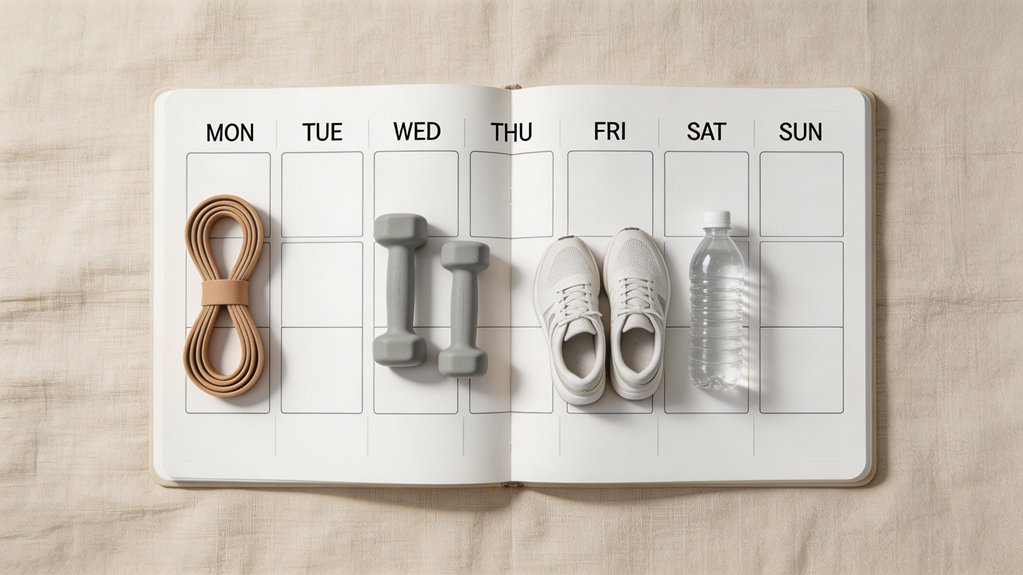
Three to four exercise days per week is a realistic starting point for most people. This frequency lets you build exercise motivation without burning out.
You’ll give your body adequate recovery time between sessions.
Spread your workouts across the week, say Monday, Wednesday, Friday, and Saturday. This spacing prevents overuse injuries and keeps you fresh.
Beginner tips include starting with thirty minutes per session combining cardio and strength work.
Building confidence in your fitness journey is essential when starting exercise after fifty.
You’re establishing a sustainable habit, not chasing perfection. Consistency matters more than intensity at this stage.
You’ll notice improvements in energy and mood within weeks.
Alternate Cardio and Strength Training to Prevent Burnout
When you’re exercising four days a week, alternating between cardio and strength training keeps your body fresh and your mind engaged.
This cross training benefits approach prevents your muscles from adapting too quickly to the same stimulus.
You’ll experience better exercise variety by switching between a cardio day, then a strength day, then back to cardio. Your cardiovascular system recovers while you’re building muscle.
Meanwhile, your muscles repair themselves during cardio sessions.
This pattern reduces burnout because you’re not exhausting identical energy systems daily.
You’ll stay motivated longer when you’re not repeating identical workouts. Your body improves faster with this balanced strategy.
Low-impact exercise options like swimming or cycling can be particularly effective for beginners who want to build endurance without putting excessive stress on their joints.
Build Around 150 Minutes of Weekly Activity
The 150-minute weekly aerobic target might sound like a big commitment, but it’s actually quite flexible once you understand how to structure it.
You can spread this activity across different days, and workout variety keeps things interesting.
Try 30 minutes five times weekly, or 50 minutes three times weekly, whatever fits your schedule.
Mix activity types: walking, cycling, swimming, or jogging all count.
Smart time management means fitting exercise into your existing routine.
Integrating simple lifestyle changes into your daily habits makes it easier to sustain consistent movement without requiring a complete schedule overhaul.
Set specific, measurable goals for each week. This approach helps you serve your own health while building sustainable habits that stick.
Add 10 Minutes Weekly Without Overwhelming Yourself
If you’ve been inactive or just starting your fitness journey, jumping straight to 150 minutes weekly can feel like too much.
Instead, add 10 minutes each week.
This manageable approach builds momentum without overwhelming you.
- Start week one with 10 minutes of walking or light cardio.
- Week two, bump it to 20 minutes. Continue this pattern until you reach 150 minutes.
- Activity variety keeps things interesting; alternate between walking, swimming, and cycling.
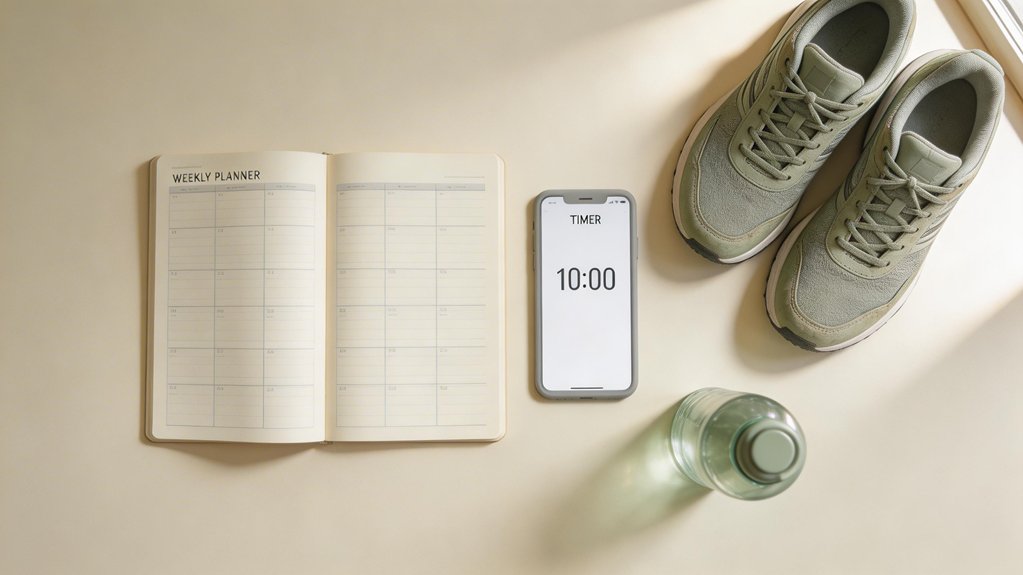
- Track your progress using a simple calendar or app.
- Celebrating small wins motivates continued effort.
Mini activities like vacuuming also count toward your total.
Walking offers numerous health benefits beyond just meeting your weekly exercise goals, making it an excellent choice for your fitness routine.
Listen to Your Body: When to Rest, When to Push
As you build your exercise routine, knowing the difference between productive discomfort and genuine warning signs becomes essential.
Muscle soreness lasting one to two days after workouts signals normal adaptation. Sharp pain, however, demands immediate attention and rest.
Your rest signals matter: consistent fatigue, trouble sleeping, or elevated resting heart rate indicate overtraining.
Listen when your body whispers before it shouts.
Meanwhile, don’t shy away from moments when you can push limits. Breathing hard during cardio or feeling muscle burn during strength work means you’re working effectively.
Recovery days aren’t laziness; they’re when your muscles actually strengthen.
During rest days, your body repairs muscle fibers and adapts to the training stress you’ve placed on it, making them critical for sustainable fitness progress.
Read more: Why We Stick With Exercise Longer When Others Are Involved.