
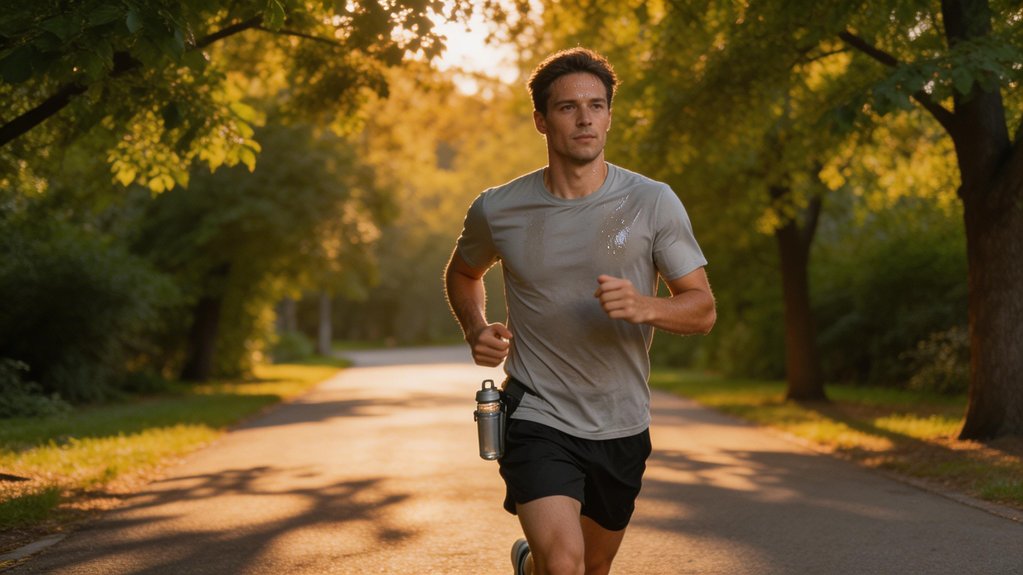
You’ll stay safe exercising in hot weather by timing workouts before 9 a.m. or after 7 p.m. when temperatures are cooler.
Drink water every 10–15 minutes during exercise, and wear light-colored, moisture-wicking clothing plus SPF 30 sunscreen.
Watch for heat exhaustion signs like dizziness, nausea, and excessive sweating, stop immediately if you notice them. When temperatures exceed 90 degrees, move your workout indoors to a gym or pool.
There’s plenty more strategy to help you train confidently year-round.
Time Your Workouts Before 9 A.M. or After 7 P.M
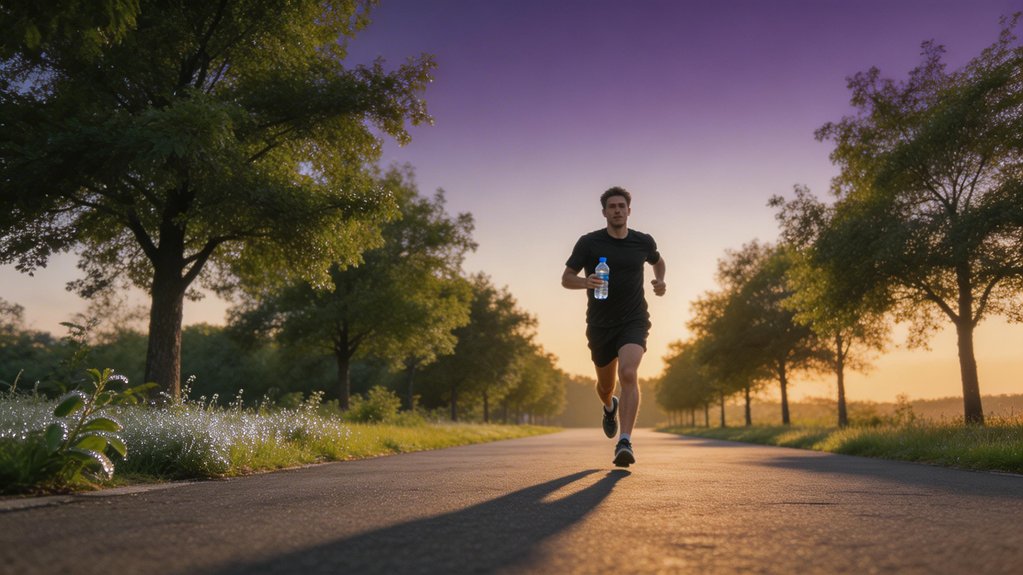
When you’re planning outdoor exercise in hot weather, timing is everything.
You’ll find early morning benefits before 9 a.m. when temperatures stay cooler and humidity remains lower. Your body handles physical activity better during these quieter hours.
Alternatively, you can schedule workouts after 7 p.m. when evening energy kicks in and the day’s heat finally subsides.
Avoid the peak heat window between 10 a.m. and 4 p.m., especially the intense noon-to-3 p.m. period.
By shifting your routine to these safer windows, you’re protecting yourself from heat stress while still maintaining consistent training.
Your body will thank you.
Recognize Heat Exhaustion Signs
Even though you’ve timed your workout perfectly and stayed hydrated, your body can still send warning signals that something’s wrong. Recognizing heat exhaustion symptoms keeps you safe.
Watch for dizziness, nausea, or faintness during exercise. You might experience excessive sweating, weakness, or a rapid heartbeat. Your skin may feel clammy or cold despite the heat.
During exercise, watch for dizziness, nausea, excessive sweating, weakness, rapid heartbeat, or clammy skin, your body’s warning signs.
These heat exhaustion symptoms demand immediate action. Stop exercising right away and move to a cool location. Drink water slowly and rest for several minutes.
Apply prevention strategies by taking regular breaks in shade and monitoring how you feel.
Listen to your body, it’s your best guide.
Drink Water Before, During, and After Exercise
Three timing windows matter most when you’re drinking water around exercise in hot weather: before you start, while you’re working out, and after you finish.
Begin hydration techniques before thirst hits; it’s unreliable. Drink every 10-15 minutes during activity.
Consume 4-6 ounces per interval, or 16-32 ounces hourly during intense exercise. For workouts exceeding one hour, sports drinks support electrolyte balance by replacing sodium and minerals your body loses through sweat.
After exercising, continue drinking until your urine reaches pale yellow. This post-exercise rehydration restores your system completely.
Proper timing prevents dehydration and keeps you performing safely.
Staying hydrated through consistent exercise also supports better sleep quality, helping your body recover fully between workouts.
Wear Light, Breathable Clothing and Sunscreen

While your hydration strategy keeps your body’s internal systems running smoothly, your clothing and sun protection create the external shield that prevents heat buildup and UV damage.
Wear light-colored, loose-fitting clothing made from moisture-wicking fabrics that pull sweat away from your skin. These clothing materials enhance cooling efficiency dramatically.
Consider investing in UV-protective athletic wear specifically designed to block harmful rays while maintaining breathability.
Add a hat or visor to protect your face, head, and neck from direct sunlight.
Apply broad-spectrum sunscreen with minimum SPF 30 before heading outside.
Avoid heavy, tight-fitting gear like protective padding, which traps heat and forces your body to work harder during exercise.
Move Indoors When Heat Becomes Dangerous
Temperatures above 90 degrees signal that it’s time to take your workout indoors. When external heat becomes dangerous, you’ll find plenty of exercise alternatives to maintain your fitness routine.
Gyms offer climate-controlled environments perfect for cardio and strength training.
Shopping malls provide air-conditioned walking spaces. Swimming pools deliver excellent low-impact workouts while keeping you cool. Community recreation centers often feature various indoor activities.
Home-based exercises work too. Try bodyweight routines, yoga, or online fitness classes.
A sustainable weekly exercise plan helps you stay consistent with indoor workouts during hot months.
These indoor workouts eliminate heat stress on your body and let you exercise safely year-round. You’re protecting your health while staying committed to your fitness goals.