
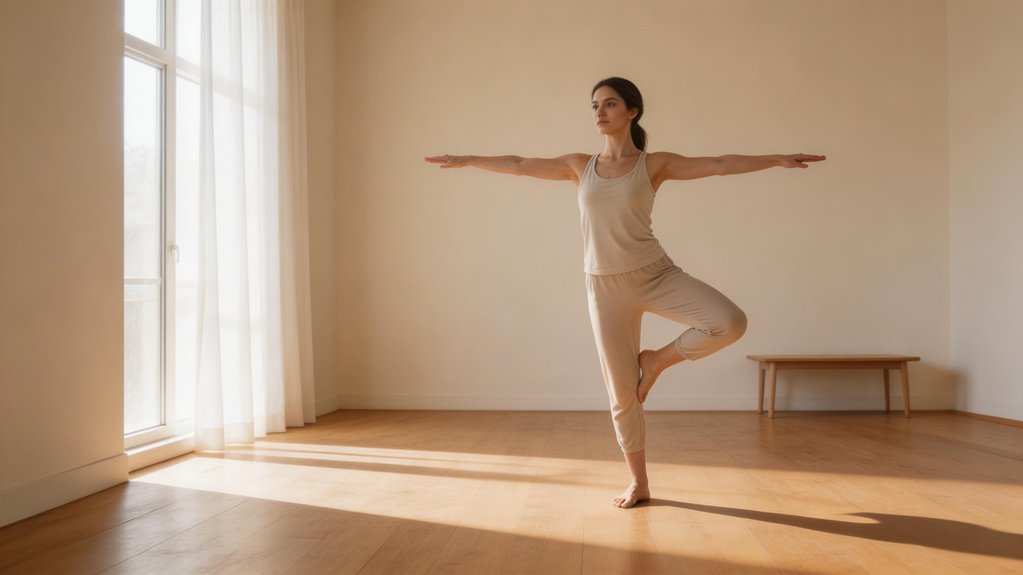
You can start building balance at home safely by wearing loose clothes and keeping water nearby.
Begin with single-leg stance for 5-30 seconds using a chair for support, then progress to tandem stance with one foot forward.
Once you’re holding poses for 20-30 seconds without wobbling, add dynamic movements like heel digs and knee raises.
Layer in arm lifts and light punches while standing on one leg to strengthen your core. Stick with daily practice, you’ll notice real improvements within weeks.
Setting Up Safely for Balance Work
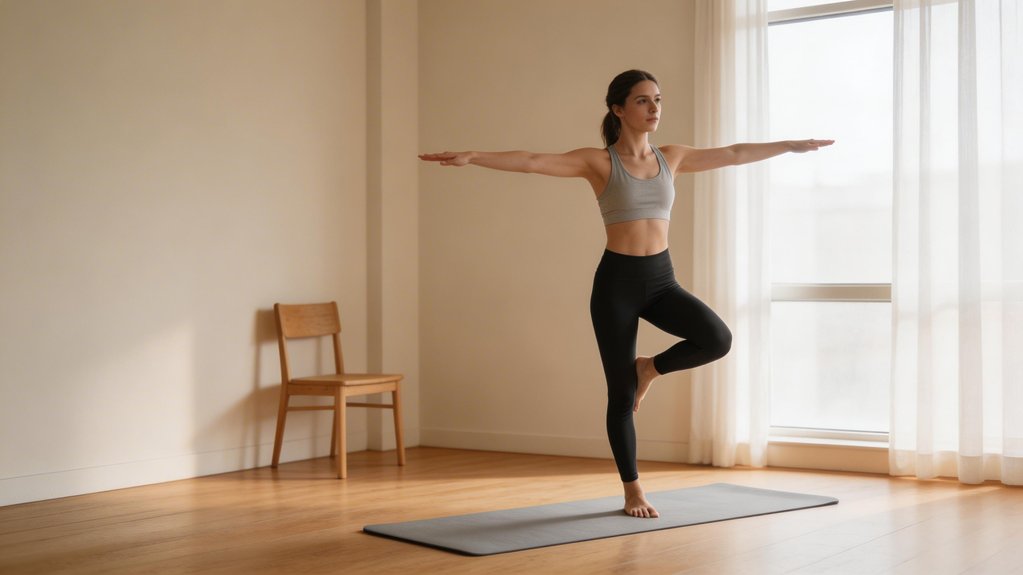
Before you start any balance work at home, you’ll want to set yourself up for success and safety.
Wear loose, comfortable clothing that lets you move freely without restriction. Keep water nearby for hydration during your session.
Wear loose clothing for unrestricted movement and keep water nearby to stay hydrated throughout your balance workout.
For balance aids, use a stable chair or wall for fingertip support if you’re beginning.
Remove tripping hazards like loose rugs or clutter from your exercise area.
Safety precautions matter most; never rush your practice. Start slowly, especially if you haven’t exercised recently.
Your body adapts gradually to new movements. If you experience joint pain during exercise, consider safe exercise modifications to protect your joints while staying active.
These simple preparations help you build confidence and prevent falls while developing better stability.
Master Static Balance Exercises First
Static balance exercises form the foundation of your balance training, and they’re where you should begin.
These foundational movements build stability before you progress to harder routines.
Start with single leg stance by standing on one foot for 5-30 seconds. Keep your knee slightly bent.
Try tandem stance next, positioning one foot directly in front of the other heel-to-toe.
This engages your proprioception and joint awareness. You can hold onto a wall with your fingertips for support.
As a low-impact exercise, static balance work is gentle on your joints while effectively building strength and stability.
Practice these exercises daily for consistent progress.
You’ll notice improvements within weeks as your stability naturally increases.
Progress to Dynamic Movements Without Risk
Once you’ve built a solid foundation with static exercises, you’re ready to add movement into the mix.
Dynamic stability requires your body to maintain balance while you’re actively moving.
Start with heel digs and knee raises. These movement changes let you shift weight safely while keeping control.
Progress gradually by adding calf raises or high marching.
Keep your gaze forward and move slowly at first. You’ll develop better coordination and muscle awareness.
As you grow confident, increase your speed or duration. This progression prevents injury while building the balance skills you’ll use daily.
Remember that gradual progression is essential for new exercisers to minimize the risk of overuse injuries and soreness.
Layer in Upper Body and Core Moves
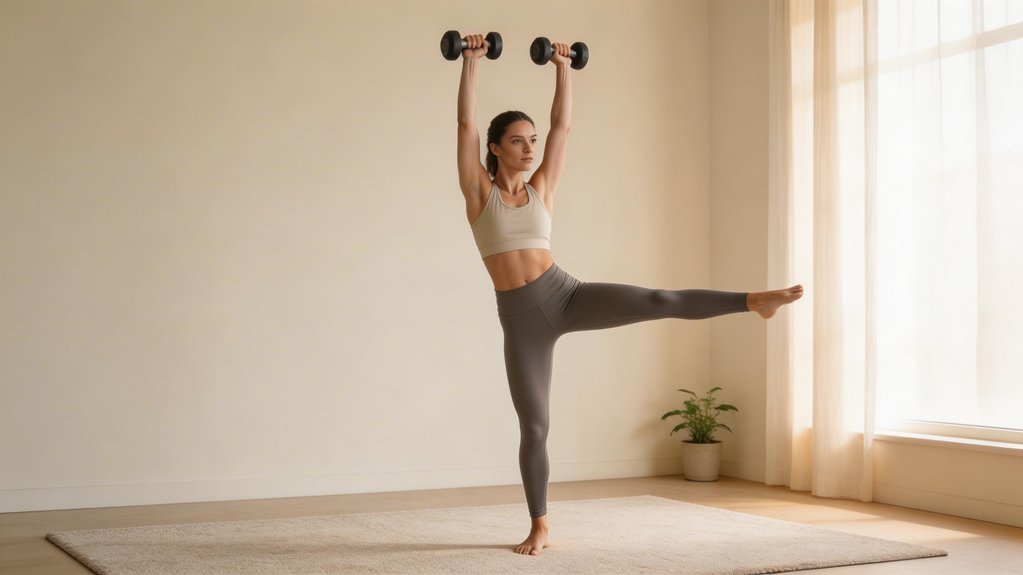
As your balance improves with dynamic movements, it’s time to challenge your core and upper body too. You’ll build functional strength while maintaining stability.
Strengthening these areas is essential to improve your posture during daily activities.
Here’s how to integrate upper body moves:
- Tandem standing with arm lifts: Lift your arms out to shoulder level while holding heel-to-toe position for added challenge.
- Airplane balance variations: Extend your arms to the side, front, or behind while balancing on one leg.
- Single-leg punches: Hold light weights at chest height, shift onto one leg in a quarter-squat, and punch across your body.
- Heel digs with arm extensions: Lift both arms straight out at 45 degrees as you bring one foot forward.
These upper body integration exercises develop core stability while you maintain your balance foundation.
Know When You’re Ready to Advance
Progress in balance training isn’t about rushing ahead; it’s about recognizing when your body’s actually ready for the next challenge.
You’ll know your balance readiness improves when you hold poses for 20-30 seconds without wobbling or needing wall support.
That’s your signal to try dynamic movements or reduce exercise modifications like fingertip contact.
Daily practice over weeks builds this foundation naturally.
Listen carefully to your body’s feedback. Understanding functional fitness principles helps you recognize how balance improvements translate into real-world stability for everyday activities.
If you’re still shaky after consistent effort, stay with current exercises longer. There’s no shame in that approach.
Advancing gradually prevents setbacks and builds genuine stability that serves you well.