

Look up how much protein you need and you will likely find one number: 0.8 grams per kilogram of body weight per day. That is the official guideline for adults.
A growing body of research says that for people past 60, it is set too low.
Why the standard number falls short after 60
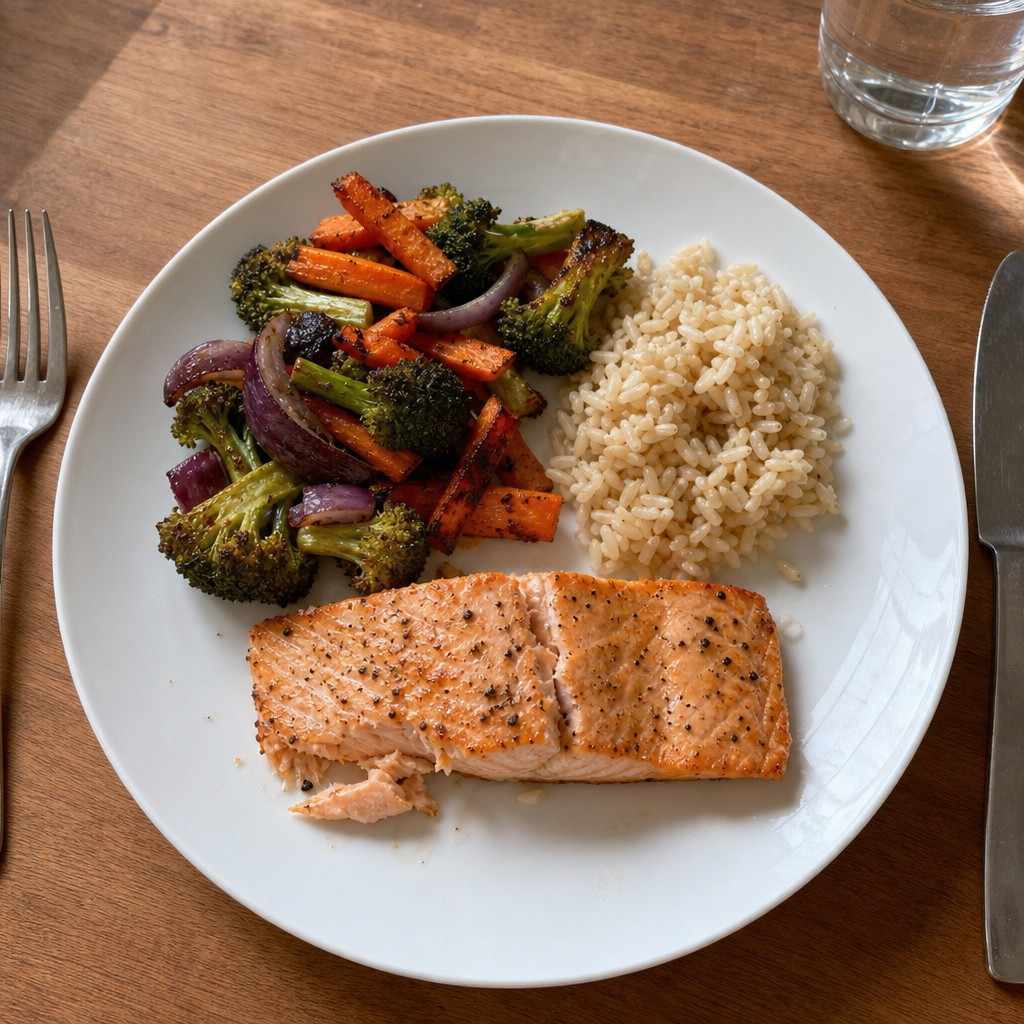
Older muscle is harder to feed. The same serving of protein triggers less muscle building in a 70-year-old than in a 30-year-old, an effect researchers call anabolic resistance.
That means older adults need more protein, not less, to hold on to the muscle they have.
Two expert panels landed on the same higher target.
In 2013, an international team called the PROT-AGE Study Group reviewed the evidence in the Journal of the American Medical Directors Association.
They recommended that healthy older adults aim for 1.0 to 1.2 grams of protein per kilogram of body weight each day. That is well above the standard 0.8.
A European expert group writing in the journal Clinical Nutrition in 2014 reached the same range.
What does that look like in pounds? For a 150-pound (68 kg) adult, the old guideline works out to about 54 grams a day.
The higher target is closer to 68 to 82 grams. Harvard Health, summarizing the evidence on protein needs in older adults, puts the useful range even a little wider for some people.
It is not only how much, but when
One detail most guidelines skip: how you spread protein across the day matters as much as the total.
Because of anabolic resistance, older muscle seems to need a larger dose at each meal to respond, roughly 25 to 30 grams of protein. A big serving at dinner does little good if breakfast and lunch were nearly protein-free.
Aim for a solid serving at each of your three meals rather than saving it all for the evening. Harvard’s review makes the same point: dividing protein evenly across meals helps your body actually use it.
What this looks like on a plate
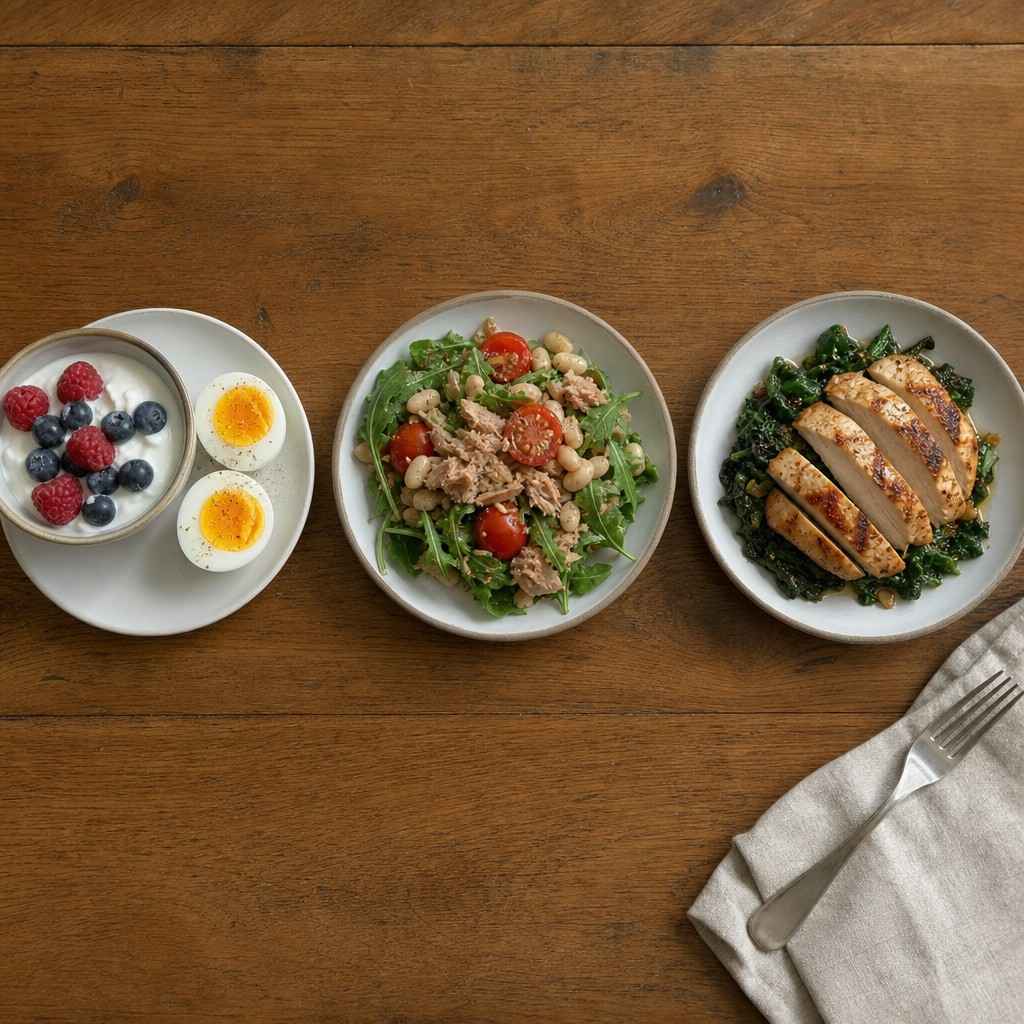
Reaching the higher target is easier than it sounds once protein moves to the center of each meal.
- Breakfast: two eggs (about 12 g), a cup of Greek yogurt (about 17 g), or cottage cheese.
- Lunch: a can of tuna (about 25 g), beans and lentils, or leftover chicken.
- Dinner: a palm-sized piece of fish, poultry, or tofu (around 25 to 30 g).
If you are not sure where to begin, the best high-protein foods for older adults breaks down simple, affordable options for each meal.
Protein needs a partner: movement
Eating more protein helps protect muscle. Building muscle takes one more ingredient: using it.
Protein gives your body the raw material, but resistance and strength work send the signal to build. The two together are what the studies measured, not protein on its own.
Even gentle, twice-weekly strength training after 50 is enough to start, and pairing it with smart eating around your workouts supports recovery.
The takeaway
The old 0.8 figure was never written with aging muscle in mind.
For most healthy adults over 60, the research points higher, to roughly 1.0 to 1.2 grams per kilogram. Spread that across the day in servings of 25 to 30 grams. If you have kidney disease or another condition that affects how much protein is safe for you, check with your doctor before changing your diet.
It is never too late for this to matter. Muscle responds to better fuel and regular movement well into later life. Protecting it is one of the most direct things you can do to stay strong and independent.
Sources:
- Bauer J et al. (2013), Journal of the American Medical Directors Association. Evidence-based recommendations for optimal dietary protein intake in older people (PROT-AGE Study Group).
- Deutz NEP et al. (2014), Clinical Nutrition. Protein intake and exercise for optimal muscle function with aging (ESPEN Expert Group).
- Harvard Health. Muscle loss and protein needs in older adults (health.harvard.edu).