

Your brain’s thirst signal weakens as you get older. That is not a minor inconvenience. It means you can be mildly dehydrated and feel nothing unusual at all.
The thirst system becomes less reliable after 60, which means relying on it alone is not enough.
This is not a willpower problem or a habit gap. It is physiology, and once you understand it, the fix is straightforward.
Why Thirst Fades With Age
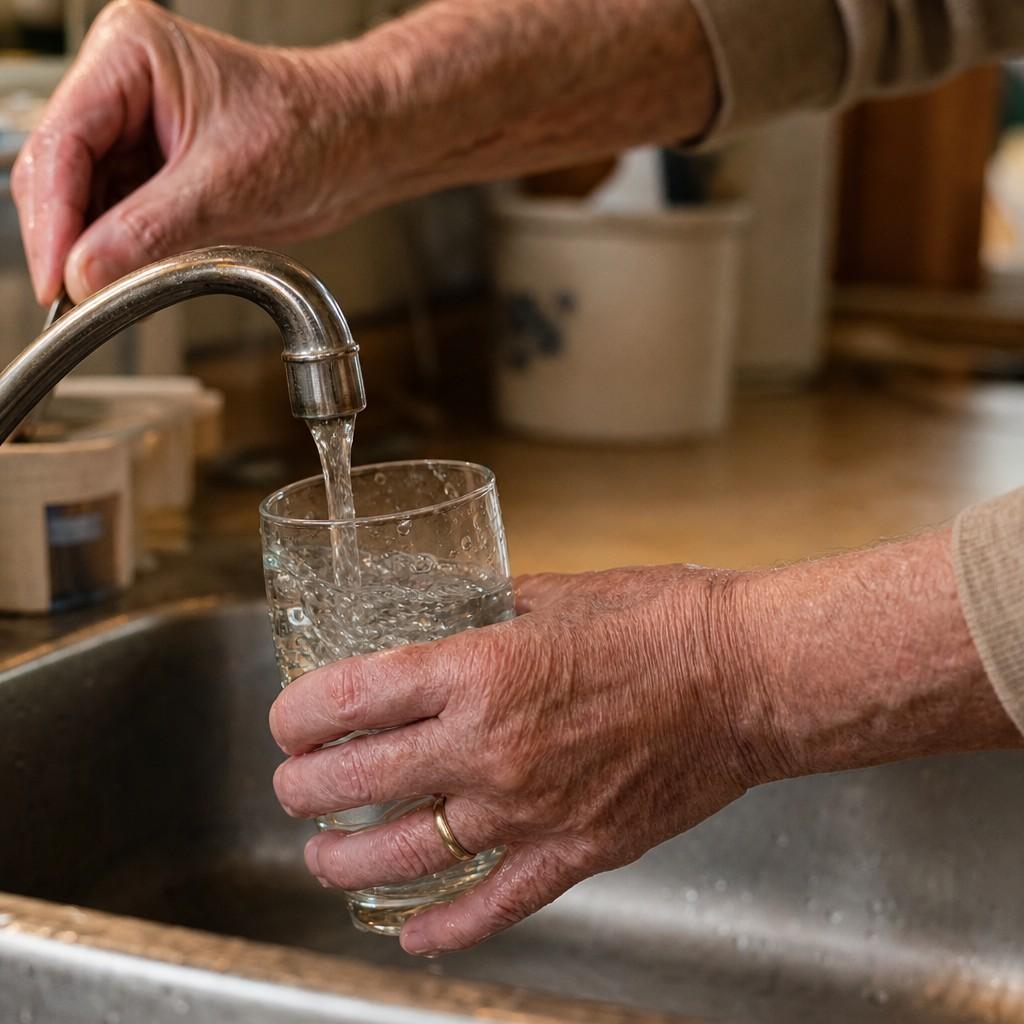

Thirst is controlled by osmoreceptors in the brain that detect when blood becomes more concentrated. With age, these receptors become less sensitive, so the same level of dehydration triggers a weaker signal than it once did.
At the same time, the kidneys lose some of their earlier efficiency at conserving water. They may excrete more fluid than younger kidneys would in the same situation.
The National Institute on Aging notes that older adults may not feel thirsty even when their bodies need fluids, and advises drinking regularly rather than waiting for thirst to prompt you.
The result: your body needs fluid, but the signal that used to remind you has gone quieter.
The practical implication is not to panic. It means building some simple checks into your day so that thirst is a bonus cue, not your only one.
Signals That Work Better Than Thirst
Most people know the urine color check in theory but skip it in practice. Light yellow is the goal. Dark yellow or amber is a clear signal to drink more. Colorless is not the target either.
A few other practical signals are worth paying attention to:
Mild dehydration often shows up as fatigue or a dull headache before any thirst. Mayo Clinic notes that even mild dehydration can cause fatigue and dizziness. If an afternoon slump hits reliably, fluid might be part of the answer.
Dry mouth is another signal. It is not as reliable as urine color, but it is easier to notice in the moment.
The simplest fix is a timed routine. Drink at set points in the day: one glass when you wake up, one with each meal, one mid-morning and one mid-afternoon. That pattern tends to add up to adequate intake without requiring constant monitoring.
Hydration and Exercise
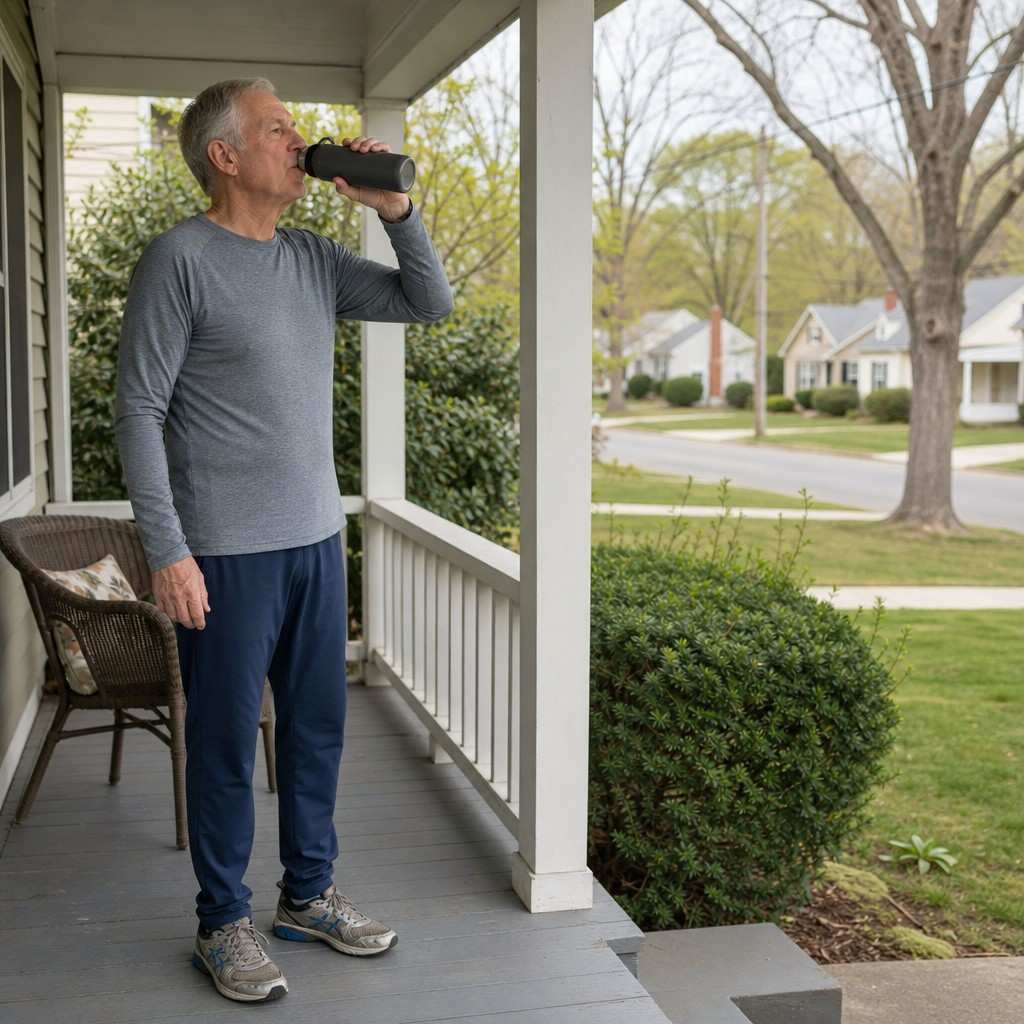

Even mild dehydration can make a walk feel harder than it should. It affects muscle efficiency and, importantly for older adults, it can affect balance.
For regular walkers or anyone doing gentle exercise for overall health, the timing matters. Drink a glass of water before you head out, not only afterward. By the time you feel thirsty during a walk, your body is already playing catch-up.
Drink before exercise, not just after. The body cannot fully catch up mid-effort.
For anyone exercising in warm weather, the fluid needs increase further. Sweat loss is real even when temperatures feel moderate. A deeper look at how to exercise safely in hot weather covers the temperature side of this in more detail.
Fluid Does Not Have to Mean Plain Water
Plain water is fine, but it is not the only source that counts. Soup, fruit, milk, herbal tea, and decaf coffee all contribute to daily fluid intake.
Harvard Health and the Harvard T.H. Chan School of Public Health note that food contributes a meaningful share of daily fluid needs, particularly fruits and vegetables with high water content. A bowl of watermelon or a cup of broth counts toward your total.
A wide range of foods and drinks contribute to hydration. Plain water is one option, not the only one.
Still, over-drinking is not the goal. There is no benefit to forcing large amounts of fluid beyond what your body needs. For most healthy older adults, spreading six to eight cups of fluid through the day is a reasonable starting point.
Medications and Conditions That Change the Picture
Some blood pressure medications, particularly diuretics, increase how much fluid the body loses. If you take them, your fluid needs may be higher than average.
At the same time, some heart and kidney conditions require limiting fluid intake rather than increasing it. The rules can run in opposite directions.
If you have a heart or kidney condition, or take diuretics, check with your doctor about what daily fluid intake is right for you.
A Simple Routine That Works
One habit worth building: set a glass of water by the coffee maker the night before. The first drink of the day then happens before the coffee, without any decision or willpower involved. It is already there.
A small routine removes the need to rely on thirst at all.
For anyone who finds plain water unappealing, the water-bottle options and practical strategies in essential items for staying hydrated during exercise are worth a look. And if you are thinking about what else to have before or after a workout, what to eat before and after exercise pairs naturally with the hydration piece.
The underlying principle is the same for both food and fluid: small consistent habits matter more than occasional large efforts.
The Short Version
Your thirst signal fades with age. That is normal, and it is not your fault.
Check urine color, drink at set points in the day, and have a glass of water before you exercise rather than waiting until you feel thirsty.
Soup, fruit, tea, and milk all count. One glass at the right moment beats three glasses you forget to drink.