
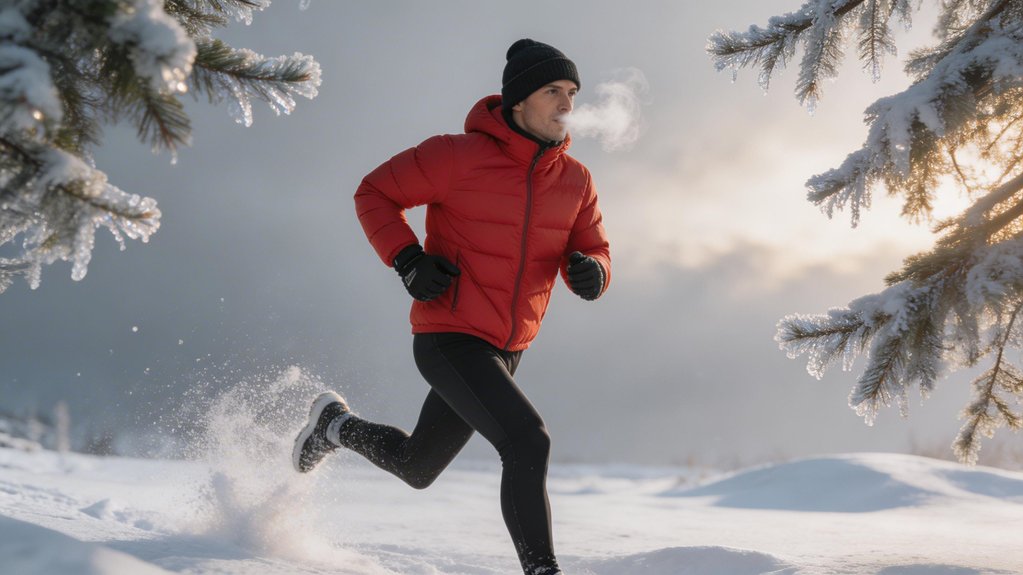
You can stay active all winter without excuses.
Try home workouts using canned goods as weights or follow free YouTube classes. Hit community centers for affordable basketball or swimming.
Layer up smart: thermal base layer, fleece middle, windproof jacket on top. Wear insulated gloves and traction gear if you’re outside.
Mall walking gives you climate control and safety. Mix indoor and outdoor options to keep things fresh.
Stick with consistency over intensity, and you’ll maintain your fitness straight through spring.
Why Winter Exercise Pays Off (Even When It’s Cold)
While the cold might tempt you to hibernate indoors, staying active during winter actually offers distinct advantages you won’t get in warmer months.
Your body burns more calories in cold weather because it works harder to maintain its temperature.
You’ll also experience a genuine mood boost from physical activity and sunlight exposure, which combat the darker season’s mental heaviness.
Winter exercise releases endorphins that lift your spirits naturally.
Regular physical activity during winter months also significantly improves sleep quality, helping you rest better through the long nights.
Plus, consistent movement prevents cardiovascular fitness loss and maintains muscle strength.
You’re not just surviving winter, you’re investing in your health and emotional resilience when staying active matters most.
Home Workouts That Need No Equipment
Now that you understand why winter activity matters, here is the practical part. You don’t need fancy gym equipment or memberships to stay moving.
Your home becomes your fitness studio through bodyweight exercises and online classes.
You can burn serious calories dancing for just fifteen minutes. Try these accessible options:
- Follow free online classes via YouTube or Zoom from experienced instructors
- Use household items like canned food as dumbbells for resistance training
- Incorporate active housework, vacuuming, mopping, and sweeping, into your daily routine
These strategies cost nothing while building strength and endurance.
Consistency matters more than intensity when you’re starting out. By prioritizing time-savvy exercise approaches, you can maintain your fitness routine even with a demanding schedule.
Indoor Winter Exercise, From Gyms to Alternatives
If you’d rather move indoors when temperatures drop, you’ve got plenty of solid options beyond expensive gym memberships.
Community centers provide budget-friendly fitness classes like basketball, volleyball, and swimming for winter workouts.
Yoga and kickboxing studios through local organizations provide structured workouts. You could also explore newer fitness trends like barre or cross-fit.
Mall walking gives you climate control and safety.
Free trial passes let you test gyms before committing financially.
Don’t overlook on-demand videos, apps, or live virtual classes from home.
Starting a new exercise routine after 50 requires safe exercise fundamentals to build confidence and prevent injury.
These alternatives keep you active, engaged, and moving consistently through winter months.
Dress Smart for Winter Workouts
Once you’ve decided to exercise outdoors when it’s cold, your clothing choices matter more than you might think.
Smart layering keeps you warm without overheating, which prevents dangerous sweating and chilling afterward.
Use these layering techniques:
- Base layer: thermal fabrics like merino wool or synthetic materials that pull moisture away from skin
- Middle layer: fleece or down jacket for insulation and warmth retention
- Outer layer: windproof jacket protecting you from harsh conditions
Don’t forget extremities. Wear insulated gloves, a hat covering your ears, and warm socks.
Adjust layers as your body temperature rises during activity. You’ll stay comfortable and focused on your workout.
Finding quality cold weather workout gear on Amazon makes it easier to build a complete winter exercise wardrobe with options delivered to your door.
Stay Safe on Ice and Snow
While proper clothing keeps you comfortable during winter workouts, your footing matters just as much.
You’ll want to avoid ice-covered surfaces entirely when possible. If you must venture outside, wear snow traction gear like microspikes or cleats.
These attach to your shoes and grip icy ground effectively. Walking in safe neighborhoods and well-maintained parks reduces your fall risk considerably.
Microspikes and cleats grip icy surfaces effectively, while safe neighborhoods and well-maintained parks significantly reduce fall risk during winter walks.
Monitor weather conditions days ahead to plan accordingly. During daylight hours, you’ll see hazards better.
Just as exercising in the heat requires special precautions, winter workouts demand attention to environmental safety risks. If you’re unsure about outdoor conditions, choose mall walking or indoor facilities instead.
Your safety comes first when staying active through winter.