
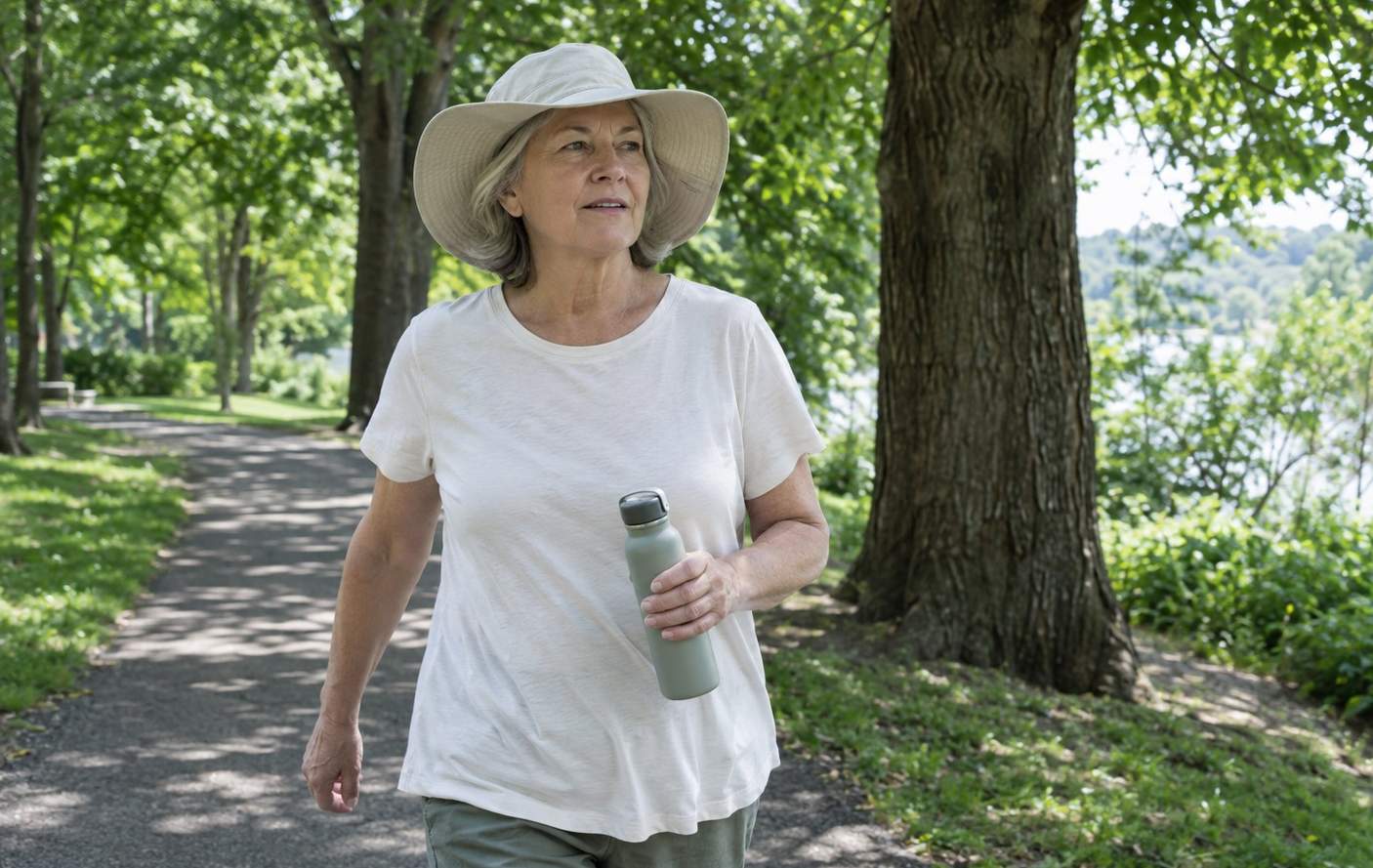
Hot weather doesn’t have to end your exercise. A few adjustments keep it safe.
Choose cooler hours, drink often, dress light and move indoors when it is very hot. Older adults handle heat less easily, so a little planning goes a long way.
When Is the Best Time to Exercise in Hot Weather?
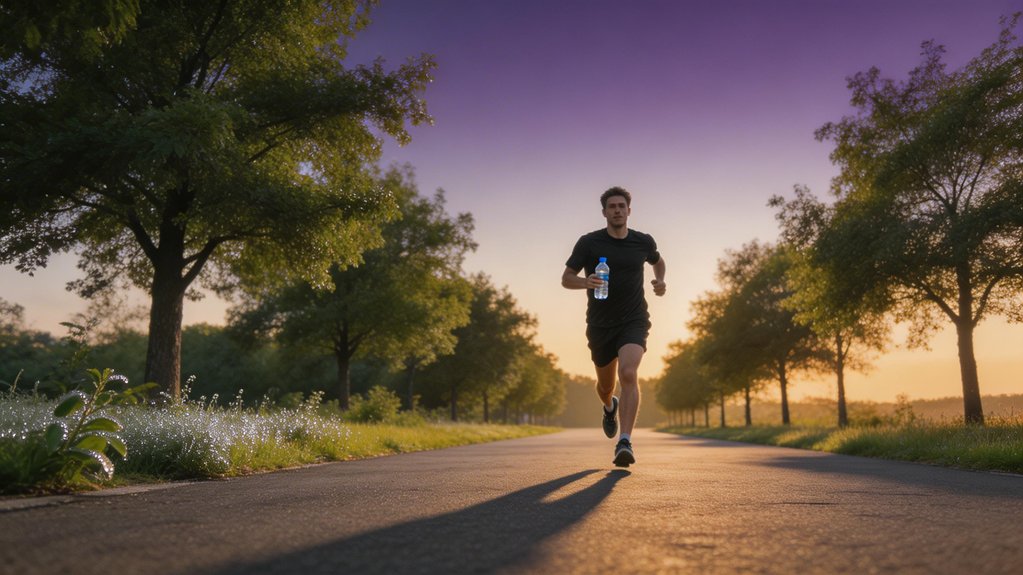
Go out in the early morning or the evening, when the air is coolest. Skip the hottest part of the afternoon.
Check the heat index before you go. It combines air temperature and humidity, and the National Institute on Aging says to pay attention to the heat index on hot days.
Choose shaded routes where you can. Plan places to sit and rest along the way.
If the heat index is high, move your session indoors instead.
What Are the Signs of Heat Exhaustion and Heat Stroke?
Even with good planning, heat can catch up with you. Knowing the signs keeps you safe.
Stop and cool down if you feel dizzy, weak, nauseated or unusually clammy. The NIA says heat exhaustion can bring thirst, dizziness, weakness, poor coordination and nausea, sometimes with heavy sweating and a rapid pulse.
Move to a cool place, rest and sip fluids slowly. If you don’t feel better soon, get medical care.
Heat stroke is an emergency. Signs include fainting, confusion or acting strangely, no sweating even when it is hot, and dry, flushed skin.
The NIA says to seek medical help right away and move to a cooler place. Call 911 if you see these signs in yourself or someone else, and cool the skin with cool, wet cloths while you wait.
How Should You Drink Before, During and After Exercise?
Sip fluids regularly, and don’t wait until you feel thirsty. Thirst is a less reliable guide for older adults.
Research on adults over 65 found that when they exercised in a warm environment, they showed decreased thirst and reduced fluid intake. Drinking on a schedule helps cover the gap.
Drink some water before you head out, take small sips at every break, and keep drinking afterward. There is more on staying hydrated as an older adult elsewhere on the site.
Plain water is a good choice for most walks. Avoid alcohol and caffeinated drinks on hot days.
If you take blood pressure or heart medicine, or your doctor limits how much you drink, ask what to do on hot days.
Regular exercise can also help you sleep better, so your body can recover between workouts.
What to Wear in the Heat
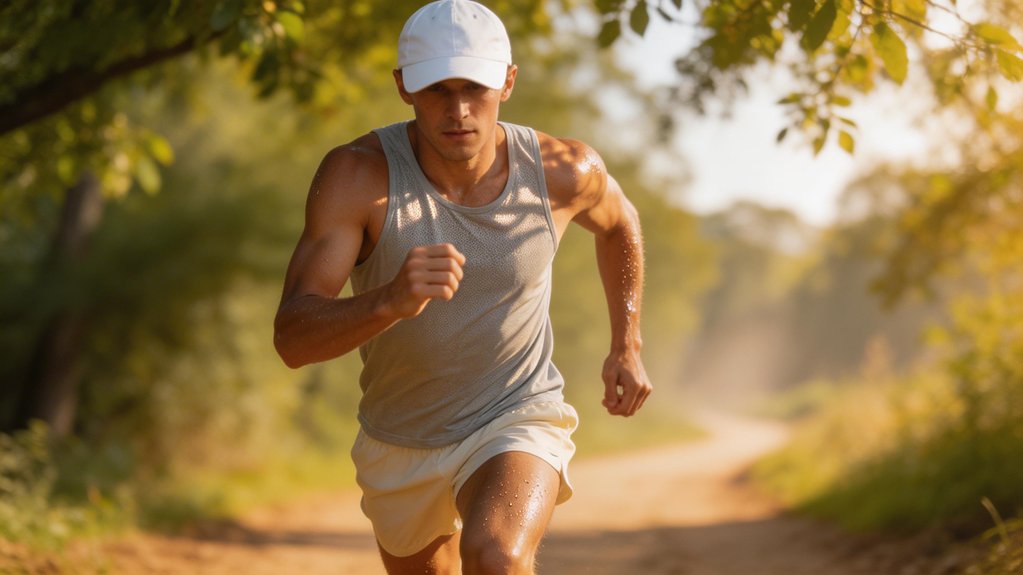
Dress in light, loose clothing and protect your skin from the sun. The NIA suggests lightweight, light-colored, loose-fitting clothing for hot days.
Fabrics that pull sweat away from your skin feel more comfortable. If you’d like added sun cover, you can compare sun protection clothing on Amazon.
Some links on this page go to Amazon, and the site earns a small commission when a reader buys through one.
Add a hat or visor to shade your face and neck, and wear sunglasses.
Use a broad-spectrum sunscreen of SPF 15 or higher, and reapply it through the day. Avoid heavy, tight gear, which traps heat.
When Should You Move Indoors?
When it is very hot, exercise inside. The NIA says to avoid outdoor exercising when it is very hot and find somewhere cool to be active instead.
Good indoor options include:
- Walking laps in an air-conditioned shopping mall.
- Gentle water exercise in a pool, which keeps you cool.
- A community recreation center or senior center.
- Chair exercises, light strength work or an online class at home.
A simple weekly exercise plan helps you keep going on hot days, too.