
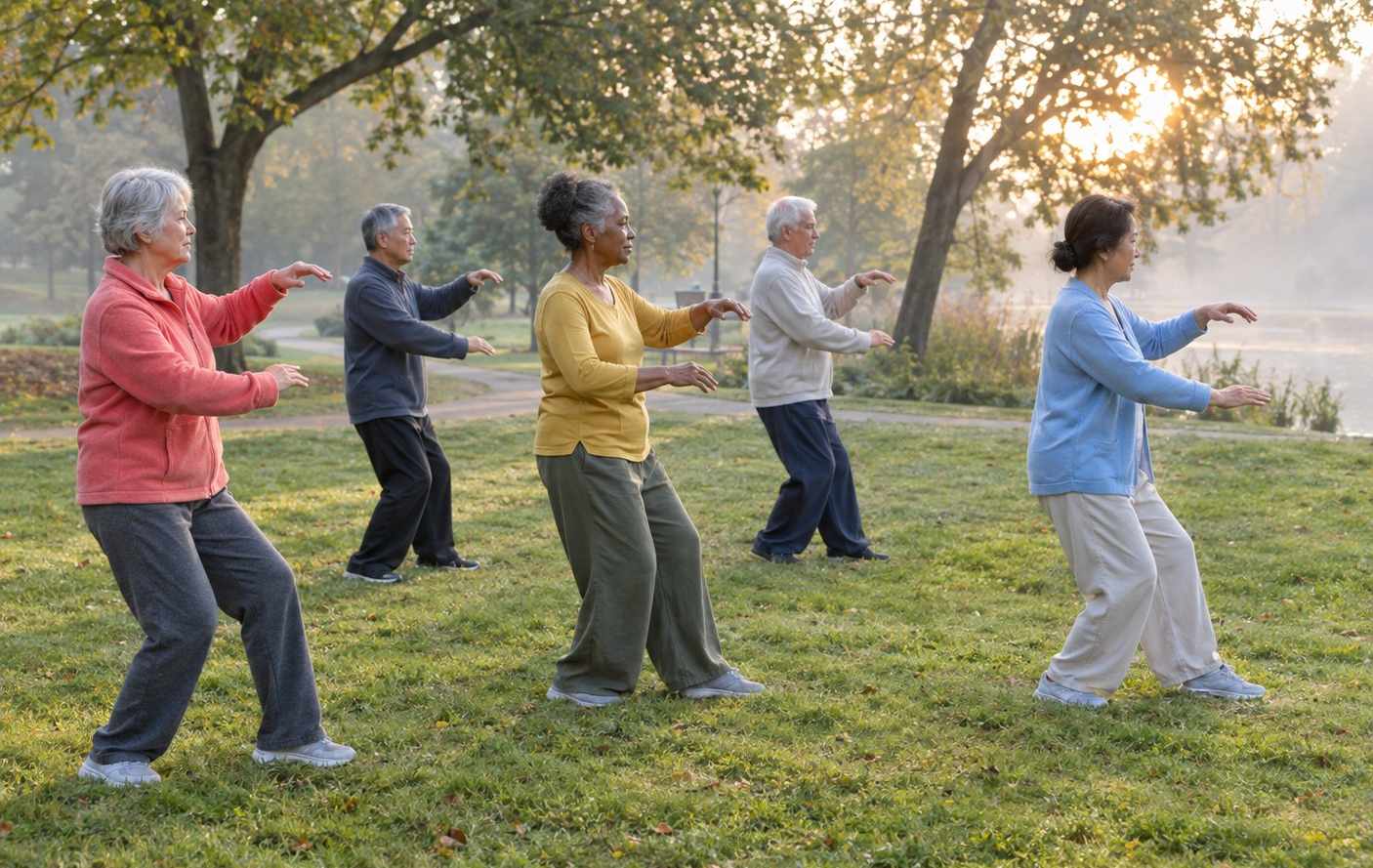
In a Cochrane review of exercise trials, tai chi was linked to about 20 percent fewer older adults falling. That result came with high-certainty evidence.
You do not need equipment or a gym.
This is general information, not medical advice. If you have dizziness, a recent fall or a balance condition, check with your doctor before you start.
What the trials found for falls
The review was led by Sherrington and colleagues and covered 108 randomized trials. Together they followed 23,407 people over 60 living in their own homes.
Across all types of exercise, the rate of falls dropped by 23 percent. For tai chi on its own, the numbers look like this:
| What was measured | Result for tai chi | Certainty |
|---|---|---|
| People who fell at least once | 20% fewer (8 trials, 2,677 people) | High |
| How often falls happened | 19% lower (7 trials, 2,655 people) | Low |
The review’s authors called tai chi something that “may” reduce falls. The finding on how many people fall is the stronger one. The finding on how often falls happen is less certain, so treat it as promising.
The National Center for Complementary and Integrative Health, part of the National Institutes of Health, reports the same 20 percent figure from those eight studies.
Other kinds of exercise helped too. Balance and functional exercises cut the rate of falls by 24 percent, while the review was uncertain about the effect of walking programs on falls.
If you want that wider picture, the research on balance training and fall prevention covers it.
What a class asks of your body
The NIH center describes tai chi as a series of slow, gentle movements and postures. It adds a meditative state of mind and controlled breathing.
In practice, you stand on both feet and shift your weight slowly from one leg to the other. Your arms move in smooth arcs. Nothing is jarring, and nothing is rushed.
The slow weight shifts practice balance, which NCCIH says tai chi may help improve.
Here is what that asks of you:
- Standing for the length of a class, with chances to rest.
- Moving slowly, which can be harder on the legs than it looks.
- Following along, since most classes teach by copying the instructor.
Safety looks good too. NCCIH says adverse events were similar for people doing tai chi, another active intervention, or no intervention, and the ones linked to tai chi were minor aches and pains.
How to find a class
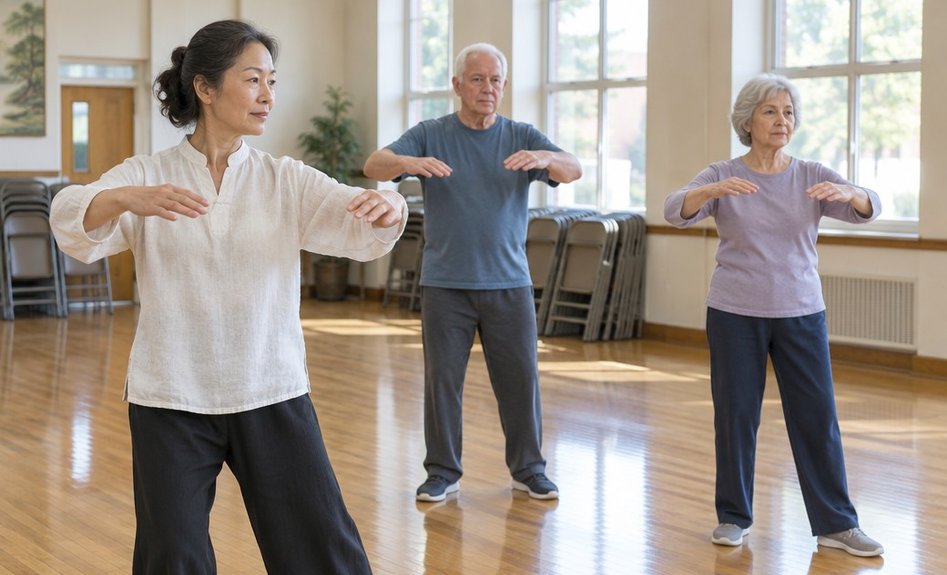
Start with a program built for older adults.
Tai Chi for Arthritis and Fall Prevention is run by the Tai Chi for Health Institute, which trains and certifies instructors. Its own page says the program was recognized by the CDC as evidence-based.
A full course is 16 one-hour lessons. The institute’s instructor directory lets you search by city, program and online availability. Certification matters here, because NCCIH notes that tai chi instructors don’t have to be licensed.
When you call a senior center, a hospital or a local YMCA, ask three things:
- Has the instructor been trained in a program for older adults?
- Can you watch the first class before you join?
- Are there chair-supported options for balance practice?
The first question comes from NCCIH’s own advice to ask about an instructor’s training and experience.
Three starting moves
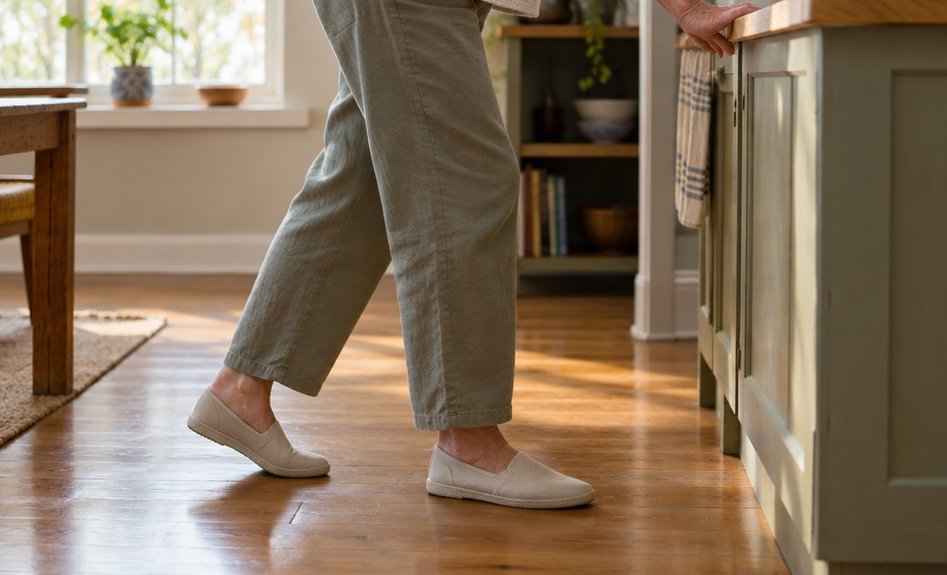
Try these beside a kitchen counter with one hand resting on it, in flat shoes or socks you won’t slip in. They are simple practice moves, not the full forms a class teaches.
- Weight shift. Stand with feet hip-width apart. Slowly move your weight onto your right foot, pause, then slowly move it left. Do ten slow shifts.
- Slow arm lift. Breathe in as you raise both arms to shoulder height. Breathe out as you lower them. Do eight, slow enough that each takes about four seconds.
- Step and pause. Step one foot forward, heel first, and shift your weight onto it. Pause, then shift back. Switch feet and repeat five times each side.
A first-week plan
Slow movement can tire the legs, so keep the first week short.
For week one, aim for four short sessions and rest on the other days.
| Day | What to do |
|---|---|
| Monday, Thursday | Weight shift and slow arm lift, about 5 minutes |
| Tuesday, Saturday | All three moves, about 10 minutes |
| Wednesday, Friday, Sunday | Rest, or read about local classes |
When these feel steady, the simple balance exercises you can do at home make a good next step. A class gives you a teacher who can correct what you can’t see yourself.
One thing to do this week
Open the Tai Chi for Health Institute’s instructor directory, search your city, and filter for Tai Chi for Arthritis. Then call your nearest senior center and ask whether you can watch a beginner class.