
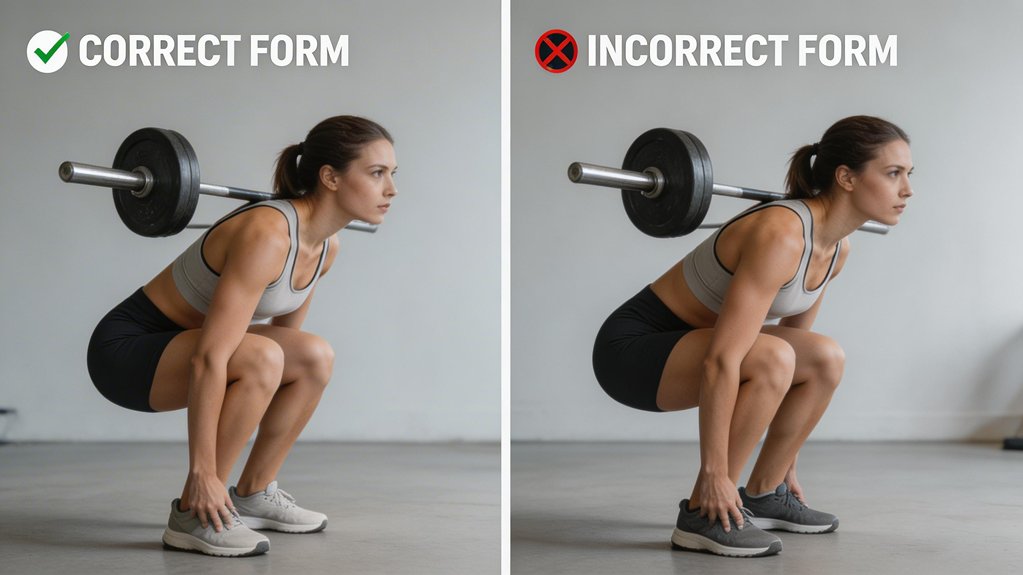
Proper form separates safe, effective training from wasted effort and injury. When you lift with poor technique, you shift tension away from target muscles and stress your joints instead.
Moderate weight with correct movement patterns builds real strength while protecting your nervous system. Small positioning adjustments dramatically improve results.
Video yourself or use mirrors to catch common mistakes like spinal rounding or swinging momentum. If pain persists despite corrections, professional guidance reveals what you’re missing.
Stop Sacrificing Form for Heavier Weights
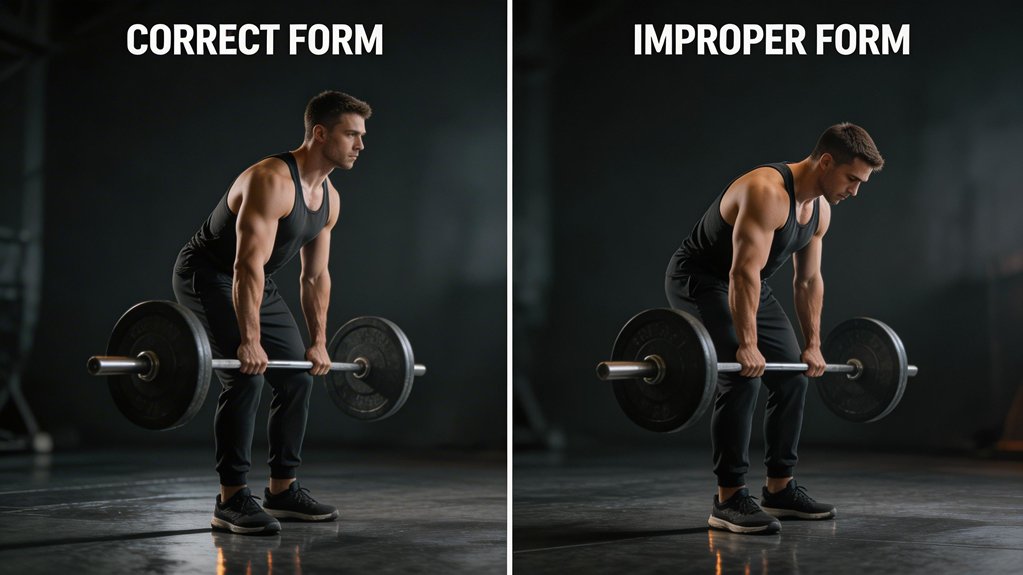
One of the biggest mistakes you’ll see in any gym is someone loading up a barbell with weight they can’t actually handle. That’s when weightlifting myths take over.
You might think heavier always means better results, but that’s wrong. Heavy weight with poor form fundamentals actually damages your joints and muscles instead of building them. You’ll sacrifice effectiveness for ego.
Correct form with moderate weight builds strength safely and consistently. Your nervous system learns proper movement patterns. Understanding key injury prevention tips will help you avoid common mistakes that plague new exercisers.
Progressive overload means gradually increasing weight while maintaining perfect technique. That’s how you actually get stronger.
Identify the Form Mistakes Costing You Results
Now that you understand why form matters more than weight, it’s time to look at what’s actually going wrong in your workouts. Most people sacrifice exercise alignment for heavier loads.
Most people sacrifice exercise alignment for heavier loads, killing muscle engagement and effectiveness.
You’re likely swinging dumbbells during bicep curls or rounding your spine on deadlifts. These mistakes shift tension away from intended muscles, killing muscle engagement and effectiveness.
Watch yourself in mirrors. Film your sets. Ask experienced lifters for feedback. Starting with safe strength training fundamentals ensures you build proper movement patterns from day one.
Small adjustments in positioning, range of motion, and breathing patterns create huge differences in results.
You’ll lift safer, stronger, and smarter when you identify where alignment breaks down.
Check Your Form: A Simple Pre-Workout Diagnostic
Three quick checks before you load the bar will catch most form breakdowns before they happen. Your pre-workout checklist should include a form assessment covering these essential areas:
- Mirror positioning to observe alignment throughout movements
- Joint positioning relative to your feet and spine
- Range of motion without compensation or momentum
- Breathing patterns and core engagement cues
- Weight selection that allows controlled repetitions
For those managing joint discomfort, incorporating safe exercise modifications into your routine ensures you can build strength while protecting vulnerable areas.
Spend two minutes reviewing these points. You’ll identify subtle issues that compromise safety and results.
This simple diagnostic prevents injuries before they start and guarantees each rep serves your goals effectively.
Fix Form Problems Before They Become Injuries

Once you’ve spotted a form breakdown during your pre-workout check, you’ve got a narrow window to fix it before the problem becomes habitual. Your form assessment reveals where corrections matter most.
Address issues immediately through lighter weights and slower repetitions. This injury awareness approach prevents bad patterns from cementing themselves.
Practice corrected movements for five to ten reps before resuming normal training. If pain emerges during adjustment, stop entirely.
Video yourself performing the exercise to catch what you’re missing. Small fixes today protect your joints, muscles, and tendons tomorrow.
Research shows that stretching and mobility work alongside proper form to create a comprehensive injury prevention strategy.
Serving your body well means prioritizing prevention over recovery.
Progress Safely: Know When Professional Help Is Worth It
While you can fix many form issues on your own through lighter weights and video feedback, some problems need outside expertise.
Professional guidance becomes essential when you’re experiencing persistent pain, limited range of motion, or recurring problems despite your efforts.
Professional guidance becomes essential when experiencing persistent pain, limited range of motion, or recurring problems despite your efforts.
A qualified coach or physical therapist can perform injury assessment and identify underlying issues you can’t see yourself. Research shows that muscle building after fifty requires particularly careful attention to form to maximize gains and prevent injury.
Consider professional help when you notice:
- Sharp pain during or after exercises
- Swelling or inflammation lasting more than a few days
- Asymmetrical movement patterns between body sides
- Difficulty performing basic movements you’ve done before
- Previous injuries affecting your current training
Getting expert help early prevents complications.