

You’ll stick with exercise when you pick activities you actually enjoy, whether that’s dancing, sports, or walking.
Set specific goals like exercising five days weekly for two months instead of vague targets.
Track your progress with apps or photos so you can see real results.
Find an accountability partner who checks in on your commitment. Don’t skip rest days; they’re when your body actually gets stronger.
These five strategies work together to build lasting fitness habits.
Find Activities You Actually Enjoy Doing

Since you’ll be exercising regularly, you’ve got to pick something you don’t dread doing. Fun fitness matters more than forcing yourself through workouts you hate.
Try different activities: walking, dancing, sports, or gym classes, until something clicks.
Maybe you’d prefer exercising outdoors rather than indoors. Perhaps you enjoy group settings more than solo training.
Enjoyable workouts keep you coming back week after week.
Enjoyable workouts keep you coming back week after week, building the consistency that transforms fitness from obligation into habit.
When exercise feels like something you want to do instead of something you must do, you’re far more likely to stick with it.
Your consistency depends on finding activities that genuinely appeal to you.
Walking offers numerous health benefits for fitness and can be an excellent choice if you enjoy low-impact outdoor exercise.
Set Sustainable Goals That Challenge You
Once you’ve found workouts you actually enjoy, the next step is setting goals that’ll keep you motivated without burning you out.
Use SMART goals: specific, measurable, achievable, relevant, and time-bound: to track real progress. Instead of “get fit,” try “walk thirty minutes, five days weekly for two months.”
Start with incremental challenges that stretch your abilities without overwhelming you. Realistic goals are especially important for beginners who are just starting their fitness journey.
Schedule weekly check-ins to assess what’s working. Adjust goals as you improve.
This approach prevents the discouragement of impossible targets while keeping your fitness journey focused and rewarding.
Track Progress in Engaging Ways
Three powerful tools, fitness apps, training diaries, and simple progress photos, transform abstract effort into concrete evidence of what you’re actually accomplishing.
You’ll document weekly strength gains, endurance improvements, or flexibility milestones that prove your commitment works.
Progress visualization through charts and graphs makes your advancement visible and tangible. Fitness trackers for progress monitoring provide real-time data that automatically captures your performance metrics across multiple workouts.
Gamification strategies, like earning achievement badges or competing against your previous week’s performance, inject engagement into tracking.
You’re not just exercising; you’re building a measurable record.
This documentation reinforces that your time investment genuinely produces results, strengthening your motivation to continue forward and helping others see fitness as achievable.
Stay Accountable to Your Commitments
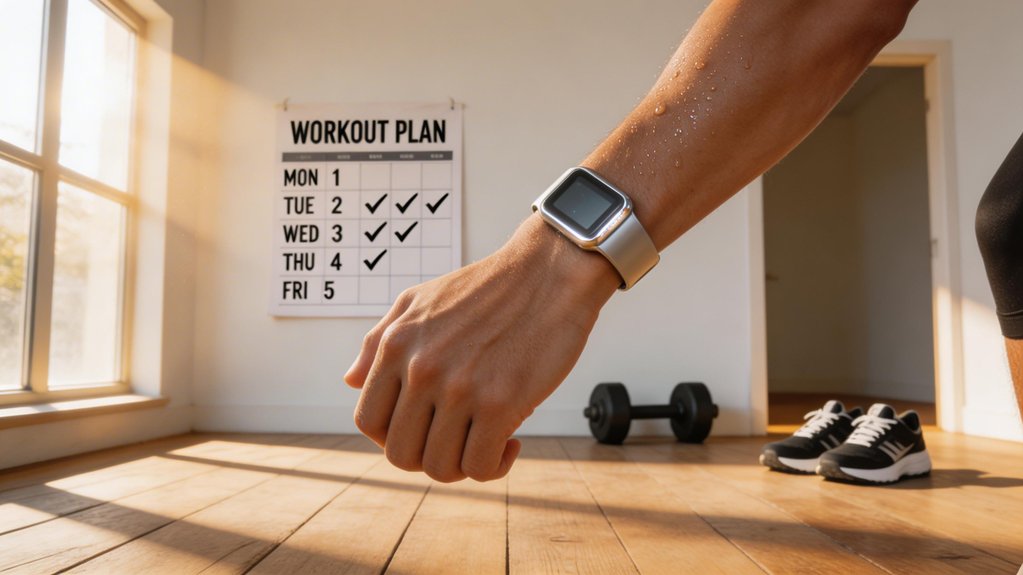
When you’ve tracked your progress and seen real results, the next step is telling someone else about your fitness commitments.
Peer support transforms exercise from a solitary activity into a shared mission.
Find accountability partners who’ll check in on your weekly goals.
Consider commitment contracts, written agreements stating your targets and deadlines. Regular check-ins with a friend, family member, or coach create external motivation. You’re not just answering to yourself anymore.
This shift matters. When you know someone’s expecting you at that class or asking about your progress, you’re far more likely to follow through.
Building accountability partnerships is especially valuable as you start safe exercise to ensure you maintain proper form and avoid injury while staying committed to your fitness routine.
Master Recovery and Bounce Back Stronger
You’ve built accountability into your routine, and that’s working, but here’s what many exercisers miss: the days you’re not working out matter just as much.
Rest strategies and active recovery techniques aren’t lazy, they’re essential wellness practices. Your muscles need downtime to repair and strengthen.
Try light walking, stretching, or yoga as rejuvenation activities. These relaxation methods keep you engaged without overexertion.
Safe exercise modifications can also help you maintain movement during recovery days while protecting vulnerable joints.
Professional athletes schedule regular recovery time for this reason. Short breaks actually improve long-term consistency and prevent injury.
Reframe rest as part of your training, not against it. Downtime benefits your body and mind, making you stronger when you return.