
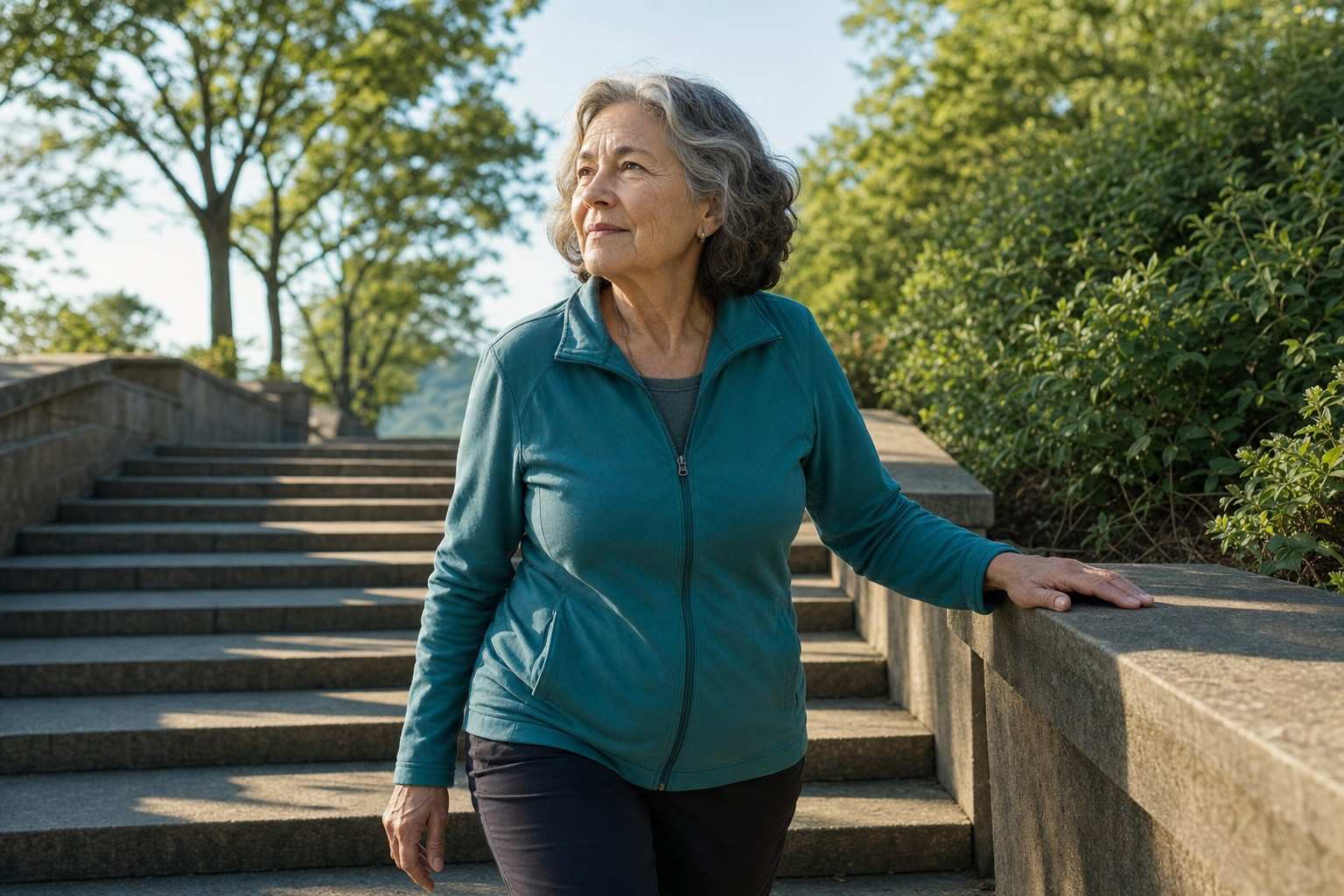
Yes, exercise can slow bone loss. Not all exercise, though. The type of movement you choose matters far more than total hours spent moving. Some activities that are excellent for your heart do almost nothing for your bones.
Bone density typically declines after midlife, and the decline speeds up after menopause. But bone is living tissue, not fixed material. It responds to physical stress by rebuilding itself denser and stronger. That response works at 55, 65, and beyond.
The research on this is clear enough to act on.
Why Load Is the Key
Bone remodels in response to mechanical load. When a muscle contracts against resistance or your foot strikes the ground, that force travels through the bone. The bone senses the stress and signals cells called osteoblasts to lay down new tissue.
This process needs enough load to trigger a response. Light, repetitive, low-impact movement simply does not deliver the stimulus bone needs to rebuild.
Two modes deliver enough: weight-bearing impact activities, and progressive resistance training. Both count. Both work through different but complementary mechanisms.
Weight-Bearing Impact: Walking, Stairs, More
Walking is weight-bearing. Each step loads your legs, hips, and spine in a way that swimming and cycling never do. The Osteoporosis and Related Bone Diseases Resource Center at the NIH, the US government’s medical research agency, notes that weight-bearing and resistance exercise both help build and maintain bone density. Walking counts as one of the accessible starting points for people with no current exercise routine.
Stair climbing is even better than level walking because each step involves a slightly higher impact. Taking the stairs at the doctor’s office rather than the elevator is a small choice that happens to be a bone-loading choice.
Light jogging delivers stronger bone signals than walking if your joints tolerate it. For many people in their 50s and 60s, short intervals on a soft surface are worth exploring. Especially if walking has been the only routine for years.
The principle holds even where it surprises people. Swimming and cycling are excellent for cardiovascular fitness, and neither does much for bone. The water supports your body weight in one case; the bike does it in the other. Load removed means bone stimulus removed.
Resistance Training: Where Muscle Meets Bone

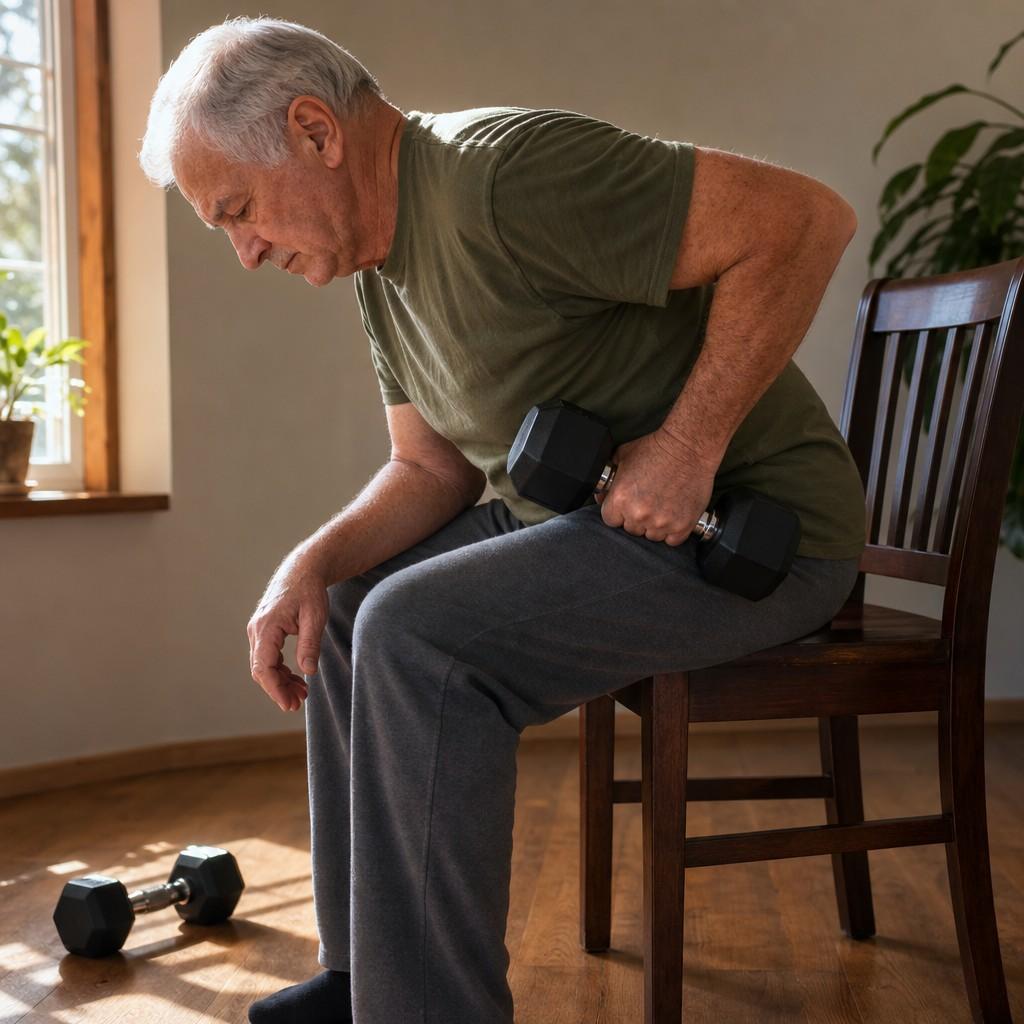
Strength training loads bone at exactly the points where muscles attach. When a muscle pulls hard against a bone during a weighted movement, the attachment site experiences stress. The bone adapts at that precise location.
This is why resistance work and walking address different parts of the skeleton. Walking loads hips and lower spine. Rows, presses, and overhead movements load the upper body and spine in ways walking never does.
The LIFTMOR trial, published in the Journal of Bone and Mineral Research, tested this directly. Supervised high-intensity resistance and impact training improved bone density in postmenopausal women with low bone mass, compared to a low-intensity control group. The result held at the femoral neck and lumbar spine, the two sites where fractures carry the most serious consequences.
Progressive resistance training means increasing the challenge over time. You start where you are today and gradually add weight, repetitions, or difficulty. For beginners, a pair of adjustable dumbbells offers a practical way to start at a light weight and increase as strength builds. You can pair resistance work with a strength training guide for beginners to find a starting structure that fits your current fitness level.
Balance Training Belongs Here Too

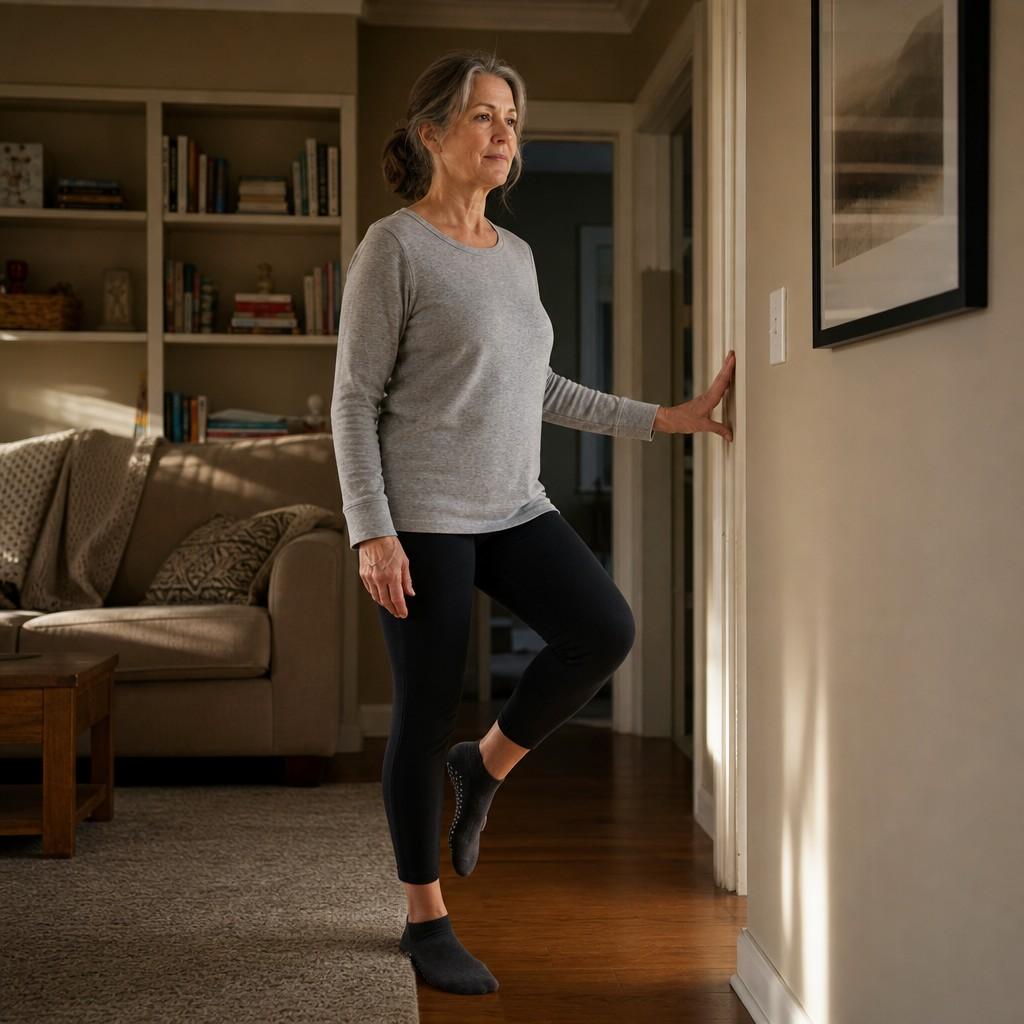
Low bone density is not inherently dangerous on its own. A fracture is what causes harm, and most fractures happen because of falls. A complete bone program addresses both sides: building density and preventing the falls that could cause breaks.
Balance declines gradually and responds quickly to training. Most people see measurable improvement within a few weeks of regular practice. For a thorough look at the research on fall prevention, balance work is covered in depth at balance training and fall prevention research.
The Bone Health and Osteoporosis Foundation, a US health organization focused on preventing and treating osteoporosis and fractures, explicitly pairs weight-bearing and muscle-strengthening exercise with balance training in its exercise guidance. These three categories work together in a bone program, not separately.
Exercise for Osteoporosis: What Changes
If you have been diagnosed with osteoporosis or have had a fracture, exercise still helps. What changes is the type of load, not whether you load your bones at all.
The National Institute on Aging, the US government’s research agency on aging, says to talk with your health care provider about physical activity that is safe for you and good for your bone health.
Two changes come up in the guidance:
- High-impact moves may be off the list. The Bone Health and Osteoporosis Foundation says that if you have broken a bone due to osteoporosis or are at risk of breaking one, you may need to avoid high-impact exercises. It names jumping rope and jumping jacks among them.
- Bend from the hips, not the waist. A fact sheet from the University of Arkansas and University of Tennessee extension services names forward bending and twisting of the spine as two movements that can be harmful with osteoporosis. It advises bending forward from the hips with a straight back and avoiding extreme spinal twists.
Newer tools add load in their own way. A weighted vest and a vibration plate each come with their own cautions: see who should skip a weighted vest or ask first and who should not use a vibration plate.
Still, the core principle does not change. Building muscle after 50 still applies even with precautions in place. The goal is finding the appropriate load level for your current bone health, not avoiding load entirely.
Gentle resistance training and lower-impact weight-bearing movement remain part of the picture even with reduced bone density. The question is which exercises and at what intensity, not whether to exercise.
The Practical Combination
Weight-bearing impact, resistance training, and balance work together form the evidence-based bone program. Walking provides the daily foundation. Strength training covers the skeleton that walking does not reach. Balance practice protects against the fall that turns low density into a fracture.
None of these require a gym or expensive equipment. Walking costs nothing. Balance exercises are done in a bare corner of a room. Resistance training starts with light weights and body weight.
The benefits of walking extend beyond bone density, and you can find more on those at the broader health case for walking. But for bone specifically, walking is the floor, not the ceiling. Add resistance work and you cover far more of the skeleton.
Start where you are. Bone responds to load at every age.