
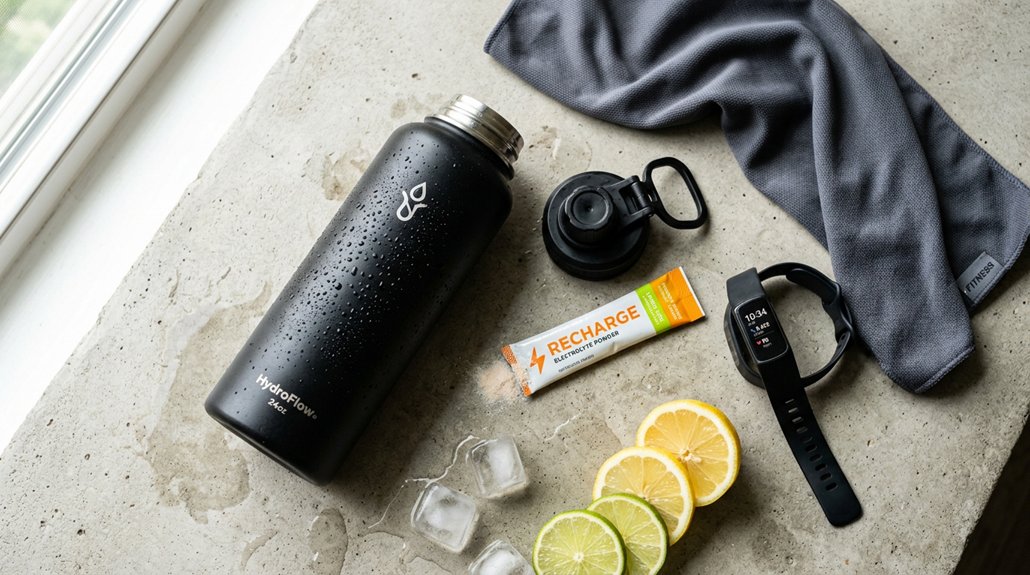
You’ll need three essentials for exercise hydration: the right drink, proper container, and a consistent schedule.
For workouts under 60 minutes, plain water works fine, drink 4-8 ounces every 15-20 minutes.
Beyond 60 minutes, you can switch to sports drinks containing carbs and electrolytes like sodium and potassium, consuming 16-24 ounces hourly. But water works fine for most.
Grab a lightweight plastic bottle for short sessions or a 32-ounce stainless steel bottle for longer efforts. No need for phone reminders, sip every 15-20 minutes.
These fundamentals cover the basics, though understanding how each element works together reveals more strategic advantages.
Drink Type and Timing Based on Activity Duration
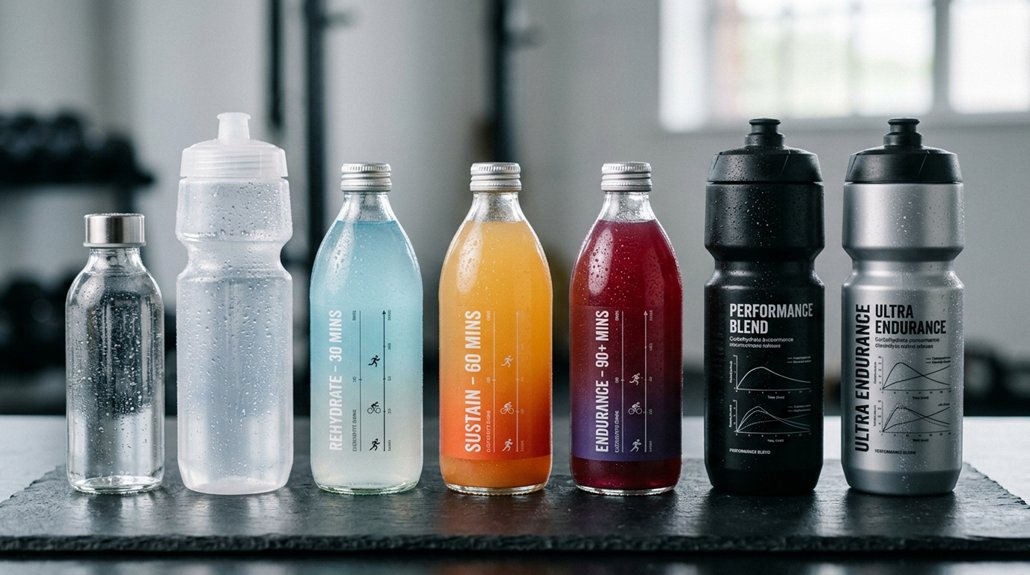
What you drink during exercise depends largely on how long you’re working out. For activities under 60 minutes, water’s your best choice.
Drink 4-8 ounces every 15-20 minutes to support fluid absorption and debunk hydration myths about needing fancy drinks early on.
Once you’re exercising beyond 60 minutes, sports drinks might help. They contain carbohydrates and electrolytes your body needs for sustained energy.
Aim for 4-6 ounces every 15 minutes during moderate activity, or 8 ounces every 15 minutes during intense workouts in heat.
Nice water bottle designed for your specific activity type can help you stick to proper hydration schedules and stay consistent with your fluid intake.
Timing matters: proper hydration before, during, and after exercise maximizes your performance and recovery.
How Much Should You Drink During Exercise?
For most exercise, drinking when you feel thirsty is a good starting point. Your fluid needs also depend on workout length, intensity, heat, and how much you sweat.
During moderate exercise, a simple guideline is about 16 to 24 ounces of fluid per hour. That is roughly 4 to 8 ounces every 15 to 20 minutes.
If it is hot outside or you are sweating heavily, you may need more.
One easy way to check your hydration is to weigh yourself before and after exercise. If you finish much lighter than you started, you likely need more fluid during future workouts.
Water is usually enough for workouts lasting under 60 minutes. For longer or harder sessions, a sports drink with carbohydrates and electrolytes can help replace what you lose in sweat and support energy levels.
Sports Drinks vs. Water, and When Electrolytes Matter
- Water is usually enough for workouts under an hour.
- For longer, harder, or very sweaty sessions, a sports drink can help by replacing fluid, sodium, and carbohydrates.
That extra support can be useful during endurance exercise or hot-weather training, when you lose more through sweat and need energy during the workout.
For most beginners, though, sports drinks are optional rather than essential.
Choosing Bottles and Packs That Fit Your Workout
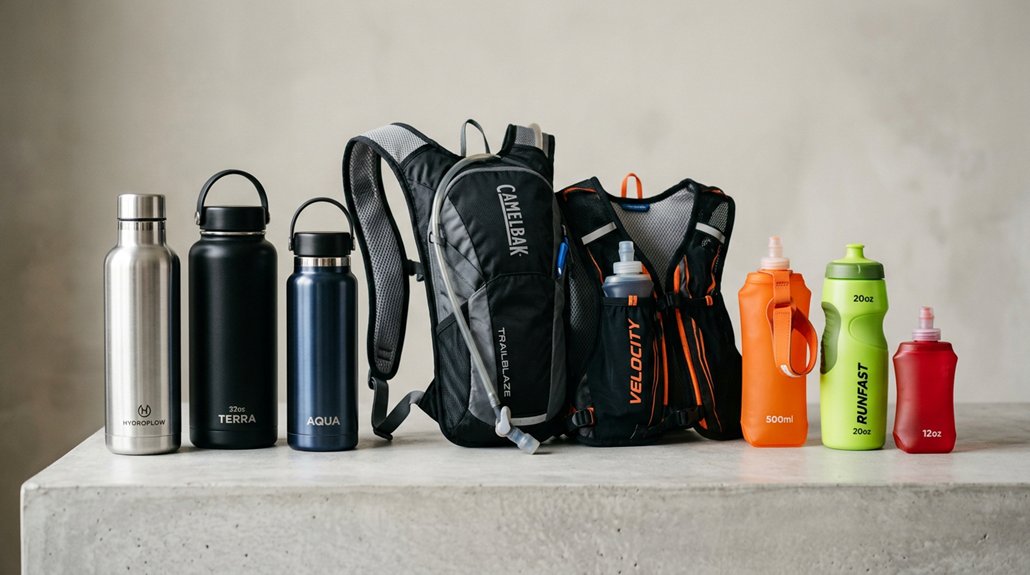
Now that you’ve got your hydration strategy down, picking the right bottle or pack matters just as much as what’s inside it.
Bottle materials like stainless steel keep drinks cool longer, while lightweight plastic works well for shorter workouts.
Consider pack sizes based on your activity duration. A 16-20 ounce bottle suits quick sessions, whereas longer efforts demand 32+ ounces or hydration packs with tubes.
Think about accessibility too; side pockets on backpacks let you grab drinks without stopping.
Choose materials and sizes that match your specific workout needs, making hydration convenient and sustainable throughout your exercise.
Hydration Strategies for Home and Gym Sessions
Staying hydrated is easier during home workouts because water is usually close at hand.
A few simple habits can help you drink enough during exercise without making hydration feel complicated.
- Keep your water bottle nearby, sip regularly during your workout, and use a reminder if needed.
- During moderate exercise, about 16 to 24 ounces of fluid per hour is a useful guideline.
- For sessions that last longer than an hour or leave you sweating heavily, a sports drink may be helpful.
Your best hydration strategy is the one you can stick with consistently.