
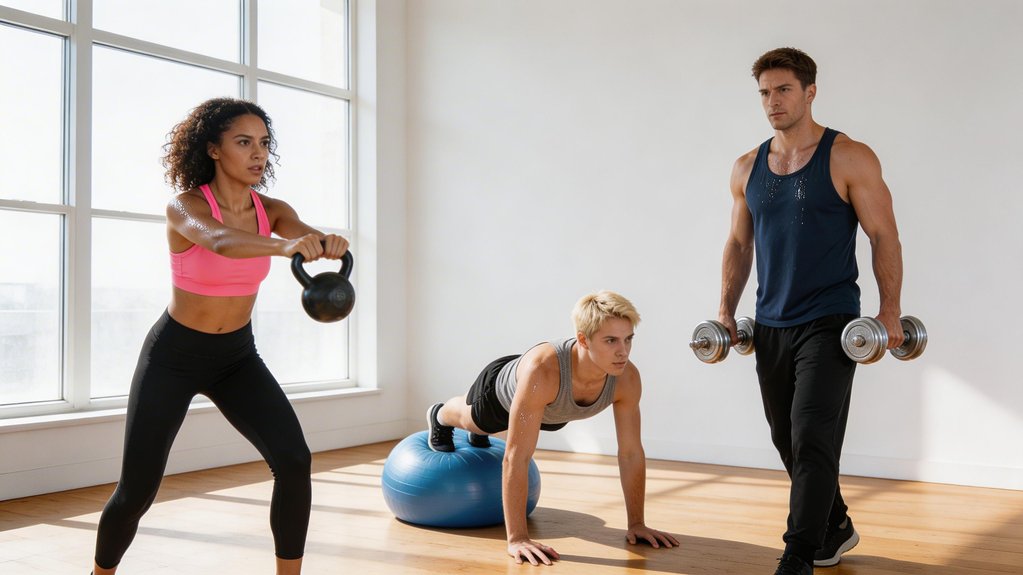
Functional fitness trains your body for real movements you do daily: squatting, lifting, pushing, and carrying.
Instead of isolating single muscles on machines, you engage multiple muscle groups working together, just like picking up groceries or climbing stairs.
This approach builds genuine coordination, strengthens stabilizer muscles, and prevents injuries. Beginners should start with three weekly bodyweight sessions, mastering fundamental movements before adding resistance.
You’ll gain confidence and efficiency in everyday tasks.
The specific movements that change how your body functions come next.
What Functional Fitness Really Means
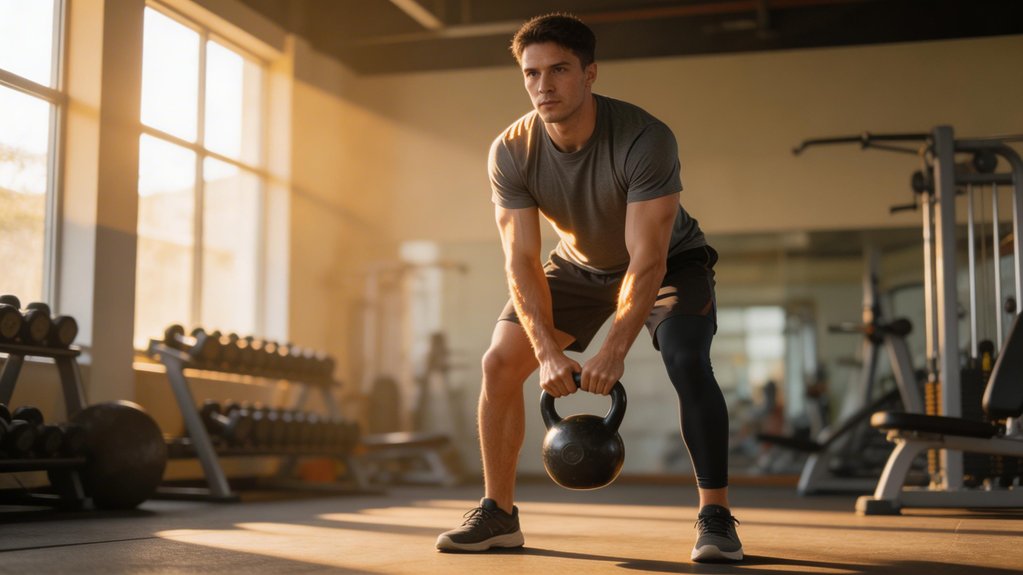
If you’ve heard the term “functional fitness” but aren’t sure what it actually means, here’s the straightforward version. It’s training your body to handle real-life movements better and more safely.
Rather than isolating individual muscles like traditional weight machines do, functional fitness engages multiple muscle groups working together, what we call strength synergy.
You’re practicing daily activities: squatting to pick things up, pushing doors open, carrying groceries.
These movement patterns train your body to work as one coordinated system.
Consistent, low-impact movement strengthens the entire body, which makes optimal walking amounts an excellent foundation for functional fitness.
The goal isn’t bigger biceps; it’s moving efficiently through life without injury while serving others and yourself with confidence.
Why Training Multiple Muscles at Once Matters More Than You Think
Traditional weight machines isolate one muscle at a time. Your biceps curl on one machine, your leg press on another. But your body doesn’t work that way in real life.
When you lift groceries or help someone move, multiple muscles fire simultaneously.
Training this way builds genuine muscle coordination. Your stabilizer muscles activate together, supporting your primary movers.
This integration dramatically improves injury prevention because your joints receive balanced support from all angles. You’re training your body as an interconnected system, not separate parts.
While you build this functional strength, gentle exercise modifications can further protect your joints.
That’s why functional training makes everyday tasks safer and easier than isolated strength work ever could.
How Functional Fitness Works (Mobility, Stability, and Strength Together)
Now that you understand how your muscles work together, let’s explore the three pillars that make functional fitness actually work: mobility, stability, and strength.
- Mobility drills give your joints the freedom to move through their full range.
- Stability exercises keep you balanced and controlled during those movements.
- Strength integration ties everything together, making your body work as one unit.
Think of it this way:
- Mobility lets you reach down to pick something up.
- Stability keeps you steady while you’re bent over.
- Strength integration lets you stand back up safely with what you’re carrying.
These movement patterns work best when trained together, not separately.
As a beginner, prioritizing injury prevention tips while developing these three pillars ensures you build strength safely and sustainably.
The Five Movements That Mirror Your Everyday Life
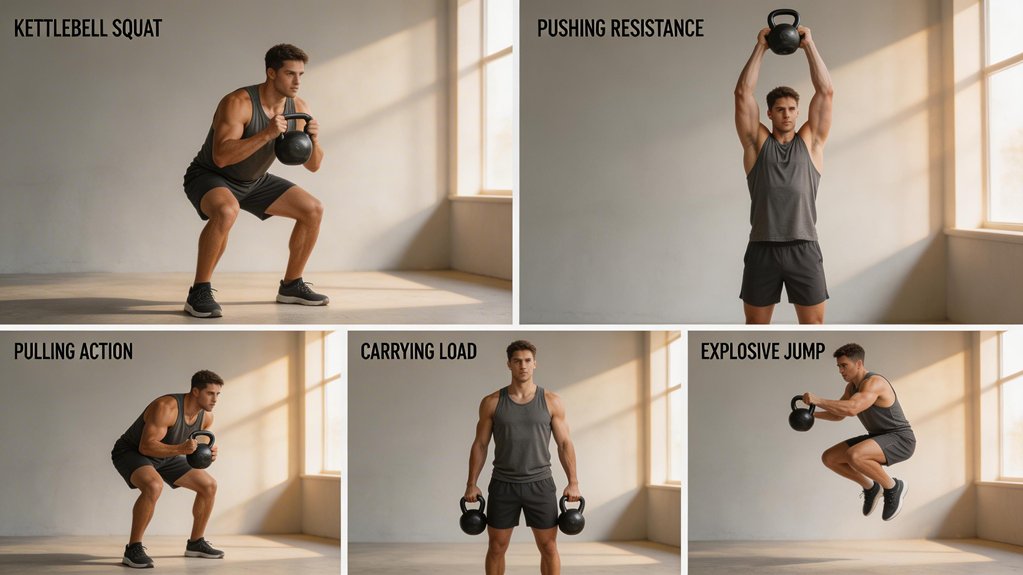
Because your body’s designed to perform real-world tasks, functional fitness focuses on five core movements you’ll actually use.
Squat mechanics help you pick up dropped items safely. Lifting techniques strengthen your ability to carry groceries or children.
Pushing strategies build power for moving furniture or opening doors. Pulling posture develops strength for hauling objects toward you. Walking develops cardiovascular endurance for covering distance.
These movements engage multiple muscle groups working together, not in isolation. When you train these five patterns consistently, everyday tasks become noticeably easier.
Your body moves more efficiently, reducing injury risk considerably while building genuine, practical strength you’ll notice immediately. Low-impact exercise options can be particularly beneficial when starting a functional fitness routine, as they minimize stress on your joints while building foundational strength.
A Practical First Step for Beginners
Where should you actually begin with functional fitness? Start with bodyweight exercises, no essential equipment needed yet.
Beginner routines should focus on mastering fundamental movements like squats, lunges, and push-ups for two to three weeks.
Master fundamental movements like squats, lunges, and push-ups before progressing to the next phase of training.
Practice three times weekly, allowing rest days between sessions. Once you’ve nailed proper form, add resistance bands or kettlebells gradually.
Keep workouts short, around twenty to thirty minutes.
Listen to your body and modify movements as needed. Progress matters less than consistency and correct technique.
Prioritize safe strength training from the start to prevent injuries and build sustainable habits. You’re building a foundation that’ll serve you, and those you help, for years.