

You need rest days to actually build muscle faster, not slower. Your muscles repair and grow during recovery, not during workouts. Aim for one or two rest days weekly, spaced three to four days apart.
Pay attention to warning signs like persistent tiredness, declining performance, and elevated resting heart rate.
You can do active recovery, light walking or stretching, on easier days, or take complete rest when you’re severely exhausted. Understanding rest as essential training, not laziness, keeps you progressing.
The specifics of structuring your recovery schedule depend on your individual training intensity.
Why Rest Days Build Muscle Faster

When you lift weights or do intense exercise, you’re actually breaking down muscle fibers through microscopic damage. That’s where rest days become your secret advantage.
During recovery, your body activates muscle repair processes and releases growth hormones that build stronger tissue. You’ll want strategic recovery nutrition, protein and carbs, to fuel this rebuilding.
Rest days also serve injury prevention by allowing your circulatory system to flush out metabolic waste and deliver oxygen to damaged areas. Without adequate rest, you’ll accumulate fatigue and risk overuse injuries.
Additionally, consistent rest days contribute to improved sleep quality, which further enhances muscle recovery and overall athletic performance.
Plan 1-2 rest days weekly. Your muscles grow during recovery, not during the workout itself.
Recognizing Rest Day Warning Signs
How do you know if you’re actually resting enough, or if you’re pushing yourself into the danger zone? Pay attention to fatigue signals like persistent tiredness that sleep doesn’t fix.
Pay attention to persistent tiredness that sleep doesn’t fix: it’s your body signaling you’re pushing too hard.
Overtraining symptoms include declining workout performance, elevated resting heart rate, and irritability.
Notice if you’re losing mental clarity or struggling with focus. Your body needs rest days to maintain immune support and fight off infections effectively.
If you’re catching every cold or feeling constantly sore, you’re probably skipping recovery.
Implementing proper injury prevention strategies during your rest days ensures you’re protecting yourself from the cumulative damage of inadequate recovery.
Aim for 1-2 dedicated rest days weekly to protect your long-term health and performance goals.
Active Recovery or Complete Rest, Which You Need
Once you’ve identified that you need more recovery, you’re faced with a real choice: complete rest or active recovery.
Complete rest advantages include full mental disengagement and minimal physical stress on fatigued muscles. You’re fundamentally pressing pause on everything.
Active recovery benefits include gentle movement, like walking or light stretching, that boosts blood flow without taxing your system. Light activity helps flush metabolic waste while keeping you engaged.
For those with joint concerns, safe exercise modifications can make active recovery more comfortable and effective.
The best approach depends on your fatigue level. Severe exhaustion calls for complete rest. Mild fatigue responds well to active recovery.
You might alternate between both strategies throughout your recovery week.
Where to Place Rest Days in Your Week
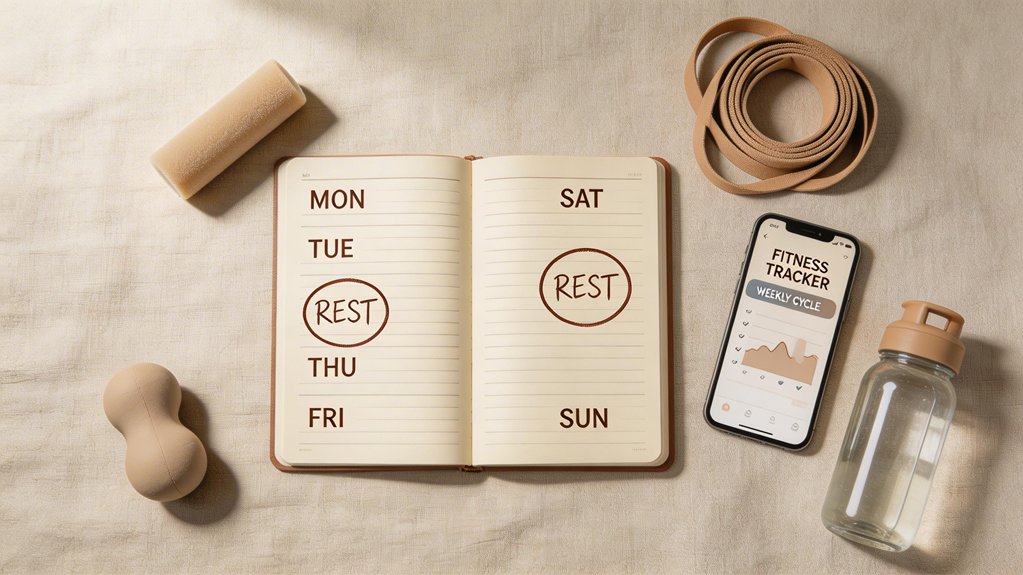
Strategic placement of your rest day scheduling matters just as much as taking them.
You’ll want to space your recovery frequency thoughtfully throughout the week. Most people benefit from 1-2 complete rest days weekly, spaced 3-4 days apart.
Space your 1-2 weekly rest days thoughtfully, keeping them 3-4 days apart to prevent accumulated fatigue.
If you train hard Monday and Tuesday, take Wednesday off. Then resume Thursday through Saturday, resting Sunday.
This pattern prevents accumulated fatigue while letting your body repair between intense sessions.
You’re allowing muscles time to rebuild stronger. Your energy stores replenish. Your immune system recovers.
Consider your personal training intensity when deciding placement.
Harder weeks might need strategic rest midweek.
Walking offers complementary health benefits of walking that can enhance your overall wellness routine on active recovery days.
Rest as Training, Not a Break From It
Now that you’ve got your rest days scheduled, it’s time to shift how you think about them. Rest isn’t laziness; it’s active training that builds strength.
You’re serving your fitness goals by prioritizing recovery. Proper pre and post workout practices complement your rest days by optimizing how your body prepares for and recovers from exercise.
Consider these rest benefits:
- Mindfulness practices like stretching or meditation deepen your recovery and mental clarity.
- Nutrition strategies during rest days replenish glycogen and support muscle repair.
- Active engagement through light walking or gentle yoga maintains momentum without overtraining.
Bust recovery myths by understanding that rest days aren’t wasted time. They’re essential training sessions.
Use motivation techniques to reframe recovery as progress. Your body rebuilds stronger during rest, making you genuinely more capable next workout.