
Yes, you can start now, and two days a week is the amount to aim for.
The Centers for Disease Control and Prevention (CDC), the federal public health agency, asks older adults for muscle-strengthening activity at least 2 days a week.
A first session can be five simple moves with no equipment, one set of each. A sturdy chair, a wall and a kitchen counter are enough to begin.
A sixth move, with a resistance band, joins them once the first five feel comfortable.
This is general information, not medical advice. Check with your doctor first if you have a heart condition, joint replacement, osteoporosis or pain that limits you.
What changes around menopause
A 2009 review in the Journal of Musculoskeletal and Neuronal Interactions describes menopause as a natural decline in estrogen, a hormone. That decline is linked to less muscle mass and less strength, as well as less bone density.
Bone density falls over the same years, and exercises for stronger bones covers which kinds of movement load bone after 50.
In a 2025 review in the journal Bone, researchers at the University of Calgary looked at exercise trials in women going through menopause. The highest rate of bone and muscle loss occurs during the menopause transition, they report.
The review found only six trials in women of this age, all rated low quality, and it calls it inconclusive which training method works best.
The 2009 review also names two factors you can change. Low physical activity and low protein intake are the best contributors to sarcopenia (age-related muscle loss) and loss of strength after menopause.
What the guidelines ask for
Strengthen your muscles at least 2 days a week, in addition to your aerobic activity.
Here is what that means in practice, according to the CDC:
- Choose activities that work the legs, hips, back, chest, abdomen, shoulders and arms.
- Try 8 to 12 repetitions of each activity. That group of repetitions counts as one set.
- Do at least one set. For more benefits, do two or three.
- Work until it is hard to do another repetition without help.
The CDC lists weights, resistance bands and body-weight exercises such as push-ups or sit-ups as ways to do it.
You do not need a gym.
A two-day starter week
The National Institute on Aging (NIA), the part of the National Institutes of Health that studies aging, lists body-weight exercises. Examples are arm circles, leg raises, pushups, planks and squats. It also lists work with resistance bands and hand-held weights.
The six moves below are built from those CDC and NIA examples, in easier forms:
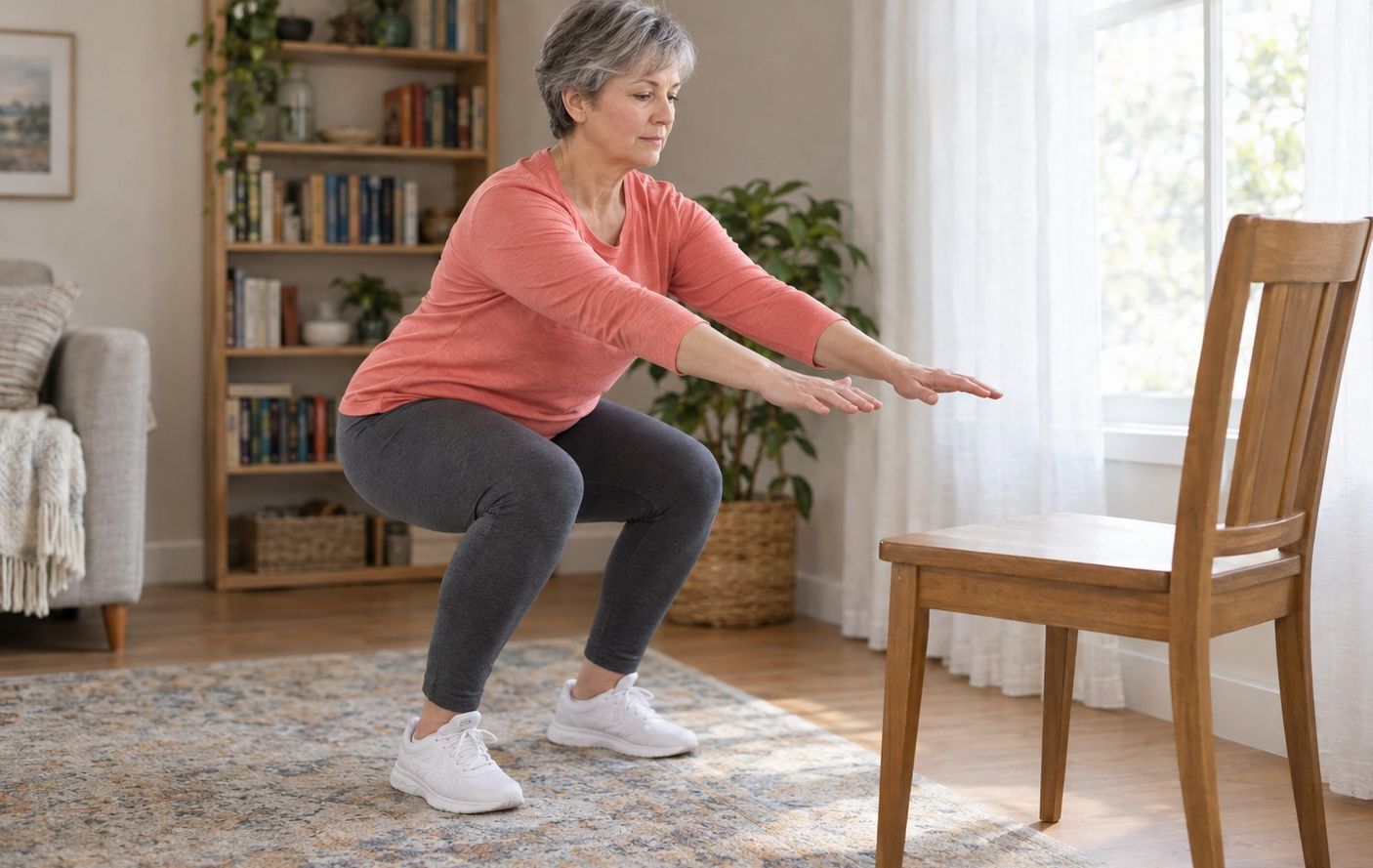
- Legs and hips: a squat down to a chair and back up.
- Legs and hips: a leg raise, holding the kitchen counter for balance.
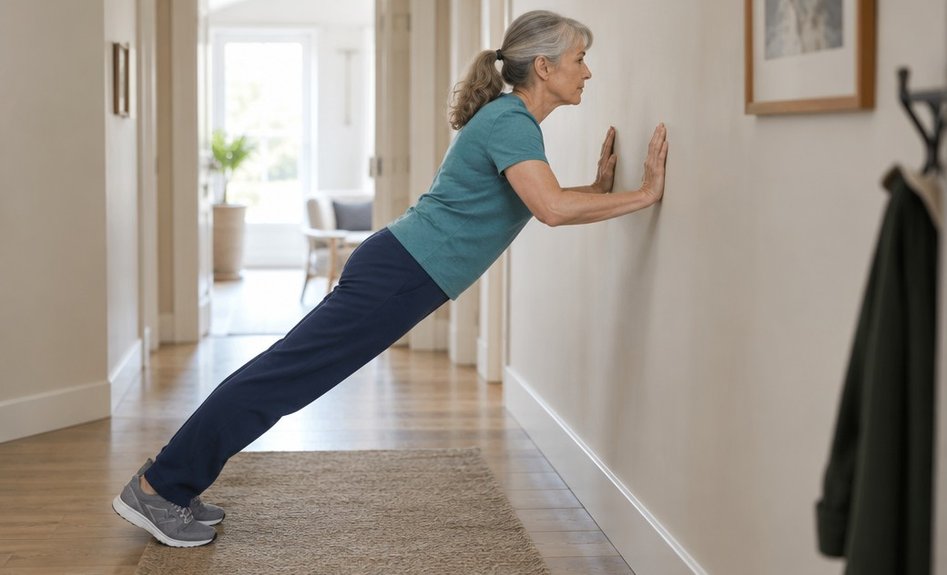
- Chest: a pushup against a wall.
- Shoulders: arm circles.
- Abdomen: a plank hold with your hands on the kitchen counter, for as long as you can keep your body straight.
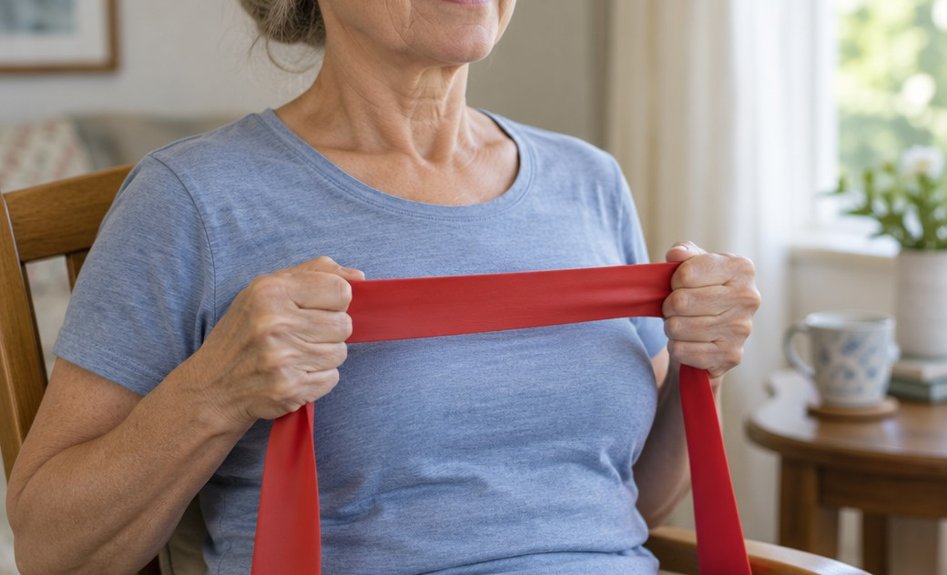
- Back and arms: pull a resistance band toward your chest.
Begin without a band or weights. The NIA advises beginners to try exercises without weights or resistance bands until they are comfortable with the movements. Resistance bands are stretchy elastic bands that come in varying strengths.
So do moves 1 to 5 first, and add the band move as soon as those feel comfortable.
Until then, the week does not yet cover your back. Later, hand-held weights can replace the band. A separate page compares light dumbbells for older beginners.
Pick a band or weight that lets you finish 8 to 12 repetitions, with the last ones hard. If the last repetition is easy, the weight is too light for the effort the CDC describes.
Two safety points from the NIA:
- Keep breathing: out as you push or lift, in as you ease back.
- Do not lock your arm and leg joints straight.
Choose two days that are not back to back, such as Tuesday and Friday. The NIA advises avoiding the same muscle group on any two days in a row, so the muscles can recover between sessions.
How to build it up
One set of each of the six moves, with the last repetitions hard, on two days a week, meets the CDC’s minimum.
When one set feels manageable, add a second set, then a third if you want more benefit. The CDC describes two or three sets as the step up.
The NIA says gradual increases in weight, number of sets or repetitions, or days a week will result in stronger muscles. Judge the load by how hard the last repetitions feel, as the CDC describes.
Why muscle can respond less to exercise and food with age is covered in the science of building muscle after 50.
Your first week
Open your calendar now and mark two days, such as Tuesday and Friday.
Clear a spot near a wall, a chair and the kitchen counter beforehand.
On Tuesday, do one set of 8 to 12 repetitions of each of the first four moves. Then hold the counter plank for as long as you can keep your body straight, and stop. Do the same on Friday.