

You’ll want to warm up with five minutes of light cardio before stretching to prevent micro-tears in cold muscles.
Use dynamic stretching with controlled movements during warm-ups, then shift to static stretches, holding each for 30 seconds, after your workout.
Breathe steadily through your nose and out your mouth; holding your breath tightens muscles and limits flexibility. Avoid bouncing, pushing through pain, or stretching injured areas.
Target every major muscle group twice weekly for consistent progress and injury prevention.
Static or Dynamic Stretching, and When to Use Each
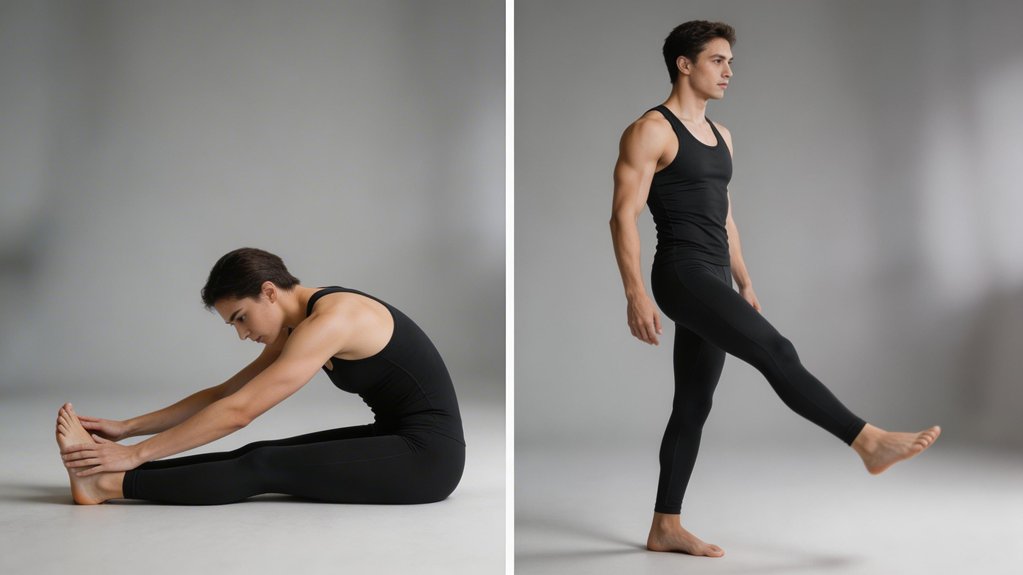
When should you use static stretching versus dynamic stretching? Here’s the straightforward answer: dynamic stretching belongs in your warm-up.
It actively increases your joint range of motion through controlled, rhythmic movements. This approach improves power and running performance.
Static stretching, meanwhile, works best after your workout during cool-down when muscles are already warm. You’ll hold each stretch for about 30 seconds.
Never stretch cold muscles, that’s asking for injury prevention problems. Understanding this distinction helps you maximize flexibility benefits while protecting yourself from harm.
Proprioceptive neuromuscular facilitation is another advanced stretching technique that can enhance your flexibility gains when performed correctly. Choose the right method at the right time.
Why Warming Up Before Stretching Prevents Injury
Before you even think about stretching, your muscles need to be warm, and that’s non-negotiable for injury prevention. Cold muscles risk micro-tears and inflammation when stretched.
You’ll want a five-minute warm-up first: light cardio like walking or jogging increases blood flow to your muscles. This warm-up benefit preps your tissues for safe stretching.
Static stretching before exercise actually decreases strength and performance, so save it for cool-down instead.
Dynamic stretching during warm-up improves power and running ability.
Timing matters tremendously. Research shows that stretching timing significantly impacts both injury risk and performance outcomes during physical activity. Warm muscles respond better, stretch deeper, and help you serve your body well through sustainable flexibility gains.
How to Hold a Stretch Without Holding Your Breath
Ever notice how you naturally hold your breath when focusing hard on something?
That same instinct happens during stretches, and it’s counterproductive.
When you hold your breath, you create unnecessary muscle tension that actually limits your flexibility gains.
Instead, maintain steady, regular breathing throughout your entire stretch duration. Breathe in through your nose and out through your mouth in a calm rhythm. This breath control keeps your muscles relaxed and allows you to hold stretches longer without discomfort.
Think of breathing as your stretch’s best friend. It helps you go deeper while staying safe and comfortable.
Using stretching straps and tools can further enhance your ability to maintain proper breathing patterns while achieving deeper stretches with better form.
Five Stretching Mistakes That Cause Injury

Most people make the same stretching mistakes over and over, and they don’t even realize it’s hurting their flexibility gains.
You’re bouncing into stretches when you should hold steady positions instead. You’re stretching cold muscles before warming up, which causes micro-tears.
Bouncing into stretches and stretching cold muscles causes micro-tears. Hold steady positions after warming up instead.
You’re pushing through pain rather than stopping at mild tension, a critical injury prevention mistake. You’re holding your breath, which tightens muscles further.
You’re even stretching already-injured areas, making damage worse.
These stretching myths sabotage your progress. Instead, warm up first, breathe steadily, feel gentle tension only, and hold stretches for thirty seconds without bouncing.
Consistency matters more than intensity for safe results. For those managing joint discomfort, safe exercise modifications can help maintain flexibility without exacerbating existing conditions.
Beginner Stretches for Every Major Muscle Group
Now that you’ve learned what mistakes to avoid, it’s time to build a solid foundation with beginner stretches targeting every major muscle group.
Your beginner routines should address neck, shoulders, chest, trunk, lower back, hips, legs, and ankles at least twice weekly.
Effective techniques include holding each stretch for 30 seconds without bouncing. Common misconceptions suggest pushing harder yields faster results; that’s false. Instead, progress gradually by easing into gentle tension.
Target problem areas consistently. Warming up for five minutes beforehand prevents injury. Starting your day with a morning stretch routine can help establish consistency and make flexibility training a natural part of your daily habits.
You’ll notice flexibility improvements within weeks when you prioritize consistency over intensity with these foundational muscle group targets.