
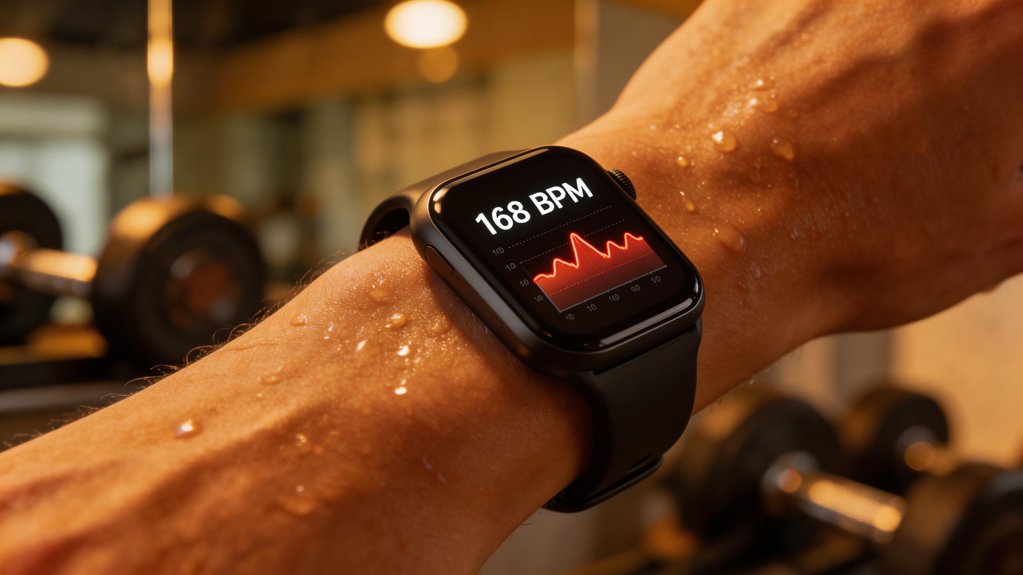
You’re likely exercising without knowing if you’re actually pushing hard enough. Exercise intensity matters because it determines whether you reach your goals or waste time.
You can monitor intensity three ways: use the talk test (can you speak easily?), check your heart rate against target zones, or rate your perceived exertion on a scale of 6 to 20.
Combining these methods gives you clearer feedback than relying on one alone.
Understanding which approach works best for your routine takes just a few minutes.
Why Intensity Monitoring Matters
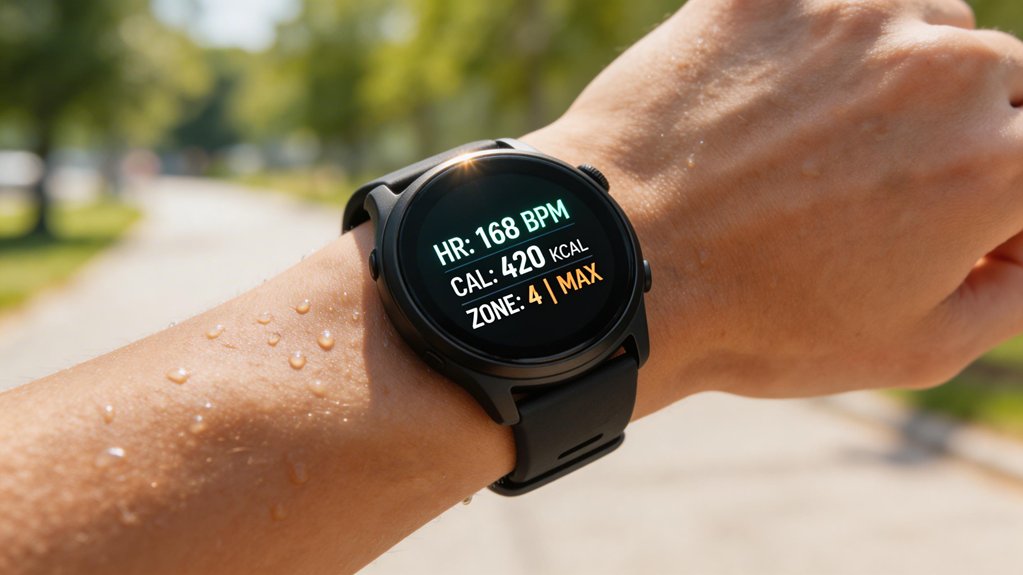
When you’re working out without tracking your effort level, you’re basically flying blind. Monitoring intensity helps you achieve your fitness goals more effectively.
You’ll know whether you’re pushing hard enough or overdoing it.
This matters because the right intensity delivers real health benefits, better cardiovascular strength, improved endurance, and more efficient workouts.
Without measurement, you might waste time exercising too casually or risk injury by going too hard.
When you serve others through fitness instruction or training, you’ll guide them toward sustainable progress.
Tracking intensity guarantees everyone gets results that match their actual capabilities. Regular exercise at appropriate intensities can also enhance sleep quality, supporting overall wellness beyond just physical performance.
Three Ways to Measure Exercise Intensity
Now that you understand why tracking intensity matters, you need to know how to actually measure it. You’ve got three solid options available.
First, the talk test lets you gauge effort by attempting conversation; if you can’t speak, you’re working hard enough.
Second, heart rate monitoring gives you exact numbers to target.
Understanding your target heart rate ensures you’re exercising at the appropriate intensity for your fitness goals.
Third, rate of perceived exertion uses a simple scale matching your effort level.
Many intensity misconceptions fade when you use these methods together. Combining approaches reveals exercise benefits more clearly and prevents guesswork about whether you’re truly pushing appropriately.
Use the Talk Test Method (No Equipment Needed)
Since you don’t have a heart rate monitor or need to calculate percentages, the talk test offers a straightforward way to check your workout intensity.
During exercise, try holding a conversation with someone nearby. If you’re talking easily, you’re not working hard enough.
If you can’t speak at all, you’ve probably pushed too intensely. The sweet spot? You can speak in short sentences but not sing.
This method provides real-time conversational cues that let you adjust your pace immediately.
Research confirms it works well for jogging and cycling. You’re always equipped with this tool.
Low-impact exercise options like walking or swimming are particularly well-suited to the talk test method, making them ideal for beginners monitoring their workout intensity.
Apply the RPE Scale for Precise Effort Tracking

While the talk test gives you quick feedback, the Borg Rating of Perceived Exertion scale offers a more precise way to track how hard you’re actually working.
You’ll rate your effort on a scale from 6 to 20, where higher numbers mean greater intensity.
This method works well when combined with heart rate monitoring. RPE applications help you serve clients or yourself by establishing consistent workout benchmarks.
However, RPE limitations include its subjectivity; what feels moderate to one person might feel intense to another. Inexperienced exercisers especially struggle with accuracy here.
Using RPE alongside heart rate data gives you the most reliable intensity picture.
For those seeking additional precision, heart rate monitors for exercise provide objective physiological measurements that complement perceived exertion ratings.
Combine Methods for Stronger Results
To get the most accurate picture of your exercise intensity, you’ll want to use multiple monitoring methods together rather than relying on just one.
When you combine heart rate monitoring with RPE integration, you’re creating a stronger system for tracking your efforts. Here’s why this matters:
- Heart rate gives you objective data while RPE tells you how your body actually feels
- RPE integration helps when technology fails or isn’t available during workouts
- Together they catch inconsistencies that reveal medication effects or fatigue patterns
Start by noting your RPE number when your heart rate sits between 50-70 percent of maximum.
You’ll use that established number for future workouts when measuring heart rate isn’t feasible.
Proper pre and post workout preparation ensures your body is ready to respond accurately to these intensity measurements and recover effectively from your efforts.