
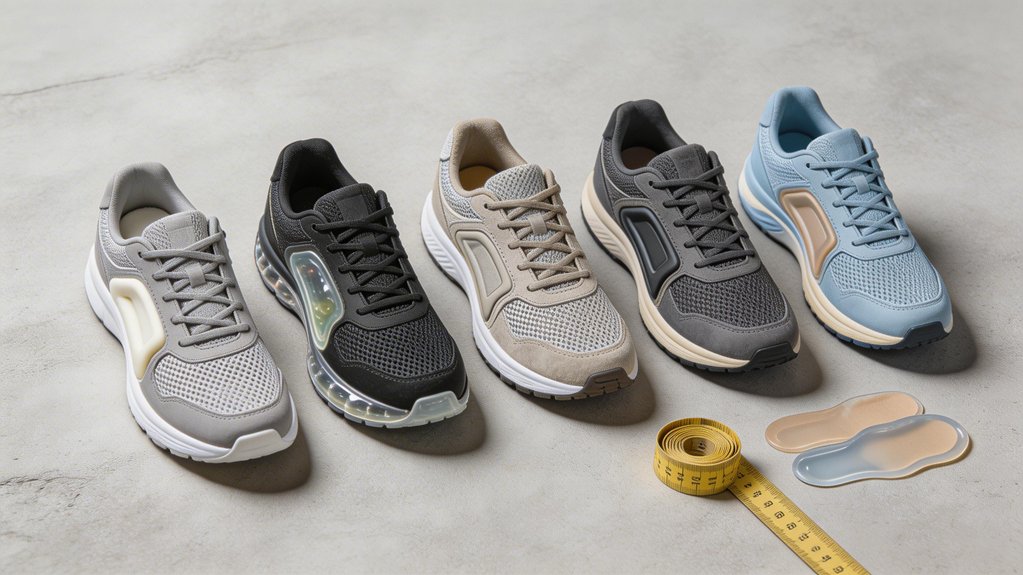
You’ll want to fit shoes late afternoon when your feet are largest, leaving one finger’s width between your longest toe and the shoe front.
Match your shoes to where you walk, urban paths need flexible soles, trails need thicker traction. Know your gait type, since pronators need arch support while supinators benefit from cushioning.
Look for moderate midsole softness with at least 100 SA shock absorption. Test shoes wearing the socks you’ll actually use, walking multiple laps to spot discomfort.
Getting these fundamentals right prevents costly mistakes that hurt later.
Get the Fit Right: Length, Width, and Wiggle Room
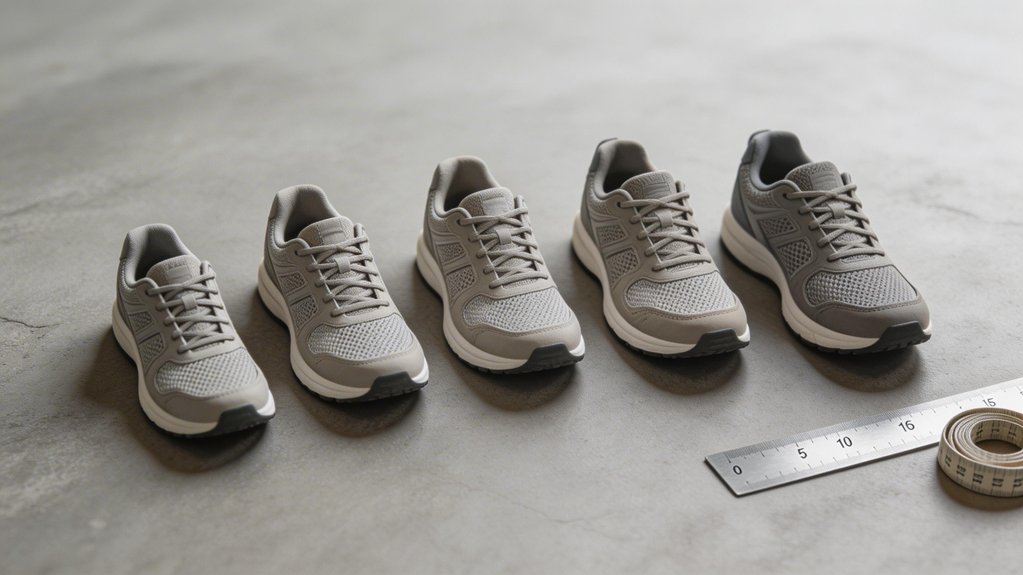
Getting the right fit is where everything starts with walking shoes.
You’ll want both length and width to feel comfortable, allowing your toes to spread freely.
Leave one finger’s width of space between your longest toe and the shoe’s front. This extra room prevents discomfort during foot swelling on warm days.
Check your heel fit too; it should grip firmly without slipping. Since feet expand by evening, shop late afternoon when they’re largest.
About 60% of people have uneven feet, so always fit to your bigger foot. A proper toe box gives you wiggle room you’ll actually appreciate.
Women’s walking shoes on Amazon offer a wide selection of options designed specifically to accommodate different foot widths and sizes for optimal comfort.
Identify Your Walking Terrain (It Drives Shoe Selection)
Once you’ve nailed down the fit, where you’ll actually walk matters just as much as how your shoes feel.
Urban walking on pavement demands thinner, flexible soles that cushion hard surfaces effectively.
Trail walking requires thicker soles and specialized traction for grip on uneven ground.
Your terrain impact directly affects comfort and injury prevention during walks.
The terrain you walk on directly shapes your comfort level and determines your risk of injury during each outing.
Consider shoe durability too; hard pavements wear shoes faster, so you’ll need reinforced soles.
VIBRAM technology offers superior traction on challenging surfaces.
Comfortable walking shoes designed for seniors and beginners provide additional arch support that becomes increasingly important when navigating varied terrain types.
Match your shoe choice to your walking environment, and you’ll serve yourself well by preventing discomfort and extending your shoe’s lifespan.
Your Gait Type Determines Support Needs
Your walking gait, how your foot naturally strikes and rolls, is just as important as where you walk.
A gait analysis reveals whether you pronate, supinate, or walk neutrally.
- Pronators roll inward and need extra arch support to prevent knee and ankle injuries.
- Supinators roll outward and benefit from cushioning and flexibility instead.
Understanding your foot type lets you choose shoes that align your stride properly. Visit a specialty store for professional gait assessment.
They’ll watch you walk and recommend specific support features. The right shoe matches your natural gait, not forces your foot into an unnatural position.
Exploring supportive walking shoes with arch support can help you find options specifically designed for your gait type.
Pick the Right Cushioning and Sole Flex for Your Stride
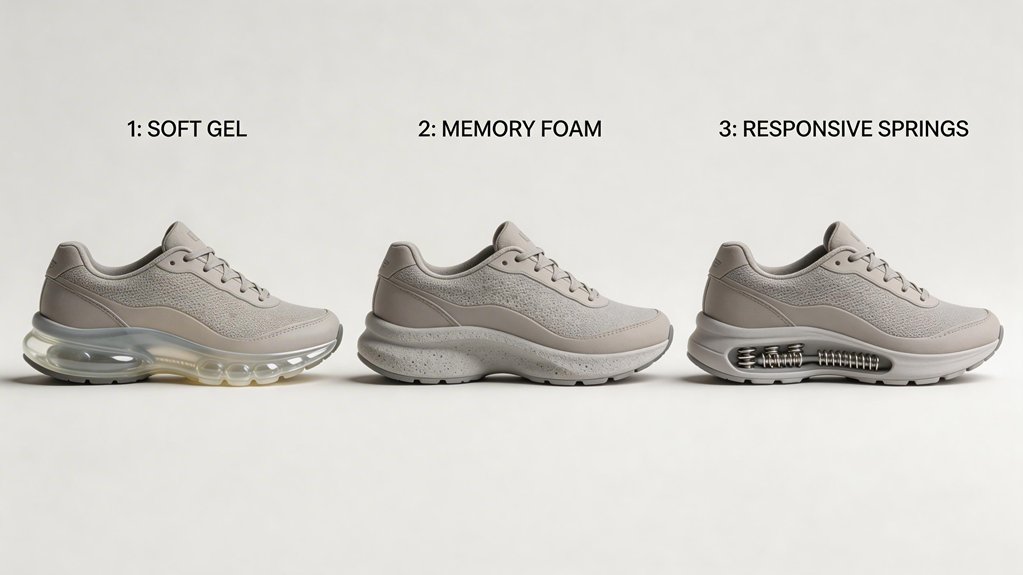
Now that you understand your gait type, it’s time to focus on two features that’ll make or break your walking comfort: cushioning and sole flexibility.
Your shoes need a moderately soft midsole that absorbs shock without feeling mushy. Look for at least 100 SA shock absorption rating for all-day wear, especially under the ball of your foot where impact hits hardest.
Sole flexibility matters equally. Your shoe should bend easily at the ball of your foot, allowing natural rolling motion.
A flexible sole prevents foot strain and supports your stride’s natural mechanics, keeping your joints healthier during extended walking sessions.
You can explore men’s walking shoes on Amazon to find options that meet these cushioning and flexibility standards.
Essential Fitting Checks
If you are testing new shoes in a shop:
- Wear the same socks you’ll use during walks.
- Walk several around the store, noticing any rubbing or discomfort spots.
- Pay attention to how different brands feel; shoe materials and brand differences greatly affect your experience.
- Check that your heel doesn’t slip and the shoe bends easily at the ball of your foot. Test both shoes thoroughly.
This approach helps you avoid mistakes and find footwear that truly works for your walking needs.
Consider trying on supportive athletic shoes specifically designed for your workout environment to ensure optimal performance.