

The 10,000 steps goal came from a 1965 Japanese pedometer company’s marketing campaign, not scientific research.
You don’t need that many. 7,000 steps daily provide substantial health benefits, with diminishing returns beyond that point.
You’ll see measurable improvements at just 2,500 steps, and each additional 1,000 steps reduces death risk by roughly 15%.
Here’s what matters most: intensity beats step count, so brisk walking benefits you more than leisurely strolling. Your ideal goal depends on your current fitness level and lifestyle.
Why 10,000 Steps Isn’t Sacred (The Real Origin Story)
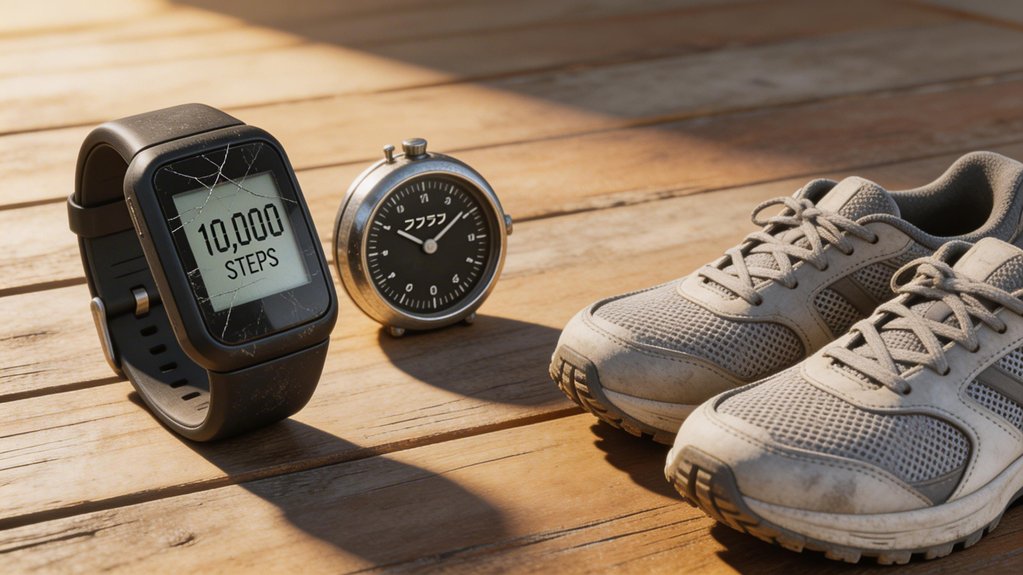
While you’ve probably accepted 10,000 steps as a legitimate health benchmark, the truth is far more commercial than scientific.
A Japanese pedometer company called “manpo-kei” created this marketing origins concept in 1965, right before the Tokyo Olympics.
The number wasn’t based on rigorous research proving it ideal. Instead, they chose 10,000 for its cultural symbolism; the Japanese character visually resembles a walking person. The round number was simply catchy and memorable for marketing purposes.
The 10,000-step benchmark wasn’t scientifically proven: it was chosen for cultural symbolism and marketing appeal.
Dr. Hatano’s study suggested walking more helped heart health, but didn’t specifically validate 10,000 steps as universal. What matters more for health outcomes is the intensity and duration of your physical activity rather than hitting a specific step target.
The most effective approach depends on finding an optimal walking amount that aligns with your individual fitness level and goals.
In essence, smart advertising created a fitness standard that stuck.
What the Latest Research Actually Says About Daily Steps?
Now that we’ve uncovered the marketing origins of that 10,000-step target, it’s time to examine what actual science says about your daily step count.
Recent research analyzing 57 studies across 160,000 participants reveals that 7,000 steps deliver substantial step benefits. You’ll experience a 47% mortality reduction compared to 2,000 steps daily.
Notably, jumping to 10,000 steps produces nearly identical results. Returns diminish beyond 7,000 steps for most outcomes.
Even modest increases matter tremendously. Moving from 2,000 to 4,000 steps is where the curve is steepest.
Beyond physical health, walking also supports mental wellbeing: studies indicate a 22% lower risk of depressive symptoms with consistent daily movement. Regular walking provides wide-ranging wellness benefits that extend beyond cardiovascular health to overall quality of life.
You don’t need perfection; consistent progress toward 7,000 steps serves your health effectively.
The Minimum Steps You Need for Real Health Gains
Before you stress about hitting 10,000 steps daily, consider what research actually proves necessary for real health improvements.
You’ll see measurable health benefits at just 2,500 steps. For significant mortality reduction, aim for 3,900 steps, roughly two miles.
Measurable health benefits start at just 2,500 steps. Aim for 3,900 steps for significant mortality reduction.
A meta-analysis of 17 cohort studies in the European Journal of Preventive Cardiology put each additional 1,000 steps at a 15% lower risk of dying from any cause.
The sweet spot lands around 7,000 to 7,500 steps daily, where benefits plateau. Beyond this step count, you’ll gain diminishing returns.
You don’t need extreme numbers to serve your body well.
Consistent, moderate daily movement delivers substantial protection without demanding perfection. Making simple lifestyle changes like taking the stairs or parking farther away can help you accumulate these beneficial steps throughout your day.
The 10,000-step target actually originated from a 1960s marketing campaign rather than rigorous scientific evidence, making modern research-based recommendations far more achievable for most people.
Why Pace Matters More Than Your Step Count?

You’ve probably noticed that step-counting apps celebrate hitting big numbers without asking whether those steps actually challenged your body.
Here’s the reality: pace benefits matter more than you’d think.
Jogging 5,000 steps delivers greater fitness gains than leisurely walking 10,000 steps. Your heart rate response, core temperature, and sweat production vary dramatically based on effort level, even with identical step counts.
When you walk faster or tackle hills, you’re triggering real cardiovascular adaptations and muscle development. Low-impact exercise like brisk walking allows you to build strength and endurance while protecting your joints from excessive stress.
Intensity impacts fitness outcomes far more than volume alone. Walking speed and terrain create physiological stress your body needs to strengthen and adapt.
However, research shows that all daily movement counts, meaning light activities like housework and errands contribute meaningfully to reducing cancer risk alongside more intense exercise.
Finding Your Personal Step Goal Based on Your Fitness Level
How do you know what step goal actually fits your life? Your personalized goals depend on honest fitness assessment. Track your current steps for two to three days, including both weekdays and weekends.
This baseline reveals your starting point. Then increase gradually, roughly ten to twenty percent weekly. If you’re currently hitting five thousand steps, bump it to fifty-five hundred or six thousand.
Hold this new level for one to two weeks before advancing further. Your fitness level, age, and health status all matter.
The pooled evidence puts the meaningful threshold at about 7,000 steps a day, with benefits levelling off beyond it.
Progress at your own pace. Building sustainable exercise habits requires setting realistic goals you’ll actually maintain rather than pursuing aggressive targets you’ll abandon.
This is general information, not medical advice. If you have a condition, an injury, or any doubt about what level of activity suits you, check with your doctor before you start.