
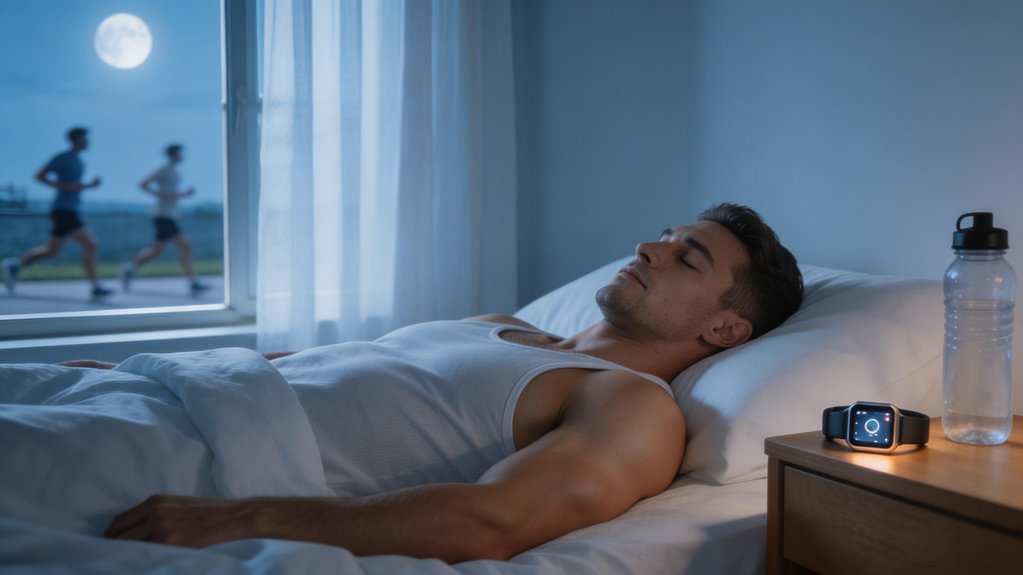
You can transform your sleep in weeks with consistent exercise. Aim for 150 minutes of moderate activity weekly, that’s three 30-minute sessions, to cut sleep onset time and reduce nighttime awakenings.
Aerobic work adds roughly 23 minutes of sleep nightly, while resistance training sharpens sleep efficiency.
Combine both modalities targeting 920 MET-minutes weekly, scheduling workouts at least two hours before bed. Exercise lowers cortisol, releases mood-boosting endorphins, and realigns your circadian rhythm.
The specifics of building your ideal routine reveal even greater benefits.
How Much Exercise You Need for Better Sleep
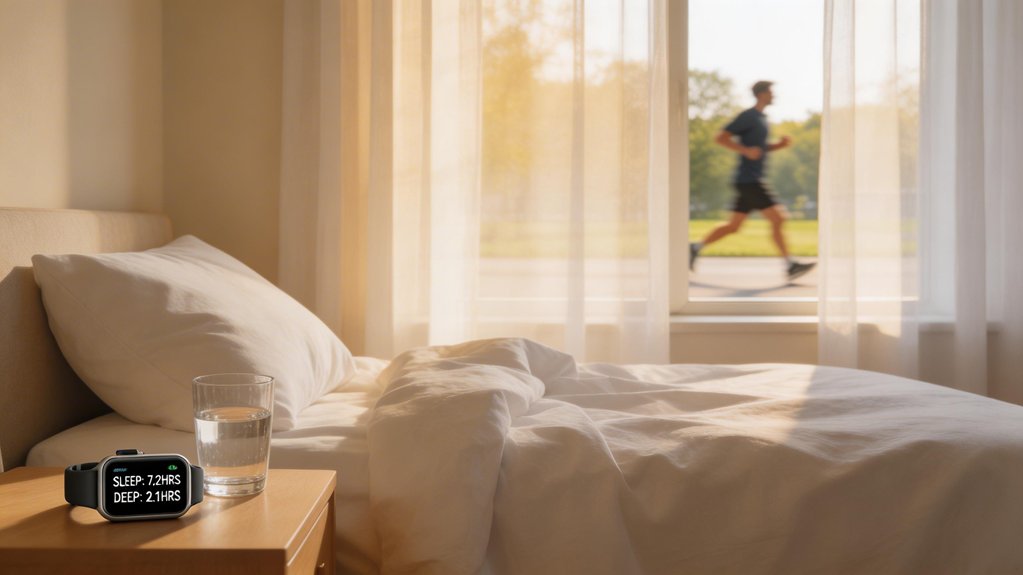
If you’re wondering exactly how much exercise’ll actually improve your sleep, the answer isn’t as complicated as you might think. You need at least 150 minutes of moderate-intensity aerobic activity weekly.
That breaks down nicely: three 30-minute sessions weekly markedly improves sleep duration and reduces nighttime awakenings.
Four to seven sessions weekly enhances sleep quality even more. Each session duration should hit that sweet spot of 30 minutes for ideal results.
Even light morning exercise of just 10 minutes daily adds measurable sleep time. Building safe exercise habits after fifty requires the same consistency principles that enhance sleep quality.
The key is consistency; stick with your exercise frequency and session duration, and you’ll notice better sleep within weeks. Additionally, including strength training at least twice a week adds benefits that aerobic exercise alone does not.
The Best Time to Work Out, Morning or Evening
Now that you’ve got your weekly exercise minutes locked in, the next question becomes when you’ll actually do them. Your timing shapes both your results and your sleep quality.
Consider these factors:
- Morning advantages: Lower heart disease risk, improved fat burning for hours, and eliminating workout worry early.
- Evening benefits: Better physical performance, longer workout duration, and ideal muscle flexibility.
- Afternoon sweet spot: A 2023 UK Biobank study in Nature Communications found that people who did most of their exercise between 11 a.m. and 5 p.m. had the lowest risk of early death.
- Body temperature: Your muscles work best when warmer, typically late afternoon or evening. Evening workouts can reduce ghrelin levels, the hunger hormone, which may help with appetite management after exercise. Studies demonstrate that optimal walking amounts throughout your week contribute significantly to overall wellness outcomes regardless of timing.
- Personal consistency: Your best workout time is whichever one you’ll actually stick with regularly.
Aerobic, Strength, or Combined Training, Which Works Best?
Which type of exercise actually delivers the best sleep improvements? Resistance training wins on sleep metrics like onset latency and efficiency.
You’ll fall asleep roughly three minutes faster and improve sleep efficiency from 68% to 85%.
Aerobic benefits include longer sleep duration, about 23 minutes nightly. This preliminary research involved 386 sedentary adults with high blood pressure, of whom one-third reported inadequate sleep.
Strategic rest days between sessions allow your body to consolidate these sleep gains and prevent overtraining.
Combined effectiveness integrates both advantages: cardiopulmonary gains plus muscle strength benefits.
Here’s what matters most: all three modalities markedly improve sleep quality.
Your best approach? Match your preference to consistency. Aim for roughly 920 MET-minutes weekly across whichever modality you’ll actually maintain long-term.
Build Your Sleep-Boosting Routine
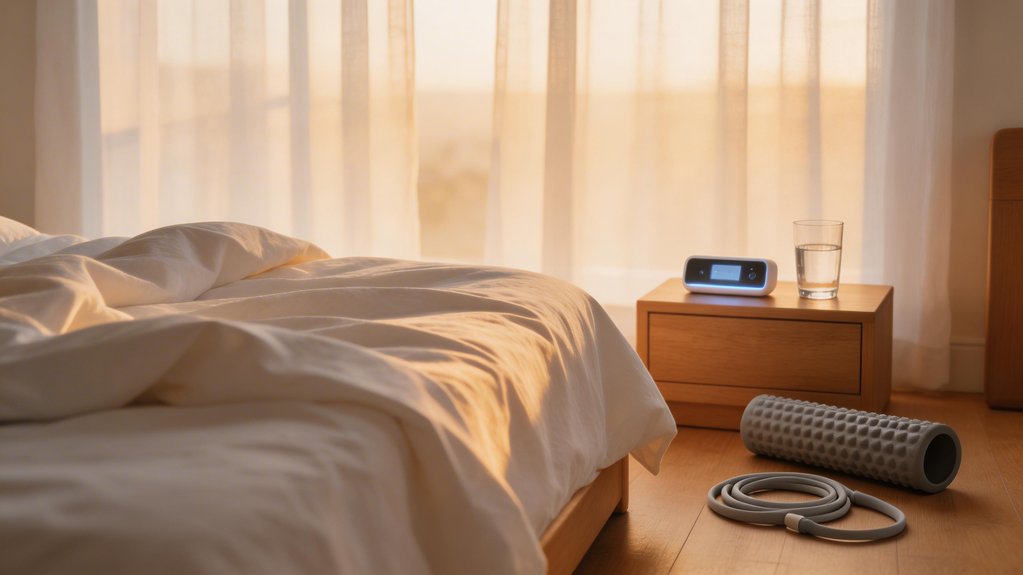
Since you’ve learned what works, it’s time to build a routine you’ll actually stick with. Your sleep-boosting plan combines exercise variety with smart timing for maximum benefit.
Build a sustainable routine that combines exercise variety with smart timing for better sleep and lasting results.
Your Sleep-Friendly Exercise Strategy:
- Mix resistance training, aerobic work, and mind-body exercises throughout your week.
- Schedule workouts at least two hours before bedtime.
- Aim for 920 MET-minutes weekly (roughly 184 minutes of resistance or 230 minutes of cycling).
- Perform strength training three times weekly for consistency.
- Keep morning light exercises to just 10 minutes.
Strong sleep hygiene pairs perfectly with exercise variety. Low-impact exercises are particularly effective for beginners looking to establish consistent workout habits without overexertion.
Research shows that aerobic exercise produces particularly significant improvements in sleep quality, making it a cornerstone of any effective sleep enhancement program.
You’re building sustainable habits that serve your health and help you show up better for others daily.
Why Exercise Improves Sleep
When you work out, your body triggers a cascade of changes that directly improve your sleep. Exercise reduces cortisol, your stress hormone, creating a calmer mental state by bedtime.
You’ll experience enhanced mood through endorphin and serotonin release, which combats anxiety naturally. Research has demonstrated that regular exercise significantly reduces symptoms of sleep disorders such as insomnia and sleep apnea.
Your circadian rhythm realigns with consistent activity, preventing insomnia and strengthening your internal clock.
Physical exertion raises body temperature, followed by a restorative 30-90 minute drop that facilitates sleep onset.
Even ten minutes of moderate activity daily produces measurable sleep improvements and deeper non-REM sleep.
These sleep science mechanisms work together, delivering hormonal balance and circadian alignment for profound rest.
This is general information, not medical advice. If you have a condition, an injury, or any doubt about what level of activity suits you, check with your doctor before you start.