
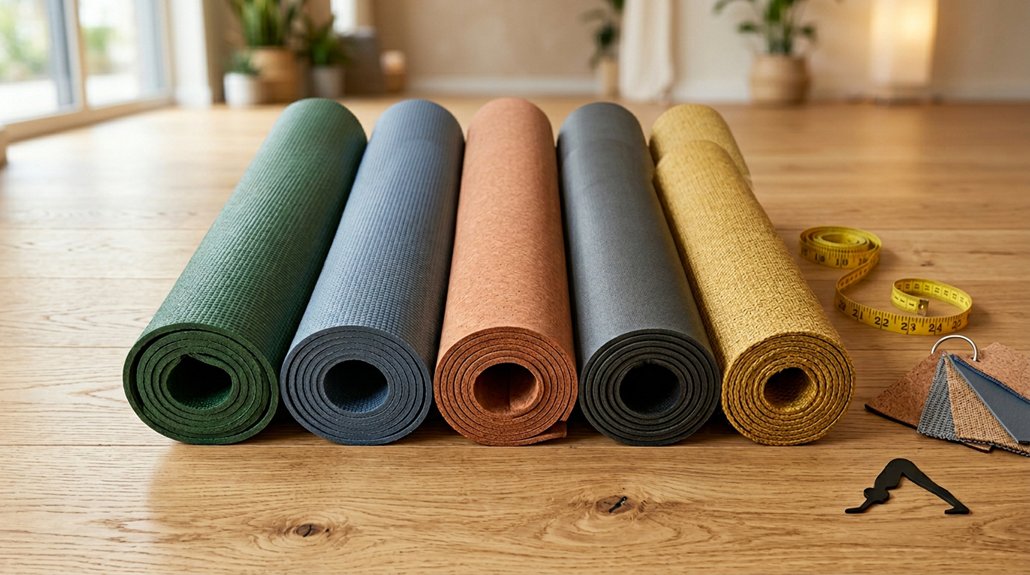
When you’re buying your first yoga mat, focus on five key factors. Consider your yoga style, hot yoga needs superior grip, while restorative practice benefits from extra cushioning.
Standard mats run about 1/8 inch thick for balanced comfort and stability.
Choose between durable PVC or eco-friendly natural rubber based on your values. Test the grip to guarantee it prevents slipping during poses.
Finally, check for consistent material thickness and reinforced seams as durability markers. Understanding these specifics helps you make a choice you’ll appreciate for years.
Assess Your Yoga Style and Practice Frequency First
Before you start shopping for a yoga mat, you’ll want to figure out what kind of yoga you’re actually doing and how often you’ll practice.
Your yoga styles and practice goals directly shape which mat features matter most.
If you’re practicing hot yoga or vinyasa, you’ll need superior grip and stability.
Restorative or slow-flow practitioners benefit from extra cushioning instead.
Someone practicing daily requires a durable, high-quality mat that won’t deteriorate quickly.
Occasional practitioners can manage budget-friendly options.
Mats with extra cushioning and stability are particularly beneficial for beginners over fifty who are just starting their yoga journey.
Match your mat choice to your actual commitment level and preferred yoga styles.
This foundation prevents buying a mat that doesn’t serve your real needs.
The Comfort and Stability Trade-Off in Mat Thickness
Once you’ve pinned down your yoga style and practice frequency, the next consideration is how thick your mat should be.
Standard mats measure about 1/8 inch, balancing comfort with stability. Thicker options at 1/4 inch offer enhanced cushioning options but reduce floor connection during standing poses.
Thinner travel mats around 1/16 inch sacrifice cushioning for portability. Your mat thickness should protect your joints without compromising balance.
Beginners and those practicing restorative yoga benefit from extra cushioning. However, vigorous styles demand thinner, firmer mats for stability.
Consider your body’s needs alongside your practice type when selecting the right thickness for your mat. Popular options like yoga mats for morning stretching can help you find the ideal thickness for your specific routine and comfort preferences.
PVC or Eco-Friendly Yoga Mats
Now that you’ve settled on thickness, it’s time to think about what your mat is made of. Material shapes how long it lasts and how it performs.
PVC benefits include durability lasting over a decade and reliable stickiness.
PVC yoga mats deliver over a decade of reliable durability and dependable grip for serious practitioners.
However, eco-friendly alternatives like natural rubber, jute, and organic cotton serve practitioners prioritizing environmental impact.
Natural rubber offers excellent grip but poses risks for latex-allergic individuals.
Jute and cotton break down faster than PVC, which doesn’t decompose in landfills.
Consider your values and practice intensity when choosing between PVC’s longevity and eco-friendly materials’ sustainability.
Why Grip and Texture Keep Poses Safe
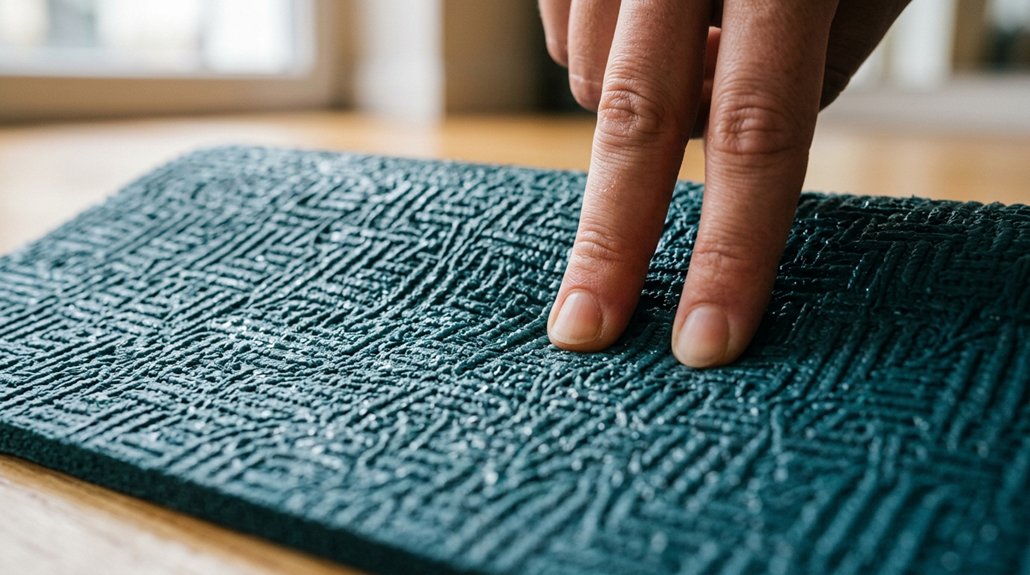
You’ve picked your material, but here’s something that matters just as much: whether your mat actually keeps you from sliding around during practice.
Grip importance can’t be overstated; slipping during poses disrupts your focus and risks injury.
Texture benefits extend beyond safety; raised patterns on rubber, jute, and cotton mats deliver excellent traction for sweaty or vigorous sessions.
PVC mats offer traditional stickiness that prevents slipping effectively.
When you’re holding a challenging pose, you need confidence that your foundation won’t shift beneath you.
Test grip before buying if possible.
Pairing your mat with stretching tools can further enhance your practice by improving flexibility and supporting your poses.
Signs Your Mat Will Actually Last Years, Not Months
You’re about to invest in something you’ll use regularly. It helps to know what separates a mat that lasts a decade from one that falls apart in months.
Quality craftsmanship shows in consistent material thickness and reinforced seams.
Check whether your mat sheds during the first week; budget mats deteriorate quickly. Higher-quality materials like natural rubber and PVC resist degradation through frequent practice.
Durability indicators include dense construction and uniform texture.
Your practice frequency matters too; consistent sessions demand better materials.
When selecting from home workout options, prioritize mat construction quality over initial cost savings.
Prioritize mat construction quality over initial cost savings. A durable mat serves you reliably for years.
Read more on How to Set Up a Simple Home Workout Space.