
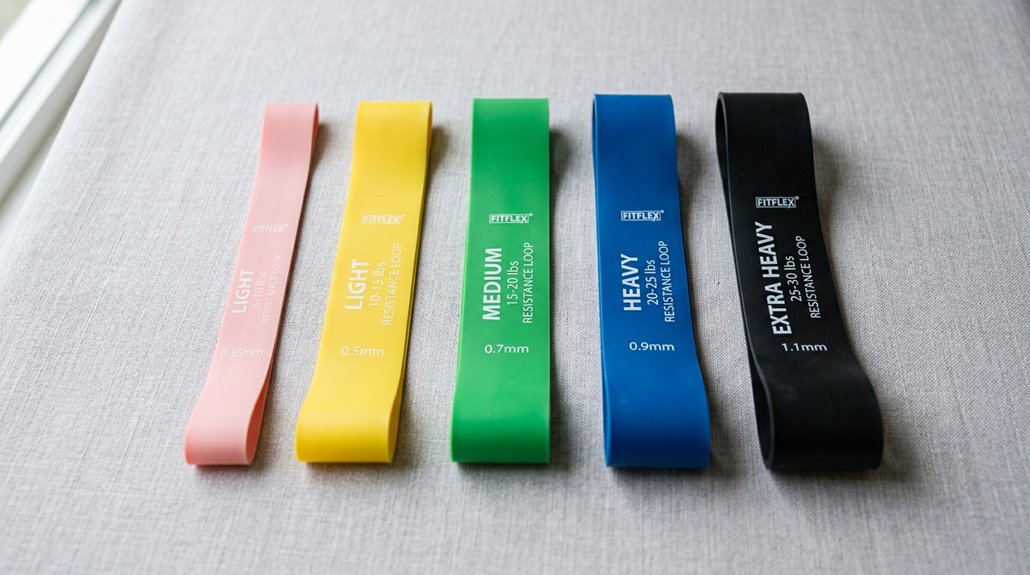
Start with a beginner set containing two resistance levels, light green for foundational exercises and medium red for progression after 2-3 weeks.
Choose long bands for full-body movements like squats, or loop bands for lower-body work. Check for natural latex construction and smooth texture without cracks.
Test your band by stretching it fully; you should complete twelve reps with challenge but maintain perfect form. Bands that feel comfortable without snapping indicate solid durability.
These fundamentals set you up for sustainable progress.
Which Resistance Band Type Should You Actually Buy?
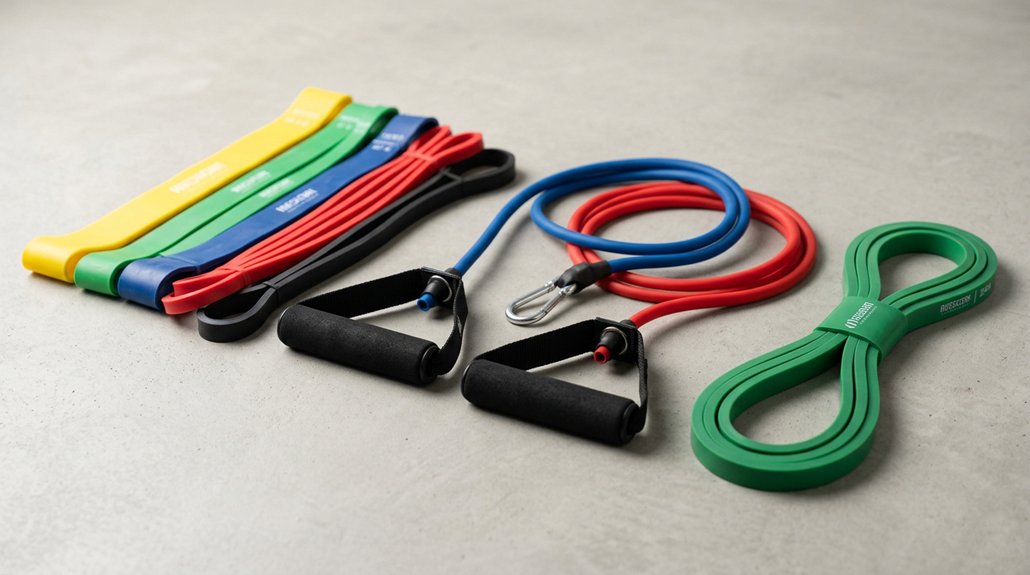
How do you know which band fits your workout style? Consider your exercise adaptability needs first.
Long bands work well for full-body movements like squats and deadlifts. Handled bands suit upper-body work such as bicep curls and shoulder presses.
Loop bands excel at lower-body exercises like glute bridges. Pull-up bands provide extra support while you build strength.
A compact set offers band versatility, letting you perform multiple exercises with one purchase.
Start with a set containing various resistance levels. This approach lets you adjust tension by muscle group and progress naturally as you grow stronger.
Sets built for beginner-friendly home strength training typically include multiple resistance levels to support your fitness journey from day one.
How to Choose the Right Resistance Band Level Without Guessing?
What’s the sweet spot between too easy and too hard? You’ll know you’ve found it when you can complete all reps with proper form while feeling genuine muscle engagement.
Start with light resistance bands, typically green, to establish foundational strength safely.
After two to three weeks, progress to medium resistance if exercises feel too easy.
Quality band durability matters; choose bands that stretch smoothly without tearing. The resistance band benefits you’ll experience depend entirely on selecting appropriate tension.
Your band should challenge you without compromising movement quality or form.
Listen to your body and adjust accordingly.
Light resistance bands are specifically designed for gentle strengthening and work particularly well for those recovering from injury or building initial muscular endurance.
What Resistance Levels Should Your Beginner Set Include?
Since you’re just starting out, your beginner resistance band set should include at least two different resistance levels. That keeps you progressing without hitting a wall.
- Start with a light green band for foundational exercises like squats and bicep curls.
- Add a medium red band as you progress over few weeks of consistent training.
Multiple tension options let you adapt exercises to different muscle groups. This strategy builds sustainable fitness habits while keeping costs low and motivation high.
When selecting your first set, look for resistance band sets that offer color-coded bands indicating different tension levels. That makes it easy to track progress and switch exercises.
How to Spot a Band That Won’t Break Under Use

When you’re looking for resistance bands, durability matters just as much as resistance level.
Look for bands made from natural latex or high-quality synthetic rubber. These materials resist tears and maintain elasticity over time.
You can browse Amazon resistance band options that highlight top-rated brands known for their durability and performance.
A durable band lasts years with proper care, making it a smart investment for your fitness journey.
The Quick Test for Your Resistance Band Fit
How do you know if you’ve picked the right band for your body and workout goals? Test the band’s resistance by stretching it to full extension while performing your planned resistance band exercises.
You’ll want enough tension that your muscles feel challenged without straining your form. The band should stretch comfortably without snapping or tearing, indicating solid band durability.
If you’re completing twelve repetitions easily, you’ve probably chosen too light a resistance. Conversely, struggling past five reps suggests the band’s too heavy.
Aim for that sweet spot where you’re working hard but maintaining control throughout each movement.
Proper form during resistance band exercises is essential to injury prevention and ensures you’re targeting the intended muscle groups safely.