
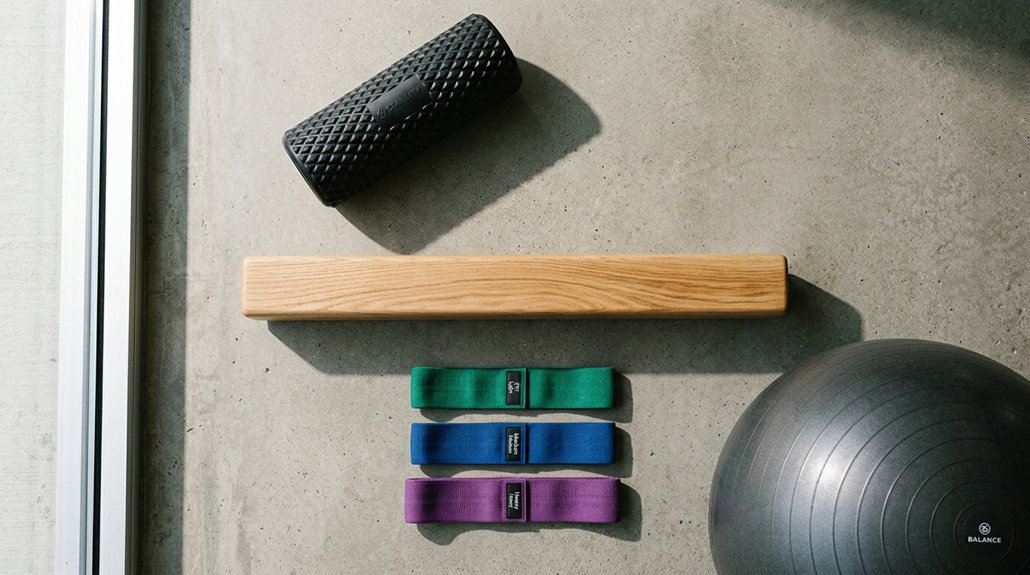
You don’t actually need much. Start with your kitchen chair or couch, they’re perfect for weight-shifting exercises and single-leg stands.
If you want to invest, grab an inexpensive balance board to strengthen your ankles, or a stability ball for around the same price.
Wobble cushions are cheaper still and work great too. Pick one piece that matches your specific goal, warm up five to ten minutes beforehand, and progress gradually.
Stick with what you’ve got at home, and you’ll build serious stability without breaking the bank, though there’s plenty more specific strategies worth exploring.
Your First Balance Tools Are Already in the Room
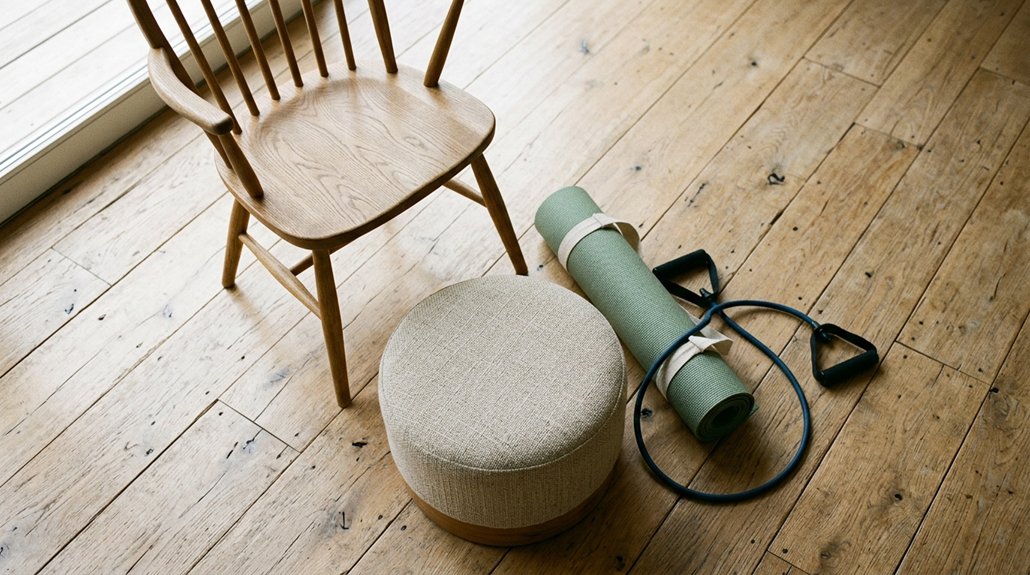
You don’t need fancy equipment to start strengthening your balance. Your home provides excellent furniture options for developing foundational balance benefits.
Stand behind a sturdy chair and practice shifting your weight side to side. Progress to holding the chair with one hand, then fingertips only.
Kitchen counters work similarly for support during standing exercises.
Use a couch edge for seated balance work or single-leg stands. These accessible tools build ankle strength and proprioception safely.
As you improve, reduce hand contact gradually. This progression prepares your body for more advanced balance training equipment later.
Regular practice with these simple furniture-based exercises significantly reduces fall prevention risks as you progress to more challenging movements.
Setup Essentials for Balance Training
Once you’ve built confidence with furniture-based exercises, it’s time to invest in actual balance equipment that’ll challenge your body more effectively.
A balance board strengthens ankle muscles while training your proprioceptive system.
Stability ball exercises engage your entire body during push-ups and planks by positioning the ball beneath your shins. Start with one quality piece rather than buying everything at once.
A basic balance board is an inexpensive start. Add a stability ball gradually as you progress.
These tools help you serve others better by building genuine strength and stability.
Quality matters more than quantity when starting out. Research demonstrates that consistent balance training with proper equipment can significantly reduce fall risk across all age groups.
Match Your Goals to the Right Equipment
Before you grab whatever’s on sale, think about what you’re actually trying to achieve with balance training.
Goal alignment determines your equipment selection. Are you recovering from an ankle injury? Balance boards target ankle proprioception effectively.
Want core strengthening? Stability balls and wobble cushions engage your midsection. Stability balls for core strengthening are particularly effective at building functional strength through dynamic movement.
Need athletic speed and agility? Agility ladders build coordination and reactivity.
Prefer low-impact full-body work? BOSU balls and vibration plates deliver thorough results.
Consider your space constraints too. Agility ladders fit apartments easily. Vibration plates work well for those seeking multi-benefit tools.
Match the equipment to your specific objectives, not just convenience.
Budget-Friendly Balance Training at Home
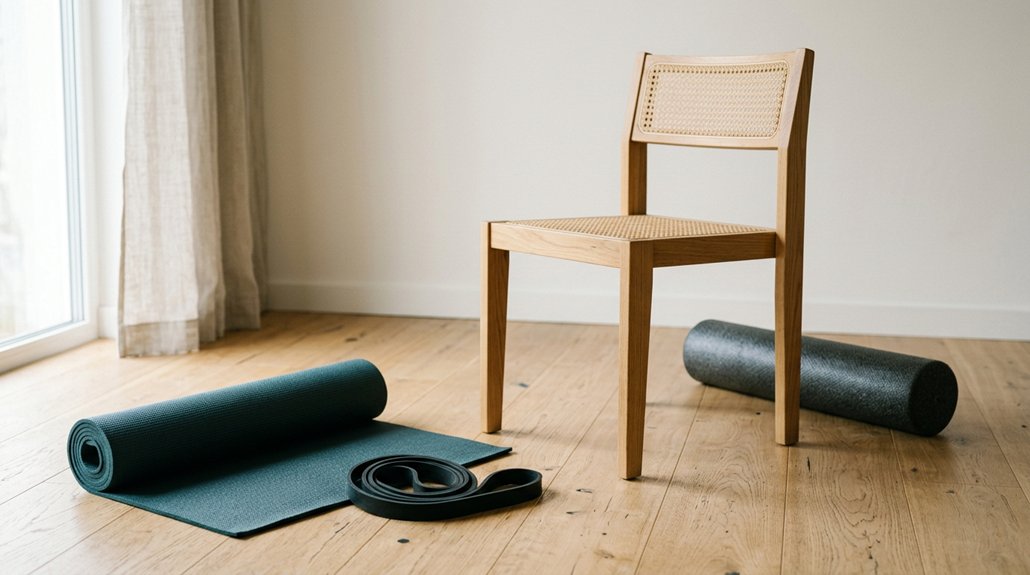
Matching equipment to your goals matters, but so does matching it to your wallet. You don’t need expensive gear for effective balance workouts and core stability training.
Wobble cushions cost less than a balance board and work your stabilizing muscles while sitting or standing.
Agility ladders cost a little more than a balance board and improve coordination without taking up much space. A stability ball costs similarly and handles full-body exercises.
For home use, balance pads are among the top-rated options and support progressive balance development.
Start simple with affordable options, then upgrade as your training progresses and your budget allows.
How to Progress Without Getting Hurt
As you build your balance training routine, the foundation you create now determines whether you’ll stay healthy or end up sidelined.
Start slowly with basic movements before advancing to complex exercises. Your preventative strategies should include proper form, gradual progression, and adequate rest between sessions.
Master proper form first, progress gradually, and prioritize rest: the foundation for sustainable balance training.
Listen to your body’s signals. If you experience sharp pain or instability, scale back immediately.
Warm up for five to ten minutes beforehand. When injury recovery becomes necessary, consult a professional before resuming training.
Understanding key injury prevention tips will help you maintain consistency in your training and avoid common mistakes that sideline beginners.
Progress takes patience, but it keeps you serving others effectively.