
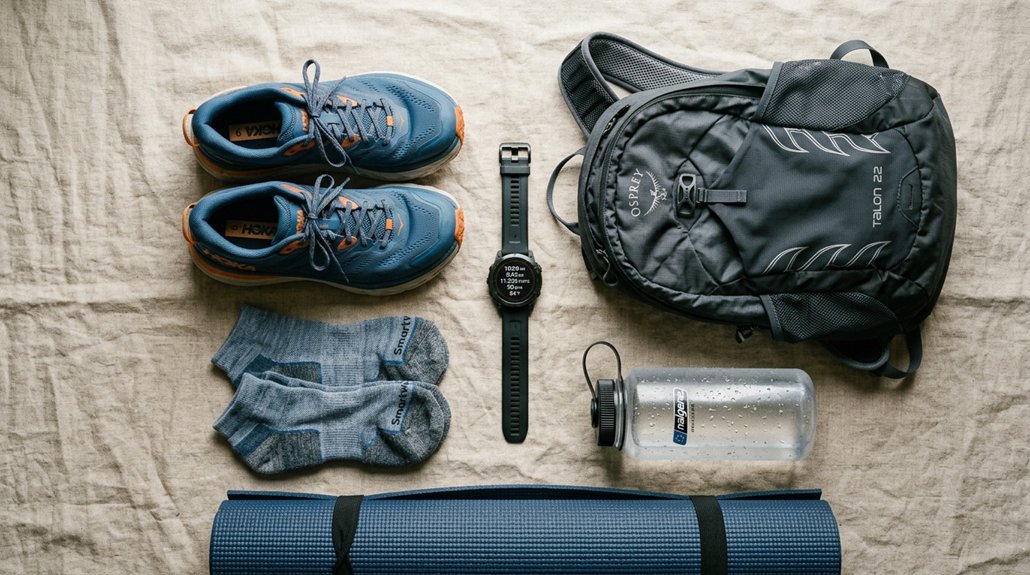
You’ll want to start with sturdy hiking boots or walking shoes that support your ankles and arch.
Layer moisture-wicking synthetic fabrics like polyester to keep sweat off your skin, adding a waterproof jacket for weather protection.
Grab a map, compass, and basic first aid kit for safety. For hydration, handheld water bottles work for walks under an hour, while longer routes need waist packs or vests.
As your distances increase beyond two hours, upgrade to a 35-40-litre backpack with padded straps.
Each piece builds a foundation that’ll transform how your body feels on the trail.
Proper Walking Shoes Make the Biggest Difference
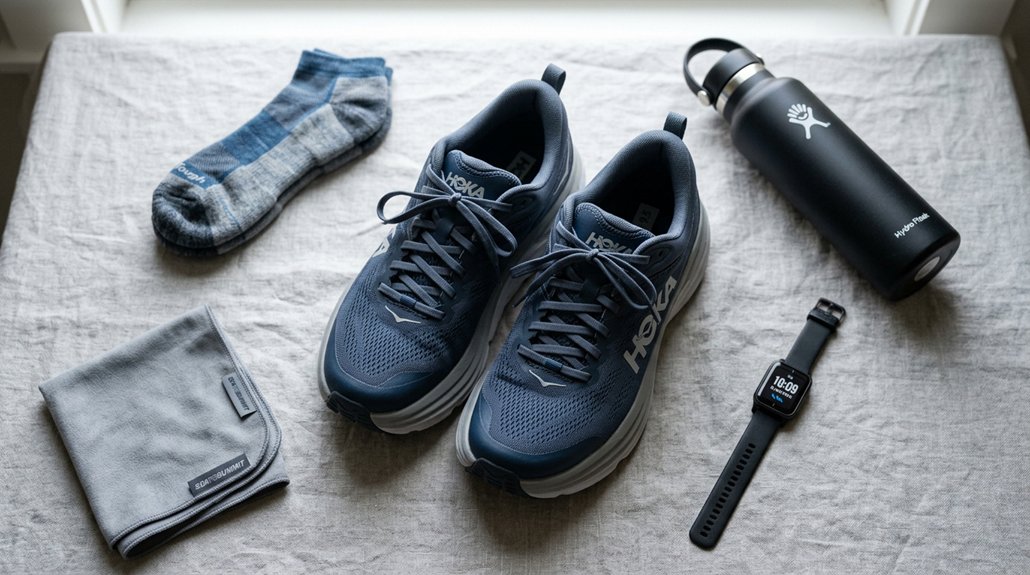
When you’re building a walking routine, your footwear matters more than anything else you’ll purchase. Sturdy hiking boots or dedicated walking shoes provide the foundation for comfort and enjoyment on every outing.
You’ll want ankle support to prevent injury on uneven terrain. Quality shoe types with proper foot support protect your joints and muscles during extended walks.
Waterproof or water-resistant materials keep your feet dry in wet conditions. Pair your shoes with high-backed socks covering the shoe tops to prevent blisters.
Look for shoes featuring arch support to maintain proper alignment and reduce strain during longer distances.
This combination makes the biggest difference to your walking experience and long-term success.
Layer Moisture-Wicking Clothing for Any Weather Condition
After you’ve nailed down your footwear, your clothing becomes the next critical piece of your walking setup. Moisture-wicking synthetic fibers like polyester and spandex keep you comfortable by moving sweat away from your skin.
You’ll benefit from layering techniques that let you adapt to changing conditions throughout your day.
Start with a moisture-wicking thermal top, add a lightweight hoodie, then top it with a waterproof jacket. This approach gives you weather adaptability without excess bulk.
High-backed socks prevent blisters while quick-drying trousers handle variable moisture. Proper undergarments provide support during longer walks.
Exploring the best moisture-wicking running apparel available can help you find quality pieces that excel at sweat management and durability.
You’re building a system that serves your comfort across seasons and terrain.
Pack Navigation and Safety Gear for Every Walk
Three essential categories, navigation, first aid, and emergency equipment, form the backbone of safe walking.
- You’ll want navigation tools like maps and compasses for unfamiliar routes, though they’re optional for familiar loops.
- A first aid kit with bandages, antiseptic wipes, and blister treatment handles common injuries.
- Pack emergency supplies including a headlamp with extra batteries, an emergency whistle, a multi-tool, and a space blanket.
These items address unexpected delays or low-light conditions.
Walking offers numerous health benefits that extend beyond physical fitness to improve overall wellness and mental health.
Together, they guarantee you’re prepared for whatever comes your way, keeping you confident and secure during every walk.
Carry Water and Hydration Based on Distance
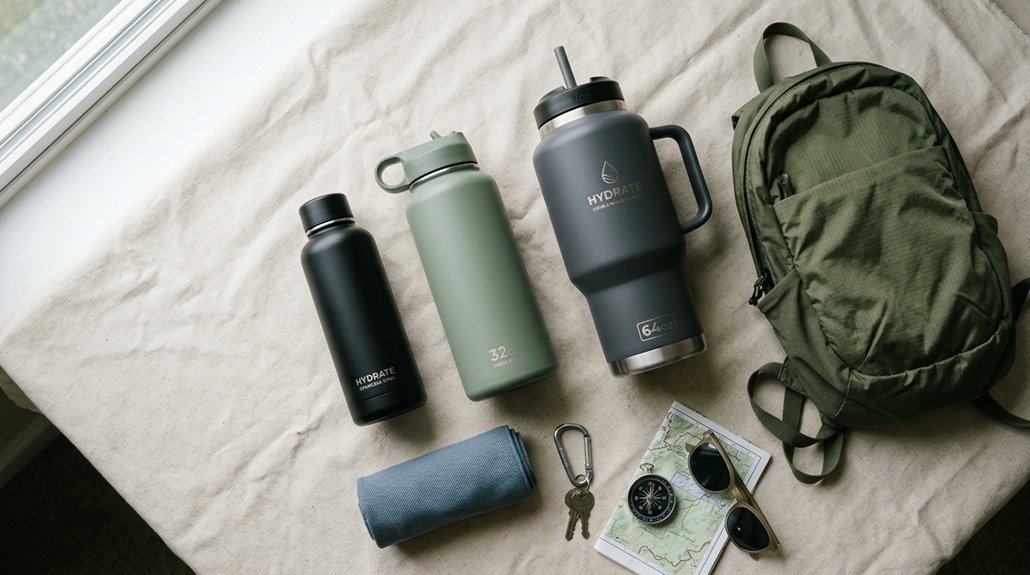
Because your body loses fluids faster than you’d expect during a walk, staying hydrated isn’t optional, it’s essential. Your hydration strategies should match your distance considerations.
- For short local walks under an hour, a handheld water bottle works fine.
- Medium-distance excursions benefit from waist packs holding one or two bottles.
- Longer adventures demand hydration vests with bladder pouches and snack storage.
Reusable bottles eliminate plastic waste while keeping costs down. Lightweight, portable options reduce physical strain compared to heavy containers.
On longer outings, insulated water bottles keep drinks refreshing whether you are walking in summer heat or cooler conditions.
Start drinking before you feel thirsty. This approach maintains energy levels and supports your body’s performance throughout your entire walk.
Adjust Your Gear Load for Longer Routes
When you’re planning walks that stretch beyond an hour or two, your gear needs shift considerably. Distance planning becomes essential for comfort and safety.
You’ll want to upgrade from a small waist pack to a 35-40-litre backpack that accommodates extra layers, snacks, and emergency supplies.
Your gear selection should prioritize weight distribution through padded, adjustable straps. Pack a hydration vest with multiple pockets for long excursions.
Include a first aid kit, headlamp, and navigation tools like maps or GPS. Investing in comfortable walking shoes with proper arch support and cushioning will reduce foot fatigue and prevent injuries during extended hikes.
These adjustments guarantee you’re properly equipped without carrying unnecessary bulk, making longer routes manageable and enjoyable.