

Start by measuring where you actually are right now, your weight, how long you can exercise, and what your body can do today.
Then set specific, measurable goals like “run three miles in ten weeks” and break them into smaller steps.
Track real progress beyond the scale: distance covered, how clothes fit, energy levels. Celebrate small wins weekly, not just the finish line. Progress gradually to avoid injury and burnout.
Know Where You’re Starting From

Before you set ambitious fitness goals, you’ve got to know exactly where you’re starting from.
A baseline assessment means measuring your current capabilities honestly.
Check your weight, BMI, and how long you can exercise without stopping.
Can you run a mile? Walk thirty minutes? Do ten pushups?
These details matter because they show what your body can actually do right now. Understanding your starting point prevents you from choosing activities that’ll overwhelm you.
It also keeps you safe from injury and burnout.
Knowing your baseline helps you avoid common exercise injuries that affect beginners who jump into programs beyond their current fitness level.
Once you know your real baseline, you can build a realistic plan that actually works.
SMART Fitness Goals That Stick
Now that you know your starting point, it’s time to build goals that’ll actually stick around. The SMART framework gives you objectives you can genuinely achieve: specific, measurable, achievable, relevant and time-bound. Here’s what works:
- Write specific targets like “run 3 miles in 10 weeks” instead of vague aspirations.
- Track measurable progress weekly through a fitness journal documenting workouts and improvements.
- Find accountability partners who’ll check in on your milestones and celebrate wins.
Goal visualization helps too. Picture yourself completing that 5K. When starting your running journey, begin with a step-by-step progression that gradually builds endurance and prevents injury.
Realistic deadlines maintain momentum without burning you out. Break everything into smaller steps.
This approach transforms overwhelming ambitions into manageable actions you’ll actually follow through on.
Start Smaller Than You Think, Then Progress Gradually
Most beginners make the same critical mistake: they start way too hard and quit within weeks.
You’ll build sustainable habits by choosing activities you can actually maintain.
If you’re new to running, start with walking three days weekly for two weeks. Then jog for one minute, walk for two. Gradually extend jogging intervals over four weeks.
This incremental progress prevents injury and burnout. Your body adapts better to small increases than dramatic changes.
Research shows that optimal walking amounts provide significant wellness benefits while being accessible for beginners to sustain long-term.
Track each week’s adjustments in a fitness journal.
Celebrate small wins. You’re building a foundation, not sprinting toward perfection. Progress compounds over months.
Measure What Actually Matters
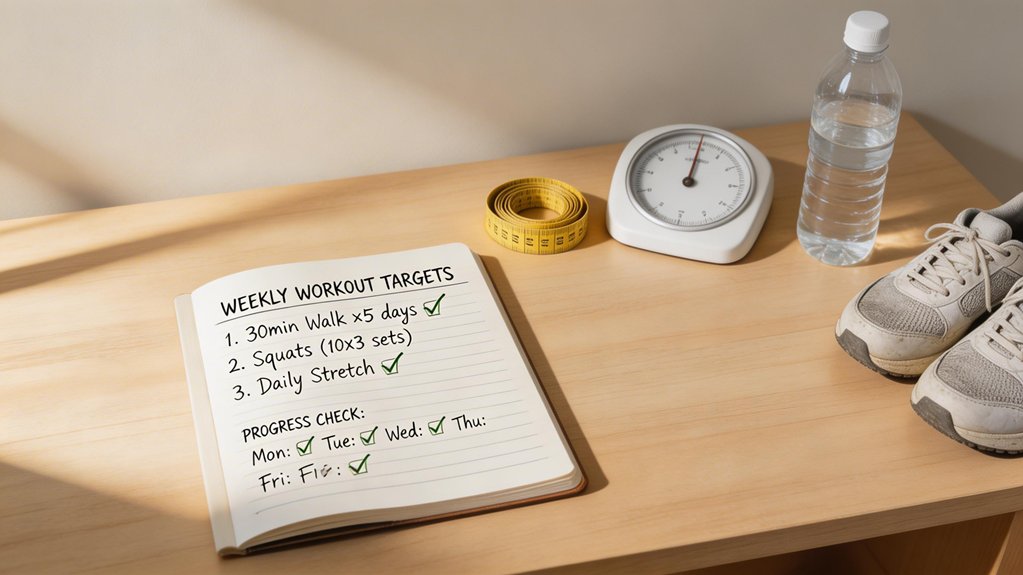
You’ve probably heard someone brag about their weight loss, but what if they lost muscle instead of fat?
That’s why you need to track progress beyond the scale. Focus metrics that actually matter for your goals:
- Body composition measurements showing muscle versus fat changes
- Performance improvements like running longer distances without stopping
- How your clothes fit and energy levels throughout your day
When you’re serving others through fitness, you’re modeling sustainable habits.
Better sleep quality and overall recovery are also key indicators of genuine progress. That is because regular exercise improves sleep and lets your body adapt to training.
Skip vanity metrics. Instead, measure what reflects real strength gains and genuine health improvements.
This approach keeps you honest and motivated.
Celebrate Wins to Stay Motivated
Tracking the right metrics keeps you honest, but here’s what actually sustains momentum: acknowledging when you’ve hit those milestones you set.
You need to celebrate milestones consistently, not just at the finish line. When you complete your first full week of workouts, acknowledge progress openly.
Hit that 5-pound loss? Mark it down and recognize it. These small wins fuel your brain’s motivation centers, making continued effort feel rewarding rather than punishing.
You’re serving your future self by building positive associations with fitness work.
That recognition compounds over time, transforming discipline into genuine habit.
Remember that incorporating rest days into your routine is just as important as the workouts themselves, since recovery is when your body actually adapts and progresses.